• SUDA MING’S CHANNEL
  • TALKING FILMS
  • Good Night | Good Morning
  • My Talk Show
  • PROFILE

MADRAS INK.

Menu

  • Archives
  • Columns
  • Diary
  • Interviews
  • My Films
  • Reviews
  • Good Night | Good Morning

  • Word thru the bird

    Tweets by SudhishKamath
  • Connect with GNGM

    Connect with GNGM
  • About GNGM

    Reviews

    “A cerebral joyride”
    Karan Johar, filmmaker on REDIFF

    “Among the most charming and creative Indian independent films”
    J Hurtado, TWITCH

    ★★★★✩
    “You don’t really need a big star cast… you don’t even need a big budget to get the techniques of filmmaking bang on…”
    Allen O Brien, TIMES OF INDIA

    ★★★★✩
    “An outstanding experience that doesn’t come by too often out of Indian cinema!”
    Shakti Salgaokar, DNA

    ★★★
    “This film can reach out the young, urban, upwardly mobile, but lonely, disconnected souls living anywhere in the world, not just India.”
    Namrata Joshi, OUTLOOK

    “I was blown away!”
    Aseem Chhabra, MUMBAI MIRROR

    “Good Night Good Morning is brilliant!”
    Rohit Vats, IBN-LIVE

    ★★★✩✩
    “Watch it because it’s a smart film.”
    Shubha Shetty Saha, MIDDAY

    ★★★✩✩
    “A small gem of a movie.”
    Sonia Chopra, SIFY

    ★★★✩✩
    “A charming flirtation to watch.”
    Shalini Langer, INDIAN EXPRESS

    “Interesting, intelligent & innovative”
    Pragya Tiwari, TEHELKA

    “Beyond good. Original, engrossing and entertaining”
    Roshni Mulchandani, BOLLYSPICE

    * * * * *
    Synopsis

    ‘Good Night Good Morning’ is a black and white, split-screen, conversation film about two strangers sharing an all-night phone call on New Year's night.

    Writer-Director Sudhish Kamath attempts to discover good old-fashioned romance in a technology-driven mobile world as the boy Turiya, driving from New York to Philadelphia with buddies, calls the enigmatic girl staying alone in her hotel room, after a brief encounter at the bar earlier in the night.

    The boy has his baggage of an eight-year-old failed relationship and the girl has her own demons to fight. Scarred by unpleasant memories, she prefers to travel on New Year's Eve.

    Anonymity could be comforting and such a situation could lead to an almost romance as two strangers go through the eight stages of a relationship – The Icebreaker, The Honeymoon, The Reality Check, The Break-up, The Patch-up, The Confiding, The Great Friendship, The Killing Confusion - all over one phone conversation.

    As they get closer to each other over the phone, they find themselves miles apart geographically when the film ends and it is time for her to board her flight. Will they just let it be a night they would cherish for the rest of their lives or do they want more?

    Good Night | Good Morning, starring Manu Narayan (Bombay Dreams, The Love Guru, Quarter Life Crisis) and Seema Rahmani (Loins of Punjab, Sins and Missed Call) also features New York based theatre actor Vasanth Santosham (Bhopal: A Prayer for Rain), screenwriter and film critic Raja Sen and adman Abhishek D Shah.

    Shot in black and white as a tribute to the era of talkies of the fifties, the film set to a jazzy score by musicians from UK (Jazz composer Ray Guntrip and singer Tina May collaborated for the song ‘Out of the Blue), the US (Manu Narayan and his creative partner Radovan scored two songs for the film – All That’s Beautiful Must Die and Fire while Gregory Generet provided his versions of two popular jazz standards – Once You’ve Been In Love and Moon Dance) and India (Sudeep and Jerry came up with a new live version of Strangers in the Night) was met with rave reviews from leading film critics.

    The film was released under the PVR Director’s Rare banner on January 20, 2012.

    Festivals & Screenings

    Mumbai Film Festival (MAMI), Mumbai 2010 World Premiere
    South Asian Intl Film Festival, New York, 2010 Intl Premiere
    Goa Film Alliance-IFFI, Goa, 2010 Spl Screening
    Chennai Intl Film Festival, Chennai, 2010 Official Selection
    Habitat Film Festival, New Delhi, 2011 Official Selection
    Transilvania Intl Film Festival, Cluj, 2011 Official Selection, 3.97/5 Audience Barometer
    International Film Festival, Delhi, 2011 Official Selection
    Noordelijk Film Festival, Netherlands, 2011 Official Selection, 7.11/10 Audience Barometer
    Mumbai Film Mart, Mumbai 2011, Market Screening
    Film Bazaar, IFFI-Goa, 2011, Market Screening
    Saarang Film Festival, IIT-Madras, 2012, Official Selection, 7.7/10 Audience Barometer

    Theatrical Release, January 20, 2012 through PVR

    Mumbai
    Delhi
    Gurgaon
    Ahmedabad
    Bangalore
    Chennai
    Hyderabad (January 27)

    * * * * *

    More information: IMDB | Facebook | Youtube | Wikipedia | Website

  • Browse: Categories

  • May 2011
    M T W T F S S
     1
    2345678
    9101112131415
    16171819202122
    23242526272829
    3031  
    « Apr   Jun »
  • Recent Posts

    • Simmba: A departure from the formula
    • Zero: The hero who wasn’t
    • Protected: AndhaDhun: What did that end mean?
    • Love and other cliches
    • October: Where is Dan?

Archive For May, 2011

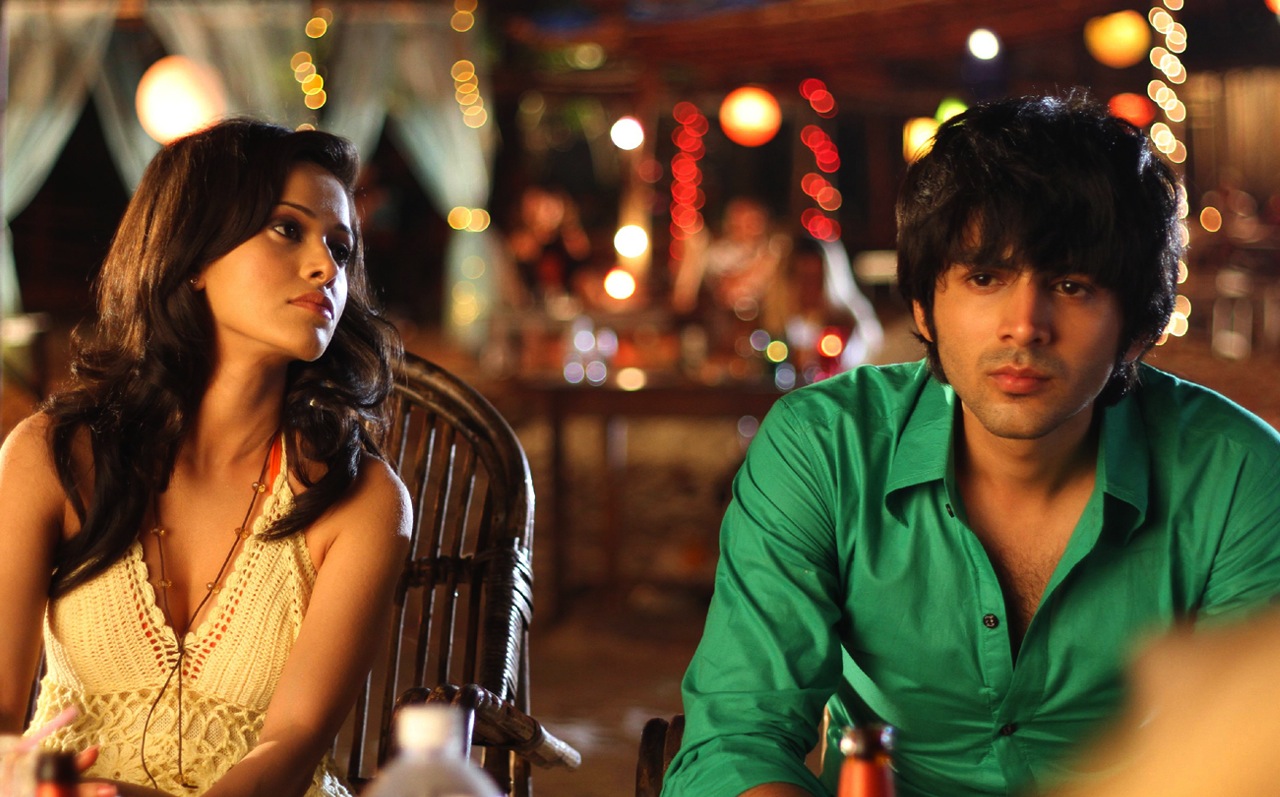
Pyaar Ka Punchnama: Punch Drunk Love

May 21, 2011 · by sudhishkamath

Genre: Drama

Director: Luv Ranjan

Cast: Kartikeya Tiwari, Raayo Bhakirta, Divyendu Sharma, Nushrat, Sonalli, Ishita

Storyline: Three guys deal with the bittersweet pangs of love

Bottomline: No matter how cool, strong or smart, every man is fool in love 

When she says she’s leaving him, our hero falls in her lap and cries helplessly, like a child that does not want his mother to leave on the first day of school. He has no words, just helpless resignation and shameless tears. She’s broken him down good. She knows exactly what buttons to hit to reduce the most self-respecting man to a submissive child stripped of all ego.

It’s very rare to see an Indian film show this side of the modern woman and more importantly, this aspect of the modern man. The image of the macho hero is broken and shattered to bits, thanks to Luv Ranjan’s heartwarming bittersweet tale of buddies, bonding and girl trouble.

Be warned, this is not a date movie. Far from it. In fact, taking your girlfriend to this film guarantees a fight unless she can deal with what goes on in a guy’s mind. Pyaar Ka Punchnama is a film that’s straight from a heart that you never knew existed in men and it’s likely to be celebrated as a cult film for its depiction of man as the weaker sex, struggling to understand the complex creatures that women are and failing to cope with the pangs of living with them.

The Hollywood celebration of this vulnerability has resulted in some truly memorable films of all time. From Billy Wilder’s The Apartment in the sixties to Woody Allen’s Annie Hall in the seventies to Cameron Crowe’s Say Anything of the eighties or Nick Hornby’s High Fidelity in the nineties, all the way to the recent 500 Days of Summer, the hopeless romantic is a timeless type.

What’s refreshing in Pyaar Ka Punchnama is that director Luv Ranjan decides to tell us the story of not just one but three seemingly different men in three different kinds of relationships with a purposeful sense of capturing the larger truth about women and relationships. Rajat (Kartik), Choudhary (Raayo) and Liquid (Divyendu) are best buddies who fall in love with three girls with varying attitudes towards commitment. Rajat’s girlfriend is committed, Choudhary’s fling does not understand commitment while Liquid’s “just-friend” does not even acknowledge let alone accept their bond.

Never has so much relationship gyaan been pumped into one film and this is clearly the When Harry met Sally of our modern cinema. Sample the six minute long single shot monologue where Rajat lets out all the pent up angst after a fight with his girlfriend. Understandably, the audience in the hall was in splits for the entire duration of that rant because someone there on screen said out loud what not many men wouldn’t find words to articulate. A fantastic thesis on the behavioural patterns of the woman during an argument.

It’s interesting that the girls go beyond stereotype. They aren’t just evil, plain cunning or opportunists as films in this genre often turn out to be. They are real people who want love too and know to get it from exactly who they want and when they want. They can bring you extreme happiness, joy and shower you with love but are totally capable of hitting the demolish button at their will and fancy.

If the highly selfish, larger than life, rich kids from Dil Chahta Hai set the mood and tone for the youth over the last decade, the more relatable guys next door from Pyaar Ka Punchnama manage to do the same for this generation without commanding any of the star appeal and hype that the Khans brought to the Farhan Akhtar film. And that is testimony to the quality of writing and acting of this ensemble.

It would be unfair to call this a coming of age comedy. It’s an utterly romantic bromance that takes a candid look at relationships and that wretched thing called love. Luv Ranjan, clearly the debut filmmaker of the year, has an uncompromising vision and confidence to switch from laugh out loud comedy to indulgent drama to angst-ridden rock and even paces it as unevenly as life itself, something that may not go down well with those looking for just laughs.

But, Guys, if you will watch only one movie this year, this is it. Girls, if you have ever wondered what goes on in the mind of every guy, this is it.

Sometimes, the baby. Sometimes, the substitute and sometimes, the dog. Such is the life of man.

This review originally appeared here.

Stanley Ka Dabba: The food of love

May 15, 2011 · by sudhishkamath

Genre: Drama

Director: Amole Gupte

Cast: Partho, Numaan Sheikh, Abhishek Reddy, Divya Dutta, Amole Gupte, Raj Zutshi

Storyline: A boy who never brings his lunch box to school needs to figure out a way to cope with the increasing pressure of academics and a teacher who wants his lunch.

Bottomline: A heartwarming take on the pangs of childhood that chokes you in small doses all through.

The Dabba is a metaphor really. And food is what makes their world goes round. Every day, during lunch hour, children open up their dabbas to each other and share a bit of that homemade love. Lunch hour at school could be a defining social leveller, a melting pot in a country of different tastes, cultures and social backgrounds.

Stanley, the spirited protagonist, has a bunch of great buddies as his support system, a caring English teacher who he has a crush on, a never-say-die drive to learn and oodles of talent. When it comes to intelligence, he’s the anti-thesis to the dyslexic Ishaan (Darsheel Safari) in Amole Gupte’s first script, ‘Taare Zameen Par’ (He was also the director of that film before Aamir Khan took over the project and Gupte was credited as Creative Director). Stanley is tougher than Ishaan. And smarter. In his own way though, not always conforming to the system.

The film is our window to his world and to many like him. And we watch him closely from a distance as the camera lingers on the children at their most candid behaviour. Never has innocence between captured like this before and Amole Gupte hits the bull’s eye in getting a pitch-perfect natural and realistic performance from his entire ensemble cast that is filled with fresh young faces, led by Partho (Gupte’s son who plays the titular Stanley).

It’s refreshing to see a film that employs love or food as the currency for every day life. Kids are sent to school with food, rewarded with chocolates and even taxed by a teacher in denominations of food. Because, that’s how it used to be. No money? No problem. Your friend would have it. No lunch? No problem. Eat from your friend’s dabba. But guess who wants a share of that love? The Despicable Me-Hindi teacher, nicknamed Khadoos by the kids, wants to eat their lunch. Devoid of love in his life, hated by all, the miserly and greedy teacher (played by Gupte himself) makes life difficult for Stanley because the boy does not bring his own lunch. His parents are away.

The English teacher, Rosy Miss, on the other hand, rewards the kids with chocolates every time she’s impressed with their home-work.  Stanley always manages to impress her. The Science teacher, Ms. Iyer, likes her students to conform to the syllabus while the Math teacher approaches arithmetic with anecdotes to make the learning more fun for children.

The school is the world the film inhabits, so we don’t get a glimpse of their homes. A clever conceit. And Gupte captures the routine of school without ever letting the monotony get repetitive for the audience.

Stanley Ka Dabba is about the role of the teacher-as-parent. It’s about how every action of theirs shapes young minds. It could encourage them or make them withdraw into a shell. It chokes you in small doses all through (easily moved Mommies will shed buckets of tears), and the drama is done so subtly and elegantly and never for manipulation… until the very end when a slap jolts you out of the rhythm of understatement.

While the dramatic revelation is crucial to the film and makes us revisit everything we’ve seen in fresh light, it seems slapped on us as afterthought.

Yet, this is a great companion piece to Taare Zameen Par, even outdoing the former in sensitivity and freshness. If you are not put off by message movies (I am), you would, like Rosy Miss, give the director a pat on the back and a Five Star chocolate.

Interview: “I’m not a critical-acclaim junkie” – Ekta Kapoor

May 14, 2011 · by sudhishkamath

“Sorry, I was in a temple,” she says, calling back promptly two minutes after the appointed time for the telephonic interview. I was given five minutes and told to call at 3.25 p.m sharp. The PR also requested if I could avoid any personal questions. After all the “She’s like the Devil in Devil Wears Prada” stories, you hear about her, the last thing you expect to hear is “Yes, Sir.”
In fact, she finishes every sentence with Sir. I am clearly enjoying this and have no heart to tell her I may be younger than she thinks. She’s respectful, polite and prompt and that’s this is the woman who runs an Empire built over millions of drawing rooms around the country. We can be pretty sure that there’s no chance any woman watching TV in this country has never heard her name before.
Ekta Kapoor is full of surprises. Currently, she’s on a roll with back to back releases and much acclaim with Shor In The City two weeks ago and Ragini MMS opening reasonably well. She speaks to us about her tryst with the motion picture business and her relationship with TV and the letter K.

Q:What kind of cinema is Balaji planning to be associated with? Any ingredients that will be common?
A: What I want to do with cinema is keep it as universal as possible. And if it has to do with different niches, give them what you promised. There’s no certain type of cinema but there’s a certain type of promise every film comes with. The agenda is to keep an eye on quality and live up to that promise.

Q: Why is your fare on the big screen and TV so different?
A: TV is more mass-oriented. It’s all about going into various homes… you got to go into a conservative home and a modern home with the same drawing room entertainment because people sit together and watch TV from different areas and different cultures. TV allows and explores unity in diversity. You need to get one interesting idea that connects with a much larger number of people than films can.

Q: How much control or regulation do you personally exercise over themes shown on your TV fare?
A: I have no interest in working against the sensibilities of all the mothers and family members who sit together. They know that if they watch a Balaji show, they will get a certain kind of entertainment. I do NOT want to break that connection ever.

Q: What’s your take on reality shows and society?
A: Anything we watch is a taste being catered to. You cannot ignore the fact that there is a taste. Somewhere we have to remember we are a voyeuristic society, we like shock value. But reality shows don’t get the numbers that fiction get. The staple diet of TV is family entertainment.

Q: First LSD and now Ragini MMS, which from trailers, seems to be quite bold for Indian audiences.
A: We are catering to an existing audience. We are not creating the audience. Youngsters talk like that. They do talk about going away for a dirty weekend. The film does not to try and shock you, it’s just accepting it. It shows a young couple who are comfortable with each other physically as they are mentally. Their conversations are real. They are not selling crass sexuality under the garb of being coy. Which is what happens in most Bollywood… wet duppattas, fluttering eye lashes, biting on the lips and yet we say it is non-sexual when it is actually overtly and covertly sexual.

Q: It was quite surprising to see a film like Shor In The City from your banner.
A: Shor In The City may not have a high level of sexuality but it may have a high level of humour that working professionals will enjoy. I think any kind of film that any audience would enjoy should be made by Balaji. Taryanche Bait, our Marathi film, that came out about a month ago was among the top five grossers. It’s about a middle-class man and his relationship with his son. We knew that the Maharashtrian audience will accept it. So we made it for them.

Q: So are you enjoying all the critical acclaim and going to festivals?
A: I am not going to become a critical-acclaim-junkie at all. I will not start falling for the bait of wanting to please people ever. I will do it the way I always do, with my gut. I cater to a viewer because that viewer’s taste matters more than anyone else’s and I will keep him first in mind and then, if it also appeals to the critics, so be it. On the other hand, it’s a great feeling to be accepted by audiences that have never accepted you.

Q: You have this larger than life image of a head-strong, highly opinionated and even arrogant businesswoman. Is that the right perception?
A: I think I am a bit too individualistic. I try to lead. I do not follow. Even if I don’t lead, I would follow my own path. If that works for people, great. If it doesn’t, great. I rather make my own mistakes and pay for them rather than pay for mistakes that are formulistic. So I just go by my gut.

Q: You seem to have come a long way from being associated only with the K-brand of TV shows.
A: I have just diversified. I don’t think I have come a long way from it. I would always go back to it when I feel the need to creatively do more shows. We underestimate the power of entertaining the country. By just doing niche films, I don’t think I have done some great work. Catering to India was far more challenging. I diversify just to explore my creativity. I believe that TV is a much bigger medium than films and I will always respect TV more.

Q: Do you watch American and British TV?
A: I am a huge American TV addict. I cannot do without my daily dose of American shows. Right now I am watching Shameless, 90210, Gossip Girl, True Blood, Dexter, Californication, Brothers and Sisters, Desperate Housewives. I am the first one to get the DVD here.

Q: Finally, what’s with the K-serial brand? Are you done with it? Do you believe in the superstition?
A: I love the letter K. I am a K-addict. (laughs) But I have taken a small sabbatical. It was an astro-thing. It suited my Mangal. When it didn’t suit me, I didn’t use it. We have currently broken up but we may get back together one day (laughs).

  • Create a free website or blog at WordPress.com.
Privacy & Cookies: This site uses cookies. By continuing to use this website, you agree to their use.
To find out more, including how to control cookies, see here: Cookie Policy
  • Subscribe Subscribed
    • MADRAS INK.
    • Join 483 other subscribers
    • Already have a WordPress.com account? Log in now.
    • MADRAS INK.
    • Subscribe Subscribed
    • Sign up
    • Log in
    • Report this content
    • View site in Reader
    • Manage subscriptions
    • Collapse this bar
 

Loading Comments...