• SUDA MING’S CHANNEL
  • TALKING FILMS
  • Good Night | Good Morning
  • My Talk Show
  • PROFILE

MADRAS INK.

Menu

  • Archives
  • Columns
  • Diary
  • Interviews
  • My Films
  • Reviews
  • Good Night | Good Morning

  • Word thru the bird

    Tweets by SudhishKamath
  • Connect with GNGM

    Connect with GNGM
  • About GNGM

    Reviews

    “A cerebral joyride”
    Karan Johar, filmmaker on REDIFF

    “Among the most charming and creative Indian independent films”
    J Hurtado, TWITCH

    ★★★★✩
    “You don’t really need a big star cast… you don’t even need a big budget to get the techniques of filmmaking bang on…”
    Allen O Brien, TIMES OF INDIA

    ★★★★✩
    “An outstanding experience that doesn’t come by too often out of Indian cinema!”
    Shakti Salgaokar, DNA

    ★★★
    “This film can reach out the young, urban, upwardly mobile, but lonely, disconnected souls living anywhere in the world, not just India.”
    Namrata Joshi, OUTLOOK

    “I was blown away!”
    Aseem Chhabra, MUMBAI MIRROR

    “Good Night Good Morning is brilliant!”
    Rohit Vats, IBN-LIVE

    ★★★✩✩
    “Watch it because it’s a smart film.”
    Shubha Shetty Saha, MIDDAY

    ★★★✩✩
    “A small gem of a movie.”
    Sonia Chopra, SIFY

    ★★★✩✩
    “A charming flirtation to watch.”
    Shalini Langer, INDIAN EXPRESS

    “Interesting, intelligent & innovative”
    Pragya Tiwari, TEHELKA

    “Beyond good. Original, engrossing and entertaining”
    Roshni Mulchandani, BOLLYSPICE

    * * * * *
    Synopsis

    ‘Good Night Good Morning’ is a black and white, split-screen, conversation film about two strangers sharing an all-night phone call on New Year's night.

    Writer-Director Sudhish Kamath attempts to discover good old-fashioned romance in a technology-driven mobile world as the boy Turiya, driving from New York to Philadelphia with buddies, calls the enigmatic girl staying alone in her hotel room, after a brief encounter at the bar earlier in the night.

    The boy has his baggage of an eight-year-old failed relationship and the girl has her own demons to fight. Scarred by unpleasant memories, she prefers to travel on New Year's Eve.

    Anonymity could be comforting and such a situation could lead to an almost romance as two strangers go through the eight stages of a relationship – The Icebreaker, The Honeymoon, The Reality Check, The Break-up, The Patch-up, The Confiding, The Great Friendship, The Killing Confusion - all over one phone conversation.

    As they get closer to each other over the phone, they find themselves miles apart geographically when the film ends and it is time for her to board her flight. Will they just let it be a night they would cherish for the rest of their lives or do they want more?

    Good Night | Good Morning, starring Manu Narayan (Bombay Dreams, The Love Guru, Quarter Life Crisis) and Seema Rahmani (Loins of Punjab, Sins and Missed Call) also features New York based theatre actor Vasanth Santosham (Bhopal: A Prayer for Rain), screenwriter and film critic Raja Sen and adman Abhishek D Shah.

    Shot in black and white as a tribute to the era of talkies of the fifties, the film set to a jazzy score by musicians from UK (Jazz composer Ray Guntrip and singer Tina May collaborated for the song ‘Out of the Blue), the US (Manu Narayan and his creative partner Radovan scored two songs for the film – All That’s Beautiful Must Die and Fire while Gregory Generet provided his versions of two popular jazz standards – Once You’ve Been In Love and Moon Dance) and India (Sudeep and Jerry came up with a new live version of Strangers in the Night) was met with rave reviews from leading film critics.

    The film was released under the PVR Director’s Rare banner on January 20, 2012.

    Festivals & Screenings

    Mumbai Film Festival (MAMI), Mumbai 2010 World Premiere
    South Asian Intl Film Festival, New York, 2010 Intl Premiere
    Goa Film Alliance-IFFI, Goa, 2010 Spl Screening
    Chennai Intl Film Festival, Chennai, 2010 Official Selection
    Habitat Film Festival, New Delhi, 2011 Official Selection
    Transilvania Intl Film Festival, Cluj, 2011 Official Selection, 3.97/5 Audience Barometer
    International Film Festival, Delhi, 2011 Official Selection
    Noordelijk Film Festival, Netherlands, 2011 Official Selection, 7.11/10 Audience Barometer
    Mumbai Film Mart, Mumbai 2011, Market Screening
    Film Bazaar, IFFI-Goa, 2011, Market Screening
    Saarang Film Festival, IIT-Madras, 2012, Official Selection, 7.7/10 Audience Barometer

    Theatrical Release, January 20, 2012 through PVR

    Mumbai
    Delhi
    Gurgaon
    Ahmedabad
    Bangalore
    Chennai
    Hyderabad (January 27)

    * * * * *

    More information: IMDB | Facebook | Youtube | Wikipedia | Website

  • Browse: Categories

  • June 2015
    M T W T F S S
    1234567
    891011121314
    15161718192021
    22232425262728
    2930  
    « May   Jul »
  • Recent Posts

    • Simmba: A departure from the formula
    • Zero: The hero who wasn’t
    • Protected: AndhaDhun: What did that end mean?
    • Love and other cliches
    • October: Where is Dan?

Archive For June, 2015

Suspect Drishyam: Did they steal it?

June 18, 2015 · by sudhishkamath

Drishyam Suspect X

Ever since Drishyam released in Malayalam, there has been a lot of talk and assumption that it’s an unofficial remake of the Japanese film Suspect X (based on the novel The Devotion of Suspect X by Keigo Higashino). With multiple remakes of Drishyam awaiting release (with Kamal Haasan in the Tamil remake Papanasam and Ajay Devgn in the Hindi remake) and also a licensed adaptation of The Devotion of Suspect X produced by Ekta Kapoor under production, here’s a closer look at the two films.

The general belief is that Jeetu Joseph’s Drishyam is copied (or at least adapted) from Suspect X. To someone who has seen both films, this sounds like a charge as valid as the accusation that Reservoir Dogs is a copy or adaptation of The Killing.

Let’s look at the bones.

The Killing is about a bunch of strangers who come together to pull off a heist and things go terribly wrong and most of them end up dead. And Reservoir Dogs is exactly the same idea. But while Kubrick shows us the heist playing with linearity, Tarantino lets us figure out what went wrong after the heist. Despite the acknowledged source material, Dogs stands on its own as a film simply because, you know, as the saying goes “It’s not about where it’s from. It’s where you take it to.”

Suspect X is about a cover up. It’s not a murder mystery. We know up early on in the film/book whodunit. It’s a HowHideIt. And so is Drishyam.

While Suspect X uses the skills of a genius problem-solving math professor, Drishyam subverts the idea of what constitutes smart by giving us a hero who hasn’t dropped out of Class 4 and his only skill sets and passion involves watching movies on TV.

While mathematics is about creating difficult riddles, cinema is about simply believable myth-making. It’s about manufacturing a story by creation of a set of incidents in a credible world populated by convincing characters who want you to believe they lived that life. How’s that for a meta-narrative… which Suspect X is not.

Without giving away anything about the specifics of the case, yes… both films follow the template of a murder investigation. Questions are asked, alibis are checked, evidence is produced, versions are compared and while both narratives have a few similar elements given that the core plot is almost the same, Malayalam filmmaker Jeethu Joseph’s take on the story is truly unique.

Unlike Suspect X, Drishyam’s leading man fumbles, makes mistakes and is always on the verge of getting caught whereas in the original, the genius has created a watertight set of equations that will comprehensively prove the riddle he has given them.

Given a choice between a problem solving specialist dealing with a problem by changing the question and a ordinary man with no special abilities other than movie watching desperately trying to come up with a narrative against the odds to save his own family, who would you root for? Which film would you rather watch?

There is no right answer. Except that if you thought about this enough, it means you know they are both different films trying to tell slightly different stories of very different people driven by different motivations, resorting to different means to figure out very different solutions to the same problem.

You are bound to smile at Drishyam even if you have seen Suspect X because the characters win you over, thanks to the fantastic performances and the smart storytelling. If the character, central conflict, choice of approach, treatment and even the resolution is different, then what’s left is just the similar premise. Even if Drishyam is a copy or an adaptation as alleged, it is one hell of a cover up because there just isn’t enough proof or sign of guilt here.

QED.

Caught between two Indias: Tales of two dogs

June 6, 2015 · by sudhishkamath

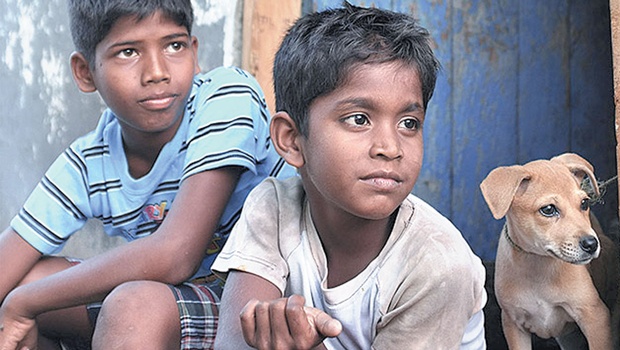
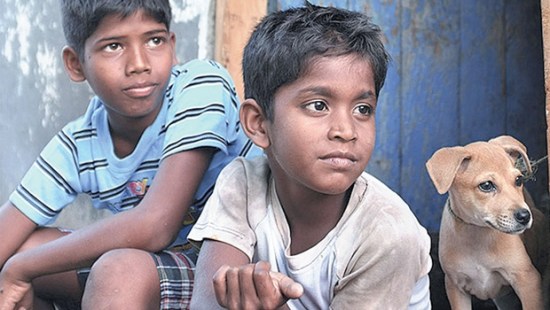
Kaaka-Muttai

Anyone who wants to understand India or Indian cinema can learn everything – Ok, almost everything – about the different Indias within by just sampling the two releases of the week.

One that defies the notion of India as a poor country by mounting a dysfunctional family drama bigger than the biggest of Hollywood indies in that space. One that shows that no matter how rich, these characters are poor little souls needing our empathy. Oh, yes, we are talking about Zoya Akhtar’s Dil Dhadakne Do.

And the other that shows us the spirited world before the poorest of poor by crafting a bittersweet adventure with an all new cast of raw young actors.

One that shows us that no matter how poor these characters are, they have led a life richer and larger than any of us can even imagine.

Manikandan’s Kaaka Muttai is the single most relevant film of our times since The World Before Her and Court last year. It ranks up there with the best movie experiences of my life. One I will cherish for a long time to come.

While it’s brutally unfair (to Zoya, of course) to compare the two, we must only to see what these two films made at the opposite end of the spectrum are trying to tell us.

In Zoya’s luxuriously shot indulgent showcase of self-pity, every character on a luxury cruise that costs 8000 euros a head is so full of angst of not getting what he/she wants from life. Ranging from a favourite plane (rich son’s motivation) to a 49 per cent share investor (rich father’s plan) to a figure that would ensure her husband doesn’t dump her (rich mother’s fear) to a desire to dump her chauvinist husband the minute the ex shows up (the rich daughter’s desire).

And it’s all narrated by a pompous dog voiced by one of the biggest actors in showbiz. How much snooty expensive wine can you pack into one bottle? Watch DDD to get a taste of what money can buy. A proxy vacation for the price of a movie ticket in the middle of your sad miserable dysfunctional lives. If Zoya took us to Spain and made us live vicariously through the boys who jumped off a plane, scuba-dived and ran with the bulls in Zindagi Na Milegi Dobara, here she takes us on a cruise with a dysfunctional family that has waited 30 years to start talking to each other about their true feelings.

This could be any Indian family irrespective of class if you replace cruise with a bus journey across a village because irrespective of class, Zoya’s characters are as regressive as any Indian family – north or south, rural or urban. And this regressive dysfunctional family needs to finally open up, talk across the table and embrace progressive choices without worrying about the rest of the world.

If not for the all-knowing fly on the wall dog that has no bearing on the plot or was around during most of the proceedings, this would have been a fairly likeable film but the storytelling gimmick is so terribly out of character for a dog that you are not sure what’s worse – the gimmick bit of it, the actor behind the voice or the lines themselves. This disinterested bullmastiff is a mascot of rich people’s love (often kept in a cage when it’s not time to show off) and also the voice of disconnect (at least with our middle class existence) in an otherwise universal, relatable film. A film your folks would lap up irrespective of what us snobbish critics say because… who doesn’t want a vacation with the stars?

Dil Dhadakne Do

It’s interesting that Kaaka Muttai (Crow’s Egg), the other release of the film, features a trophy dog too – a pug that costs Rs. 25,000. One that’s used to gently take a dig at this culture of materialism and high breed consumerism. The scene where the kids try to sell their stray mongrel for 25,000 without the slightest clue about why a pug is more saleable is a riot.

In M. Manikandan’s naturalistic document of spirit and innocence, the two little heroes (who have earned their titular nick-name by stealing crow’s eggs because they cannot afford chicken eggs for protein) are so full of spirit when they set out to buy their first pizza that costs Rs.299… that’s more than what their entire family can earn in a month. Can money alone get them access to the junk food of the rich? While this is a film that could have become one of those melodrama-ridden manipulative depictions of poor-as-innocent and rich-as-evil-poverty porn narratives Tamil cinema used to churn out as a formula after the success of the Madurai films, Kaaka Muttai is refreshingly restrained, as it chooses to focus on the spirit rather than the odds that the children are faced with.

The plot is just an excuse to show us the changing socio-economic dynamics between the haves and the have-nots in a consumerist world. What happens to class politics when the power is transferred from politicians to capitalists in a media-monitored voyeuristic networked world? The ripple effect of Kaaka Muttai’s narrative needs to be seen than described to do it full justice.

The brilliance of this narrative lies in its layers.

At a basic micro level, it’s a story of a family living at the very edge of civilization trying to get a taste of the modern world. The father is in the lock-up, the mother tries to make ends meet and get her husband out of jail while the granny wants to be of some use to the household (that she looks at the picture of a pizza and tries to recreate it using her cooking skills to satisfy the kids) and the kids themselves are happy picking up coal from the railway tracks as long as they get three rupees a kilo. And life will never be the same for this family when the kids begin to dream of pizza.

At a macro level, it’s the story of a slum and its inhabitants. Every character is a delightfully detailed nuance contributing to the larger story. They are flavours influencing the kids in the neighbourhood. There are times when you fear that the characters would cross over into the world of crime, given how close good and evil reside in a slum but fortunately, Kaaka Muttai is the handiwork of a filmmaker who has his heart in the right place. It’s responsible, mature and so well balanced. I smiled when an affluent kid who is friends with these children saves them a slice of half-eaten pizza in his tiffin box early on in the film.

In one of the finest scenes in the film, the brothers in their quest for pizza find two rich kids who are not allowed to eat the street side Paani Puri. The plate is always yummier on the other side of the class. This is the kind of balance that puts Kaaka Muttai right on top of the year list. With half a year to go, I can bet there’s nothing in sight that can take the place of this most relevant, entertainer that makes you alternate between feel-good and feel-bad all through. It’s an incredibly shot slow-burn that shines bright, thanks to the filmmaker’s gaze (Manikandan has also shot the film) that fondly finds beauty even in the dirtiest sewer running across Chennai (the Couum river). And it’s playing with English subtitles here in Bombay, so there’s no reason why you shouldn’t go.

And at a completely meta-level, this is a film that inspires goodness. When I thought of the 450 bucks I had spent on the ticket to watch this movie from the comfort of a recliner, I thought of the noodle-sponsored campaign where Ranveer Singh tells us it costs only 750 rupees to feed a child for a whole year at a time when instant noodles in the country are nearing extinction.

And then, I thought of Zoya’s world where 750 rupees is less than what you would tip the waiter for the right bottle… no, glass of wine (how can you tip less than 10 Euros on a cruise, ya?!)

And here we are, caught right in the middle of two Indias… among many. On a Friday. Going to the movies for escape and enlightenment. Until another Friday gives us something to talk about.

eom

  • Create a free website or blog at WordPress.com.
Privacy & Cookies: This site uses cookies. By continuing to use this website, you agree to their use.
To find out more, including how to control cookies, see here: Cookie Policy
  • Subscribe Subscribed
    • MADRAS INK.
    • Join 483 other subscribers
    • Already have a WordPress.com account? Log in now.
    • MADRAS INK.
    • Subscribe Subscribed
    • Sign up
    • Log in
    • Report this content
    • View site in Reader
    • Manage subscriptions
    • Collapse this bar
 

Loading Comments...