• SUDA MING’S CHANNEL
  • TALKING FILMS
  • Good Night | Good Morning
  • My Talk Show
  • PROFILE

MADRAS INK.

Menu

  • Archives
  • Columns
  • Diary
  • Interviews
  • My Films
  • Reviews
  • Good Night | Good Morning

  • Word thru the bird

    Tweets by SudhishKamath
  • Connect with GNGM

    Connect with GNGM
  • About GNGM

    Reviews

    “A cerebral joyride”
    Karan Johar, filmmaker on REDIFF

    “Among the most charming and creative Indian independent films”
    J Hurtado, TWITCH

    ★★★★✩
    “You don’t really need a big star cast… you don’t even need a big budget to get the techniques of filmmaking bang on…”
    Allen O Brien, TIMES OF INDIA

    ★★★★✩
    “An outstanding experience that doesn’t come by too often out of Indian cinema!”
    Shakti Salgaokar, DNA

    ★★★
    “This film can reach out the young, urban, upwardly mobile, but lonely, disconnected souls living anywhere in the world, not just India.”
    Namrata Joshi, OUTLOOK

    “I was blown away!”
    Aseem Chhabra, MUMBAI MIRROR

    “Good Night Good Morning is brilliant!”
    Rohit Vats, IBN-LIVE

    ★★★✩✩
    “Watch it because it’s a smart film.”
    Shubha Shetty Saha, MIDDAY

    ★★★✩✩
    “A small gem of a movie.”
    Sonia Chopra, SIFY

    ★★★✩✩
    “A charming flirtation to watch.”
    Shalini Langer, INDIAN EXPRESS

    “Interesting, intelligent & innovative”
    Pragya Tiwari, TEHELKA

    “Beyond good. Original, engrossing and entertaining”
    Roshni Mulchandani, BOLLYSPICE

    * * * * *
    Synopsis

    ‘Good Night Good Morning’ is a black and white, split-screen, conversation film about two strangers sharing an all-night phone call on New Year's night.

    Writer-Director Sudhish Kamath attempts to discover good old-fashioned romance in a technology-driven mobile world as the boy Turiya, driving from New York to Philadelphia with buddies, calls the enigmatic girl staying alone in her hotel room, after a brief encounter at the bar earlier in the night.

    The boy has his baggage of an eight-year-old failed relationship and the girl has her own demons to fight. Scarred by unpleasant memories, she prefers to travel on New Year's Eve.

    Anonymity could be comforting and such a situation could lead to an almost romance as two strangers go through the eight stages of a relationship – The Icebreaker, The Honeymoon, The Reality Check, The Break-up, The Patch-up, The Confiding, The Great Friendship, The Killing Confusion - all over one phone conversation.

    As they get closer to each other over the phone, they find themselves miles apart geographically when the film ends and it is time for her to board her flight. Will they just let it be a night they would cherish for the rest of their lives or do they want more?

    Good Night | Good Morning, starring Manu Narayan (Bombay Dreams, The Love Guru, Quarter Life Crisis) and Seema Rahmani (Loins of Punjab, Sins and Missed Call) also features New York based theatre actor Vasanth Santosham (Bhopal: A Prayer for Rain), screenwriter and film critic Raja Sen and adman Abhishek D Shah.

    Shot in black and white as a tribute to the era of talkies of the fifties, the film set to a jazzy score by musicians from UK (Jazz composer Ray Guntrip and singer Tina May collaborated for the song ‘Out of the Blue), the US (Manu Narayan and his creative partner Radovan scored two songs for the film – All That’s Beautiful Must Die and Fire while Gregory Generet provided his versions of two popular jazz standards – Once You’ve Been In Love and Moon Dance) and India (Sudeep and Jerry came up with a new live version of Strangers in the Night) was met with rave reviews from leading film critics.

    The film was released under the PVR Director’s Rare banner on January 20, 2012.

    Festivals & Screenings

    Mumbai Film Festival (MAMI), Mumbai 2010 World Premiere
    South Asian Intl Film Festival, New York, 2010 Intl Premiere
    Goa Film Alliance-IFFI, Goa, 2010 Spl Screening
    Chennai Intl Film Festival, Chennai, 2010 Official Selection
    Habitat Film Festival, New Delhi, 2011 Official Selection
    Transilvania Intl Film Festival, Cluj, 2011 Official Selection, 3.97/5 Audience Barometer
    International Film Festival, Delhi, 2011 Official Selection
    Noordelijk Film Festival, Netherlands, 2011 Official Selection, 7.11/10 Audience Barometer
    Mumbai Film Mart, Mumbai 2011, Market Screening
    Film Bazaar, IFFI-Goa, 2011, Market Screening
    Saarang Film Festival, IIT-Madras, 2012, Official Selection, 7.7/10 Audience Barometer

    Theatrical Release, January 20, 2012 through PVR

    Mumbai
    Delhi
    Gurgaon
    Ahmedabad
    Bangalore
    Chennai
    Hyderabad (January 27)

    * * * * *

    More information: IMDB | Facebook | Youtube | Wikipedia | Website

  • Browse: Categories

  • December 2025
    M T W T F S S
    1234567
    891011121314
    15161718192021
    22232425262728
    293031  
    « Dec    
  • Recent Posts

    • Simmba: A departure from the formula
    • Zero: The hero who wasn’t
    • Protected: AndhaDhun: What did that end mean?
    • Love and other cliches
    • October: Where is Dan?

Posts By sudhishkamath

The Originality Debate: You are what you settle for

July 31, 2011 · by sudhishkamath

Just this month, we’ve seen an unauthorized, almost scene-by-scene Hindi rip-off of a Korean film (Murder 2 from The Chaser), an authorised Hindi remake of a Tamil film (Singham from Singam) and a partially-ripped off Tamil adaptation of an English film (Deivathirumagal from I am Sam… if you want to know my opinion on the film, email suderblog@gmail.com to get it automatically in your inbox) sparking off an intense debate on originality between critics and fans.

Does it matter if the film is original as long as people like it? Is it okay to steal if a majority of the market will never get a chance to watch the film it is stolen from? What defines originality when ideas are only recycled from time to time and interpreted differently by different artists? Should critics really be passing moral judgments on the act of stealing itself or should they review the derived piece of art for what it achieves, irrespective of the source? And how thick is the line between inspiration and plagiarism, adaptation and remake?

As Quentin Tarantino famously admitted: “I steal from every film ever made.” He’s not kidding. He steals but also works hard enough to mix it all up to create something entirely different from everything he has taken. He even told movie buffs at the Indian Film Festival of Los Angeles a few years ago that he loved the Indian rip-off of Reservoir Dogs, ‘Kaante’. “Five movies for the price of one, he said,” recalls Vijay Venkataramanan, editor and former programmer for IFFLA.

Tarantino also called it one of his two favourite rip-offs, according to filmmaker Srinivas Sunderrajan, who asked him what he really thought of Kaante. As honoured as he was about the “famous guy with the big beard… who played Harvey Keitel,” Tarantino kept calling the film a rip-off. He probably loved it because imitation, as writer Charles Caleb Colton said, is the sincerest form of flattery. [Encouraged, Sanjay Gupta who made Kaante went on to make copies of Oliver Stone’s U-Turn (Musafir) and Chan-Wook Park’s Oldboy (Zinda)]

But consider this. Reservoir Dogs, the original of Kaante, drew it’s basic premise (of the heist gone wrong after a betrayal) from Stanley Kubrick’s The Killing, another part of the plot from Ringo Lam’s City on Fire (the bit about an undercover cop infiltrating the gang planning the heist), crooks named after colours from Joseph Sargent’s Taking of Pelham 123 (Mr. Blue, Mr. Brown, Mr.Green…), the way they dressed and walked from John Woo’s A Better Tomorrow  (men in suits and loose ties, shooting people all around), the graphic violence from Sergio Corbucci’s Django (the ear-slicing scene)  and style of using profanity and popular music from Martin Scorsese. Yet, it was not called a rip-off. It was called “the greatest independent film of all time” by Empire magazine.

So why is one film a rip-off and the other the greatest independent film when both had borrowed elements? Wilson Mizner, a playwright, is supposed to have said: “Copy from one, it’s plagiarism; copy from two, it’s research.” Or as Jean-Luc Godard observed: “It’s not where you take things from – it’s where you take them to.”

The biggest defense for plagiarism in India is that Ramesh Sippy’s Sholay considered by many as the greatest film of all time wasn’t original either. Critics of the film are quick to point out Sholay had plot elements borrowed from Akira Kurosawa’s Seven Samurai/ John Sturges’s The Magnificent Seven (hired guns protecting a town from bandits), Sam Peckinpah’s The Wild Bunch (the train robbery set-piece sequence), George Roy Hill’s Butch Cassidy and the Sundance Kid (the light hearted banter and camaraderie between the two thieves) and even some local influences like Mera Gaon Mera Desh (Seven Samurai plot simplified with just one hired gun fighting the bandit to save a village). But Sholay did not lift any scene or the storytelling style blatantly from any of these films.

Taking just a basic outline of Seven Samurai that can be written at the back of a bus-ticket and reworking the plot of the superhit Mera Gaon Mera Desh (from one hired gun to two fighting bandits to save a village), Salim-Javed went all out to create characters that became so iconic that filmmakers who tried to recreate the epic failed, Ram Gopal Varma Ki Aag being the most ambitious effort of them all.

There’s always something lost in translation, more so when borrowed from a different era or culture. Which makes it all the more important for filmmakers to interpret and make the film their own.

As independent filmmaker Jim Jarmusch writes in The Golden Rules of Filming: “Select only things to steal from that speak directly to your soul. If you do this, your work (and theft) will be authentic.”

Once the filmmaker has internalised what he wants to steal, he will find ways to give shape to the stolen ideas without feeling the need to keep referring back to the original. The student who has really understood what’s in the textbook will use his own words to explain everything he has learnt. He deserves the marks he gets.

And then there that student who writes his test copying verbatim from the textbook hidden under his desk… Would you be okay if he tops the class?

That’s the only question worth asking. Your answer reveals not just what you will settle for but also who you are.

(This story originally appeared here)

The Expletive Strikes Back: How Censors f*ck with film…

July 24, 2011 · by sudhishkamath

June was a big month for Indian cinema. We can’t really say the month cinema grew up because no one becomes an adult by just swearing. But yes, it turned just about old enough to enter a frat house, at least according to the Censors.

It was the month when our films finally admitted some of the most ostracized and choicest of expletives on to the movie screen – even if they were just used for fun. While Aaranya Kaandam took the Censors to court to get the nod, Delhi Belly had the backing of Aamir Khan to sneak it past the board. It probably helped that the film was largely in English and the Censors were allowing Hollywood films with far more explicit content into the country.

“I used expletives to portray the mood of the character or the moment,” says director Thiagarajan Kumaraja who made ‘Aaranya Kaandam.’ “Earlier, unless there was something as heinous as rape, characters would be granted permission to use a swear word – like Bastard. But we use such words in a traffic jam, we even fondly call friends swear words. Maybe those days, probably friends never abused each other. Maybe they called each other ‘Brother.’ So our censor and government officers from another era would find swear words disturbing.”

Kumararaja also believes this wasn’t always the case. “What’s surprising is that the word ‘thevidiya’ was used very casually thrown around in an old black and white AVM film called Sabapathy just for the sake of humour. I have seen smooching scenes of TA Mathuram and NS Krishnan (can’t recall the name of the film). But I don’t know what happened suddenly. We regressed. But today, the society has become liberal and the censors haven’t caught up.”

It was in 1952 when India, fresh out of British rule and under the spell of the Victorian morality, drafted the Cinematograph Act that imposed censorship of all cinematic content meant for public exhibition. While films before this were largely censored for political content, the Central Board for Film Certification eventually turned into a moral guardian for the society. Hollywood went through a similar phase in the 1950s when Billy Wilder defied the censorship code with his teasingly raunchy portrayals of Marilyn Monroe in Some Like It Hot and The Seven Year Itch.

Though we had the occasional film slip past the censors under the guise of arthouse cinema, swearing for the sake of humour or entertainment, especially if it wasn’t emotionally called for, was a strict no-no. On the contrary, the vigilance just became all the more stricter over the years. While Raj Kapoor got away with even nudity in the seventies and eighties, Nagesh Kukunoor in the nineties, had to take the fight up to the Tribunal to get Hyderabad Blues, his film ridden with unprecedented four letter words in Indian cinema cleared.

Maybe because aesthetics of nudity can always be debated in a country that gave  the world the Kamasutra, the Censors also warmed up to all the sex and kissing over the last decade. But swearing, no, it was and is still considered uncouth and low art.

“I asked the Censors how come characters in ‘No One Killed Jessica’ are allowed to use four letter words and we are not,” Gautham Menon recalls his negotiation during ‘Nadunisi Naaygal.’ “They said, it may be acceptable in the North but we are like this only. We do not want to hear swear words.”

Luv Ranjan, director of Pyaar Ka Punchnama, had to take his film through four revising committees before he could get a U/A certificate. “With censors, it’s different if you are Aamir Khan Productions or Yash Raj Films. Otherwise, they give you a really hard time. They said my theme is adult but yaar, even marriage is an adult institution. There’s no liability or accountability from the Censors because the people on the committee do it on a honorary basis. They come to watch a film that are not made for them for a Rs. 700 a day allowance. Imagine want kind of people would do that work? Who are these people passing judgment on investments of Rs. 25 crores and Rs.30 crores? You can’t question them, they can’t be sued, they cannot be punished. Legally, they have no accountability.”

And then came the surrogate swear word. More like, if you won’t allow me to swear, I will make up a word that sounds just like the one I want to use or use an existing word that sounds like a cuss word. If Delhi Belly made DK Bose run, Singham’s trailer employs the lesser used Urdu word ‘faqt’ (only) to the same effect as the English swear word it sounds like and Double Dhamaal plays with balls and calls a guy ‘Gandul’ (Pigeon Pea).

The surrogate swear word, a byproduct of repression of six decades, cleared by the Censors, has now entered the public domain through the television and gets easily picked up by kids, an audience the film is not intended for. Ask any kid singing Bhaag DK Bose.

Gandu, directed by Q, pushes the envelope further with its unprintable Bengali cuss-word title. “My intention was to legitimise the adjective by granting it the status of a noun. Hence, a word that wouldn’t have been printed in any Indian publication becomes accepted,” says Q. But Gandu earned its place under the sun by winning accolades in some of the most prestigious film festivals around the world including Slamdance and Berlin. When it plays at the Censor-exempted Naya Cinema Film Festival in Mumbai in its first ever “overground” screening in the country this month, it will kick another door wide open.

But the day it applies for censorship, we have to pray that our Censors decide that adults in this country are really old enough to watch a film with expletives and pornographic content.

(A censored version of this story appeared here)

Singham: No lion this, fakta cheater cock

July 24, 2011 · by sudhishkamath

Genre: Action

Director: Rohit Shetty

Cast: Ajay Devgn, Prakash Raj, Kajal Aggarwal

Storyline: An honest Inspector from a remote village is transferred to the big bad city for messing with ace-kidnapper villain

Bottomline: Singham, if you are an action film, be an action film. Don’t try to be police drama if it’s ends up looking like comedy.

When the villain of the film, Jaykant Shikre (a superbly comic Prakash Raj) tells the hero, Bajirao Singham (Devgn looking angry and stoned all through) “Yeh, cheating hai” when he’s outnumbered 1:500, you tend to agree with the villain.

Yes, boss. That is cheating. That is no way to treat a villain. And not when you’re a fearless hero who has just finished giving a lecture to the entire police force about going and doing “mardonwala kaam” (a man’s job) only minutes before that.

The climax of the film ruins all the good work done by the makers until then.

It’s unfortunate because two-thirds of the film is a fairly engaging, diluted yet faithful, technically improved adaptation of the Tamil mass entertainer directed by Hari.

The original wasn’t the best film around but it had a few smarts, pace and fury and worked despite its cheesy visual effects purely because of Suriya who made the corniest lines sound good. Devgn does exactly the opposite. He takes some half-decent lines (by Farhad and Sajid) and makes them sound outrightly cheesy. Yet, it should be pointed out that the man’s got piercing presence. Especially when he’s in a vest.

But it’s Prakash Raj who steals the show from right under his nose, making the most of his lines by playing it completely camp and relishing his role as the new baddie in Bollytown.

Rohit Shetty grossly underestimates the role of the villain here. The ace-kidnapper turned politician is pretty much harmless. It hasn’t occurred to him to hit the hero hard where it hurts (Hello, what’s the heroine there for, Einstein?) or at least make the bad guy grab a school kid when his life is in danger, more so when he DOES have a gun in hand and a whole bunch of kids to pick from.

As a result, we never fear the villain despite all his dialoguebaazi about being the hunter because Shetty only makes Shikre seem as dangerous as Shikari Shambu.

The hero is equally stupid. Inspector Singham is not required to do any sort of thinking either. No Sherlock Holmes like deduction or scientific approach to investigation because Shetty wants to conserve Devgn’s energies to jump around like a lion to chants of Singham that will ring in your ears for hours after you’ve left the hall. We cannot blame the villain for not kidnapping the heroine (Kajal Aggarwal wasted) in this version because the hero never seems to care enough for her.

While the original was just about a personal feud, this one has larger ambitions of being a meaningful ode to the police force heavily influenced by Rajkumar Santoshi’s Khakee. Maybe Golmaal finally got its revenge on the action director because Rohit Shetty ends up making you laugh (some intentionally and a lot unintentionally especially with the silly subtext of suggesting that the police department should become the new Omerta-enforcing-mafia in town) in the climax when he should be sticking to the basic promise of the action film. Offer stunts. Blow up cars. Beat up guys. Imagine an action film that promises unbelievable action choreography that ends without any dishoom dishoom whatsoever in the climax.

It’s the biggest cheat in the history of Hindi action films. It’s not even an interesting twist. Like Shikre said, it’s just cheating. No fighting.

Why Singham? Ran out of ‘dumm’? Or ‘faqta’ budget, umm?

Yes, ‘faqt’ apparently is an archaic Urdu word that means ‘only’. Even the Censors hadn’t heard of it but passed it because the makers insisted that they wanted Devgn to say: “Jisme hai Dumm, faqta Bajirao Singham” (Who has the guts, only Bajirao Singham). Yes, the writing in this film is that juvenile. Not to forget, twisted.

(This review originally appeared here.)

Gossip in a wired world

July 20, 2011 · by sudhishkamath

“I love rumours! Facts can be so misleading, where rumours, true or false, are often revealing,” Colonel Hans Landa (Christoph Waltz) gleefully said in Inglourious Basterds, written and directed by Quentin Tarantino.

Quentin himself was the subject of a rumour that spread all around the world after a fan Beejoli Shah, emailed pictures of them together and gave a detailed account of their one night stand, taking the liberty to comment on the lesser known parts of his physicality and widely speculated sexual preferences. Beejoli sent it only to 15 of her friends over email but the next thing she knew, she lost her job. Beejoli may have sent it only to a select few, but the viral nature of social media did the rest.

Closer home in India, starlet Bhairavi Goswami put up a post on her Facebook page ranting about the hypocrisy of a superstar and his family’s pretensions of wanting a boy-child. She accused the family of going to an IVF clinic in Thailand to ensure it was a boy. The starlet did not name the actor, but the viral nature of social media did the rest.

The most popular recent case, however, was when the Court asked Caravan magazine to remove an article that was considered defamatory by a B-school entrepreneur, who decided not only sued the magazine but also Google for making that content available.

Viewing the court’s order as stifling of freedom of expression, activists on the internet forwarded the article that was removed from the cache of Google. And the profile went on to get more hits than it would have ever got. Caravan didn’t have to spread it but the viral nature of social media did the rest.

A recent study by AC Neilsen estimates that India has over 9 million users on Twitter, with 25,000 people joining everyday and 25 million users on Facebook. With Google looking to bring all its Gmail users on to its own social network G+, news and unsubstantiated gossip will go viral faster than ever before with over 240 million mobile-phone users having access to internet.

As BBC presenter Nik Gowing observed during his talk on the viral nature of social media in the city, “No one can control the internet.”

Information – true, half-true or untrue – spreads like wildfire across social media networks and once out there, is beyond anyone’s control, including governments let alone individuals. The gap between public and private space has blurred as the two have merged on social networks that celebrities, institutions and governments are still coping to deal with mob-endorsed potentially defamatory content that’s sometimes even unattributed.

So can you get into trouble for spreading information that is deemed defamatory once it goes beyond control and turns viral? Obviously, it all depends if the affected party wants to sue.

“In theory, any person who spreads false information hurting the reputation of a person could be guilty of defamation. But over and above that, the Information Technology Act, Section 66A, for instance, makes it an offence to send offensive messages through communication services,” PVS Giridhar, an advocate specialising in Information Technology methods, tells us.

However, there is a limitation to this liability specified under the Section 79 of the Information Technology Act that comes to the rescue of the intermediary of such defamatory communication. “A search engine like Google can be an intermediary. Facebook or Twitter can be an intermediary.”

But being an intermediary is not always a get out of jail card, he adds, citing the case of Bazee.com, a portal that got into trouble when one of its users used the marketplace to sell an MMS clip with pornographic content.

“Section 79 lays down the limitation of liability in such cases which are comparable to the owner of the vehicle that’s been caught with a consignment of drugs. If the owner can prove that he had no knowledge of his vehicle used for illegal purposes, his liability is limited,” explains Giridhar.

But to be spared of legal action, the intermediary should prove that it had not initiated transmission of the defamatory subject matter, nor had not selected the receiver of the transmission, or had not modified the information contained in the transmission and that the intermediary’s role was limited to providing access to the communication system, while observing due diligence in discharging its duties.

So Twitter or Facebook or Google may not get into trouble for providing the platform, but Beejoli, Bhairavi or anyone initiating scandalous transmission may be still be treading on thin ice if the rumour/information spread is perceived as a conscious attempt to defame. And the fact that you cannot control what goes viral only makes it worse. Watch what you post. The internet has a million ears.

(This story originally appeared here.)

Protected: Review: Vikramin Deivathirumagal

July 20, 2011 · by sudhishkamath

This content is password-protected. To view it, please enter the password below.

Zindagi Na Milegi Dobara: Live life like a Bollywood film

July 16, 2011 · by sudhishkamath

Genre: Drama

Director: Zoya Akhtar

Cast: Hrithik Roshan, Abhay Deol, Farhan Akhtar, Katrina Kaif, Kalki Koechlin

Storyline: Three friends go on a road trip to fulfill a pact made years ago

Bottomline: A laidback trip with stock characters dealing with standard Hollywood hero issues that makes up for its predictability with its camaraderie and spontaneous banter.

According to Zindagi Na Milegi Dobara, life’s like a Bollywood film with song, dance and adventure. You can just drop everything, pack your bags and go to Switzerland… scratch that, Spain, with buddies for a three-week, five-star holiday with everything from the tourist brochure thrown in.

Zoya Akhtar’s second outing as a director is way more filmi than her first about the film industry. This one only pretends to be real. It’s not. You get Katrina Kaif drenched in tomato pulp at the La Tomatina festival when she’s not holding you by the hand and teaching you scuba diving. If this is not fantasy, what is?
And like most fantasies, ZNMD employs standard archetypes to spell out the moral of the story, which is also the title of the film. What’s interesting, however, is how writers Reema Kagti and Zoya Akhtar have borrowed three simple rules for life from adventure sports on land, water and air.
1. Make every breath count, dive into the beautiful expanse of life — Scuba diving.
2. Let go, free-fall and embrace the feeling of powerlessness — Sky-diving.
3. “I get knocked down but I get up again and you nay ever gonna keep me down” — Running with the bulls.
And these life lessons are all about facing your fears/issues that the three archetypes deal with.
Calculative materialistic Arjun (Hrithik plays him like a robotic stereotype) has no time for friends or his girlfriends, impulsive artist Imran (though Farhan Akhtar works best when he’s brooding) on the other end of the spectrum masks his serious Daddy issues with humour and confused happy-go-lucky Kabir (Abhay Deol, his “mantally sick” accent and timing saving his girly dialogue delivery), the peace-making glue that holds the trio together, finds himself in a rather awkward situation after rushing into an unplanned engagement.
We saw exactly the same three kinds of guys in Delhi Belly — the materialistic Nitin (Kunaal Roy Kapur), the impulsive Arup (Vir Das) and the confused Tashi (Imran Khan) who was rushed into an engagement and the same three types in Dil Chahta Hai over a decade ago.
ZNMD’s three are from the world originally introduced to us by Farhan Akhtar. The rich guys with Hollywood hero issues. The guys for whom personal space is paramount and boundaries are sacred, even among the best of friends. It’s this space that Farhan and Zoya seem to know so well and it’s this space the siblings capture best and milk for drama through slice-of-life scenes and spontaneous dialogue that give the film its likeable character. In fact, the camaraderie between three buddies is the only thing in the film that feels real in Bollywood’s sober ‘Carpe Diem’ answer to The Hangover.
Even the setting is almost the same. Three friends go on a bachelor trip and take a ride on the wild side of life. And like Stu’s possessive fiancé who keeps tabs on them, Kabir’s fiancé Natasha (Kalki Koechlin convincingly annoying) wants her future husband to conform to the sober way of life.
Since just being hung over alone wouldn’t help the guys solve their issues, Zoya just wants them to get high on life with very minimal help from alcohol. Since their reluctance to share their secrets with each other cannot be resolved overnight, Zoya takes her time to build the mood.
It’s not an easy thing to do in our times when attention spans are shrinking, patience for storytelling has waned and kids are wired to their phone, even inside the movie hall. It doesn’t help that the jokes don’t always come naturally and Shankar-Ehsaan-Loy are nowhere close to the form they were with Dil Chahta Hai.
However, ZNMD works as a mood piece if you are in the mood to live vicariously through them. Hang out with the boys and Katrina, put up with bad jokes, surrender to the quiet of the ocean, the thrill of the free-fall and the atmospherics of bulls charging at you Spainstakingly captured by cinematographer Carlos Catalan.

(This review originally appeared here.)

Travel: Romania Diary

July 15, 2011 · by sudhishkamath

Part 1: Enchanting young little Cluj
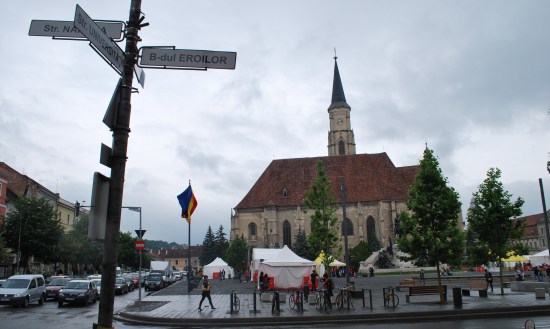
The first thing you need to know about travelling to Transilvania, as the large historical central belt of Romania is popularly called, is that the visa process is a long painful wait because it does not fall under the Schengen region yet.  Getting a visa to Romania is a suspenseful mystery process because it may take anywhere between three days to thirty days and no one at the Romanian Embassy in Delhi is ever in the mood to answer phones or answer emails. The much-awaited visa arrived the day AFTER the scheduled flight date of the tickets submitted with the application, almost 25 days after we applied. And all we got was a stingy single entry 7-day visa.

I was visiting Cluj-Napoca to attend the Transilvania International Film Festival with multiple venues all over town. Around 55,000 people visit the film festival in Cluj, annually and this period in the first week of June may be the best time to visit the town if you want to meet a truly cosmopolitan bunch of travellers.

Since Cluj is a University town bustling with young people who understand and speak English, getting around is not much of a problem. The town has a population of about 3.75 lakh people and a majority of them are students.

If you are vegetarian, be warned that the options for food are really limited. Four-star hotels in Cluj compare well with two star hotels in Indian metros and charge a bomb (anywhere between 75 to 80 Euros a night), so you are better off staying in service apartments.

Thanks to a Moldovian filmmaker friend, Vitalie, who had stayed there for ten days during the fest, we found a fully furnished service apartment with two rooms for 12 Euros a night a little away from the town centre (Str. Migdaliliu 22a, to be precise). Taxi is the local mode of transport and the drivers charge you by the meter (1.8 lei per kilometer… 4.1 lei makes a Euro).

At the centre of town is the Unirii Square, where St. Michael’s church, the tallest tower in Romania is located. You will always find tourists posing in front of the statue of Matthias Cornivus, former king of Hungary, who was born in Cluj. Diagonally opposite is the picturesque New York Palace and the architecture of buildings in the area is strikingly old world.
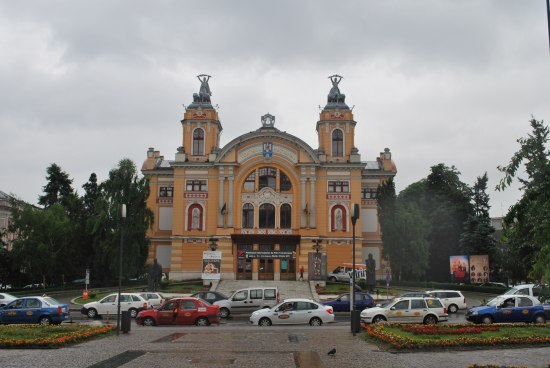
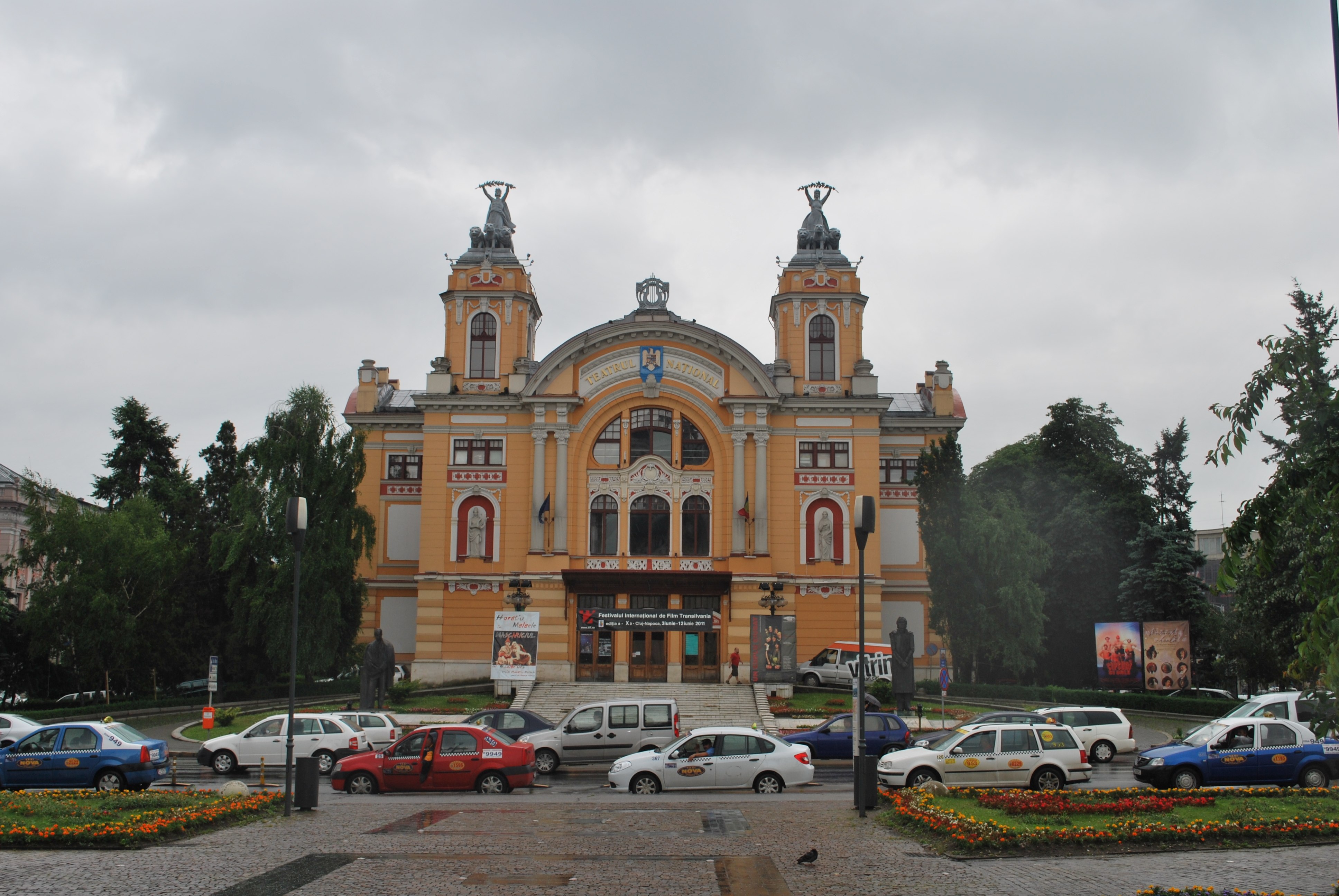
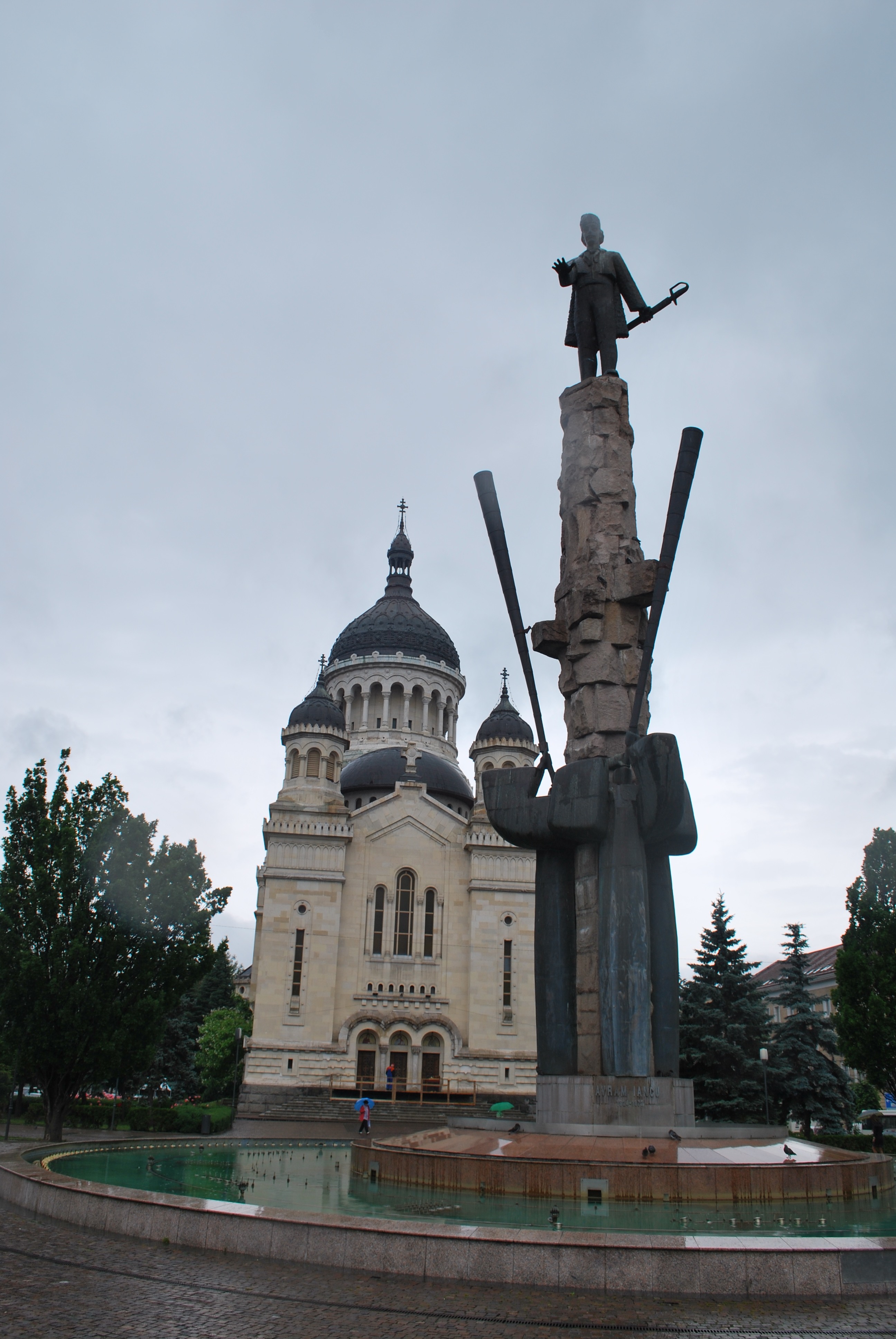
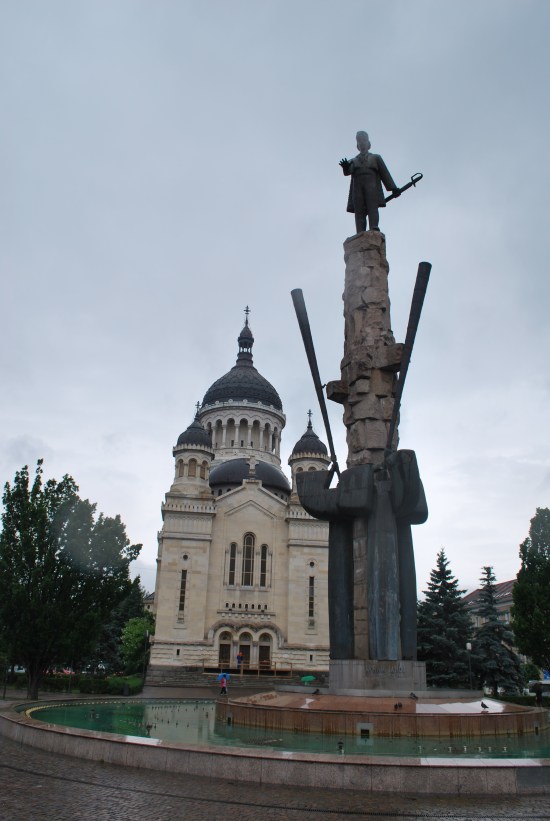
On the other side of the Unirii Square is the symmetrical Iuliu Maniu street and if you walk one block, you will reach the Avram Iancu square that houses the other church, the Orthodox Cathedral on one side and the majestic National Theatre on the other.

Right in the centre of the square is a tall statue of Avram Iancu, Romanian lawyer and revolutionary, where he seems to be saying “No Photographs” with his palm raised towards you.
There’s also The Central Park, the Botanical Garden and a host of Museums to do touristy stuff. Shopping is restricted to limited business hours on weekdays unless you want to head to the malls – the Iulius Mall and the Polus Centre at the other end of town.

But the real charm of the town lies in its clubs and love for art and architecture. Boiler Club, for example, used to be the boiler room of a factory now shut down and hosts underground acts. Gandu Circus from India performed during the festival in the basement there. The other floors of the building have been converted as spaces for art exhibitions.

The cafes and the bistros are equally lovely. Sample Marty’s Café if you like a Terrace Garden sort of a set-up or the Corso Café and Bistro on Unirii Square if you are dying for vegetarian food (they just have Penne with Pesto sauce but that’s great in a town with very little vegetarian food) the street-side Klausenburg Café for your regular fix of caffeine because if there’s one thing you need in this town, it’s to stay awake.

The sun sets only around ten p.m and rises by six a.m. It’s God’s way of telling you to walk around and explore.

Part 2: Sibiu-tiful

Most people who visit Romania don’t come back without visiting Bucharest, the capital. But since our first stop was Cluj-Napoca and we were warned by the locals there about the big bad nature of their capital city famous for its notorious tourist traps, we decided to head to a quieter little city called Sibiu instead, about 160 kilometres – a two-hour drive – away.

Forbes magazine had once rated Sibiu “Europe’s 8th most idyllic places to live” and the fact that the city was surrounded by mountains, instantly, gave us an inviting vibe.

So, without even bothering to make hotel bookings, we rented a car and set out to Sibiu. Trust Lonely Planet to scout out the best places to stay. There’s something for every budget starting from 2 Euros a night for a bed to crash in to four-star luxury for about 200 Euros.

After dumping our bags at Vila Andra, a reasonably priced three-star villa that charged us about 80 Euros per room, we set out to see the town. In winter, you could head 35 kilometers south-west to Paltinis, the mountain resort in the Cindrel Mountains, a popular skiing destination. But during summer, there’s just the town and the museums to see.

The best place to start exploring any European town is from the town centre that usually has a Square.  Sibiu has three of them, with a car park at the Town Centre for tourists to leave their wheels behind and stroll around leisurely to soak in the romance of Sibiu.

From the centre, you can see the picturesque rooftops of the houses in the Lower Town. The three squares are a part of the Upper Town. As you make your way from the Piata Unirii (Town Centre) you find a row of beer bars dotting the cobblestone walkway with shops and markets on either side. Since only walking and cycling is allowed, it’s the perfect stretch to slower your pace and look around for souvenirs and curios.
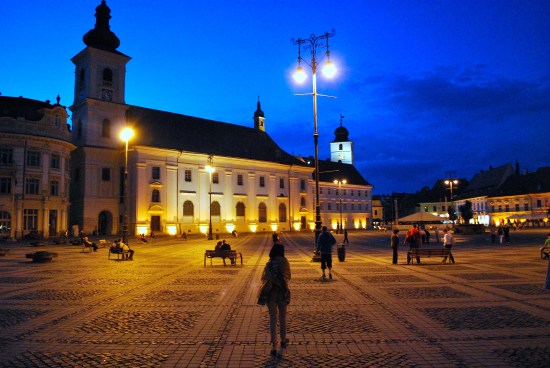
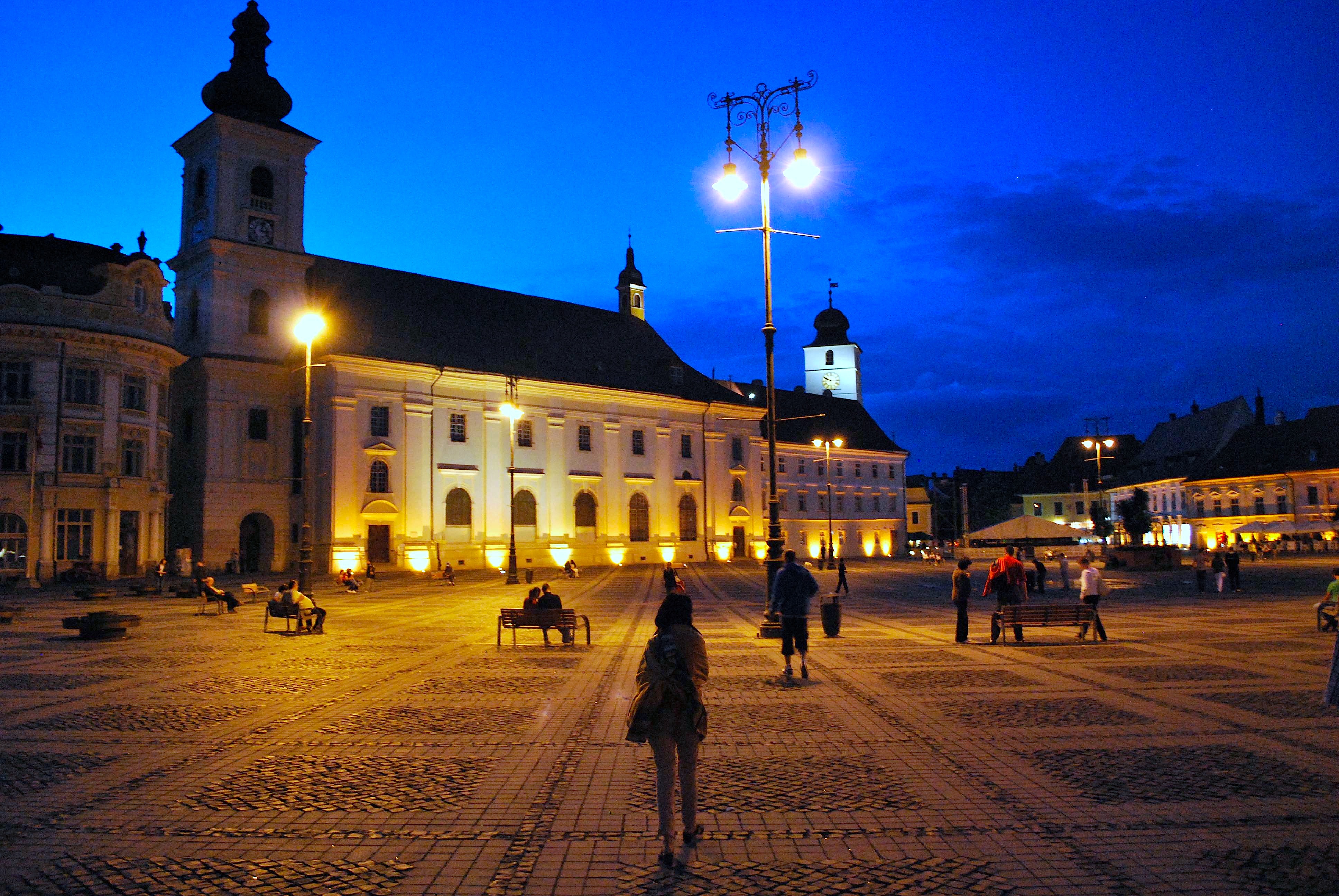
A ten-minute walk later, we are at Piata Mare (Grand Square) that houses the Brukenthal Palace and all around are similar Baroque styled buildings. The evening lighting just makes it all the more romantic with park benches scattered throughout and the remains of a medieval fountain at the heart of the square protected by a cage. The Square is Grand indeed with the majestic structures decking up the landscape that no matter where you keep your camera, you are sure to get a picture perfect frame.

As you walk further, you enter the Piata Mica (Small Square) that is packed with restaurants, bars and pizzerias. It’s almost like the whole town got together for a party. Grab a chair, order a drink and a meal, unwind and you will see the Liars Bridge at one end of the square that connects it to the Lower town. Before you know it, the sun has set and slowly the shops around too shut down.

The third square in the area is the gothic Huet Square that’s home to the Evangelical Lutheran Cathedral.

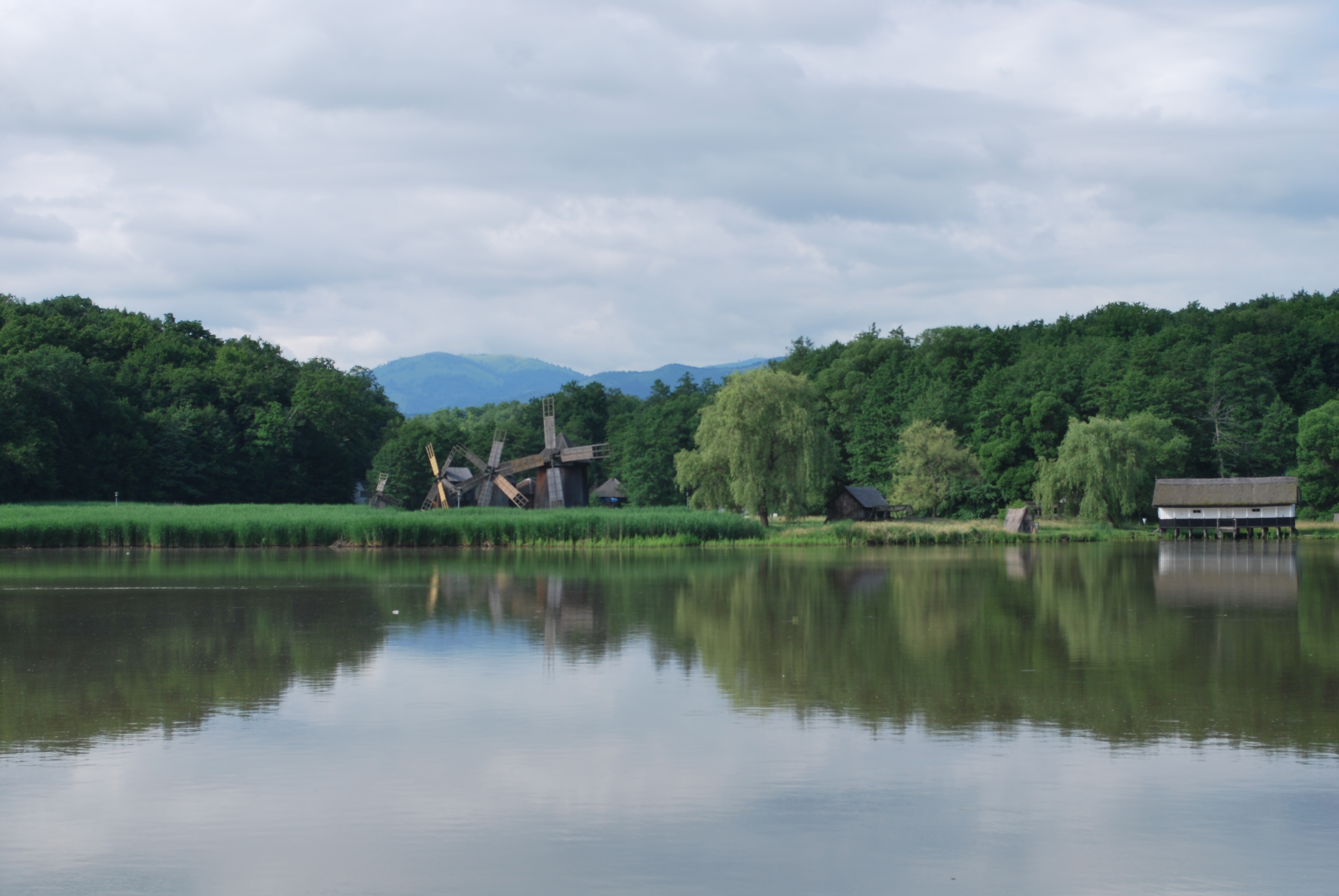
The next morning, we set out to the ASTRA open-air ethnography museum that stretches to 96 hectares of land by the Sibiu forest. It’s like time travel as you enter the Traditional Folk Civilization museum. The means of transport around is horse carriage. There are wind-mills at the other end of the lake and visitors fishing at one end. An amphitheatre by the lake seems to be the perfect venue for an evening of live music. There are statues, structures of Romanian houses, sculptures and water mills as you walk deeper into the park. Or the museum as they call it.

If you are a museum lover, there’s a lot to explore in Sibiu – the museum of Transilvanian Civilization, the museum of Saxon Ethnography and Folk Art, the Universal Ethnography museum, the Steam Locomotives Museum near the Railway station apart from the ones in Brukenthal Palace and all around the squares. Since we are not exactly museum geeks, we hit the road again, off to explore yet another side of Transilvania – Castle-spotting.

Part 3: The road to Bran
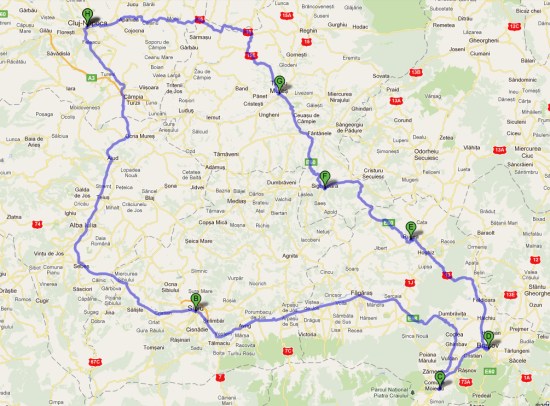
Your trip to Romania is incomplete without going in search of the Dracula’s castle in Transilvania. While there are many castles that claim that they were the inspiration for Bram Stoker’s Dracula, the most popular one among them is the Bran Castle located in Brasov, about 280 kilometres away from Cluj-Napoca, our base in Romania.

If you are a stickler for history more than literature, you could go in search of the castle where Vlad Dracul lived, the Prince of Wallachia who was called Dracula for his bloodthirst in the 15th century (he was notorious for impaling his enemies). But then, we find out from Lonely Planet that the ruins of Wallachia are very remote and that there’s not much left there for all your effort.

So we decide to the regular touristy thing and decide to hit the road to Bran and also use that as an excuse for a road trip to do castle-spotting around Transilvania.

The car rental company at the Cluj airport surprisingly does not seem to mind the Indian driving licence (though they drive on the other side of the road) as long as it’s at least three years old. While a car rental will cost you about 50 Euros a day (it’s much cheaper if you book in advance over the internet) and you can also hire a driver for another 30 Euros a day and also pay for his food and overnight accommodation. Remember, fuel is extra and is as expensive as it is in India. So we wisely opt for a diesel car.

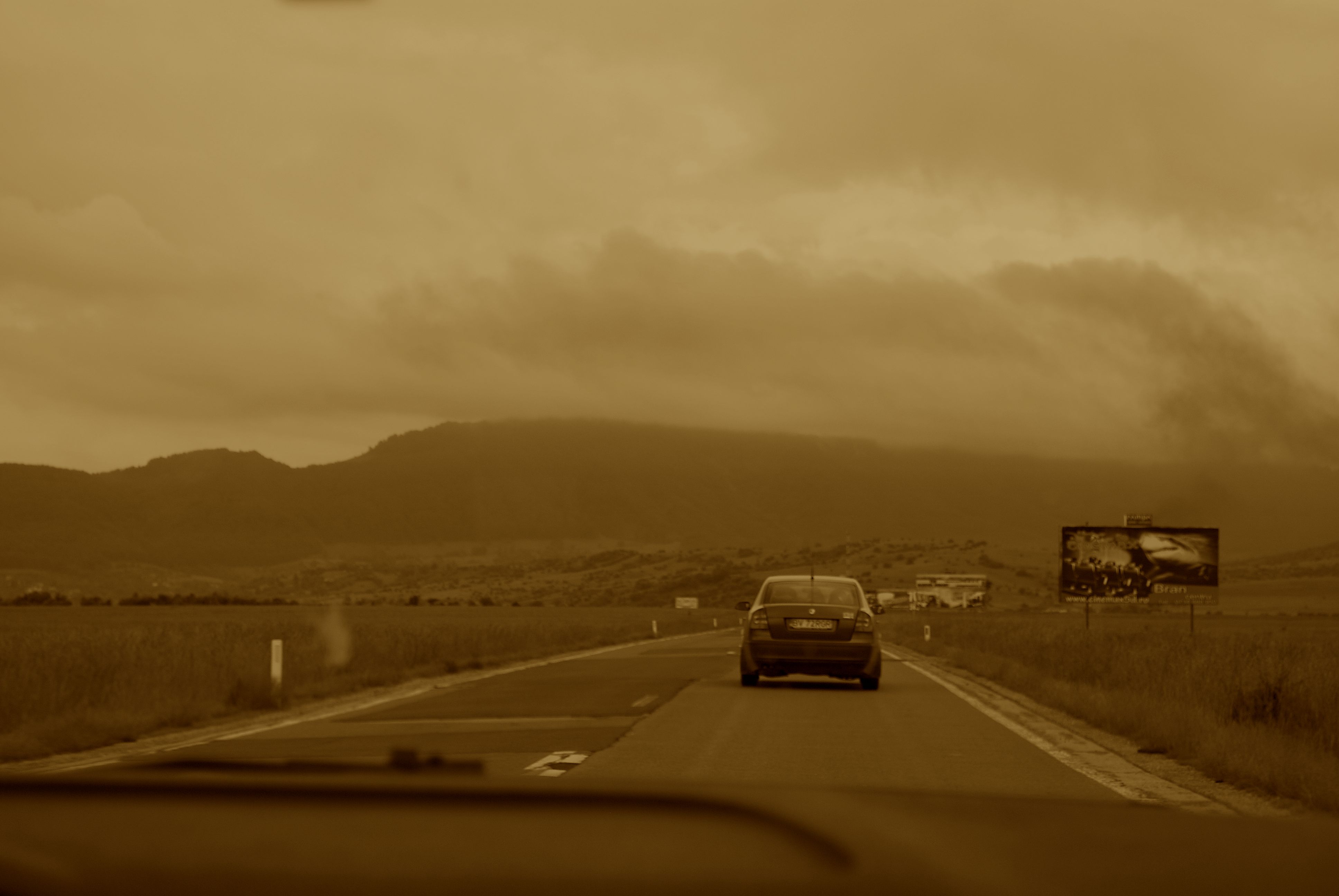
Within the next three hours, we are in Sibiu. After exploring the small town all evening and some more the next morning (as detailed in Part 2), we set out to Bran. The road to Bran is picturesque, like the Switzerland we see in Bollywood films, long stretch of road to the mountains dotted with sheep and castles passing us by every few minutes. At first, we ask Flavius to slow down to take pictures but give up soon realising that every other building along the road is a castle.
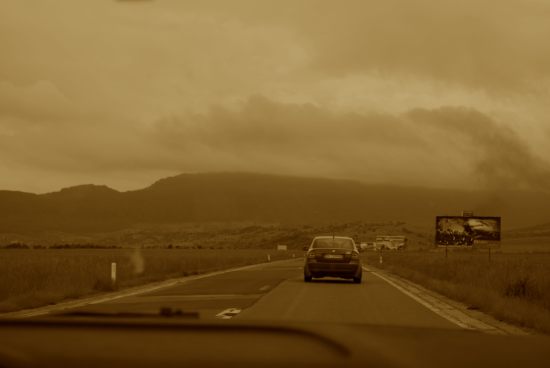
As we near Brasov, the countryside gets spooky. It’s straight out of a horror film and we see why Bram Stoker may have been inspired by the eerie landscape for his vampire tale. Imagine trying to click a picture but the camera not responding… Creepy? That’s when I realise the constant movement of the clouds was making it impossible for the camera to take a picture in the auto-focus mode.

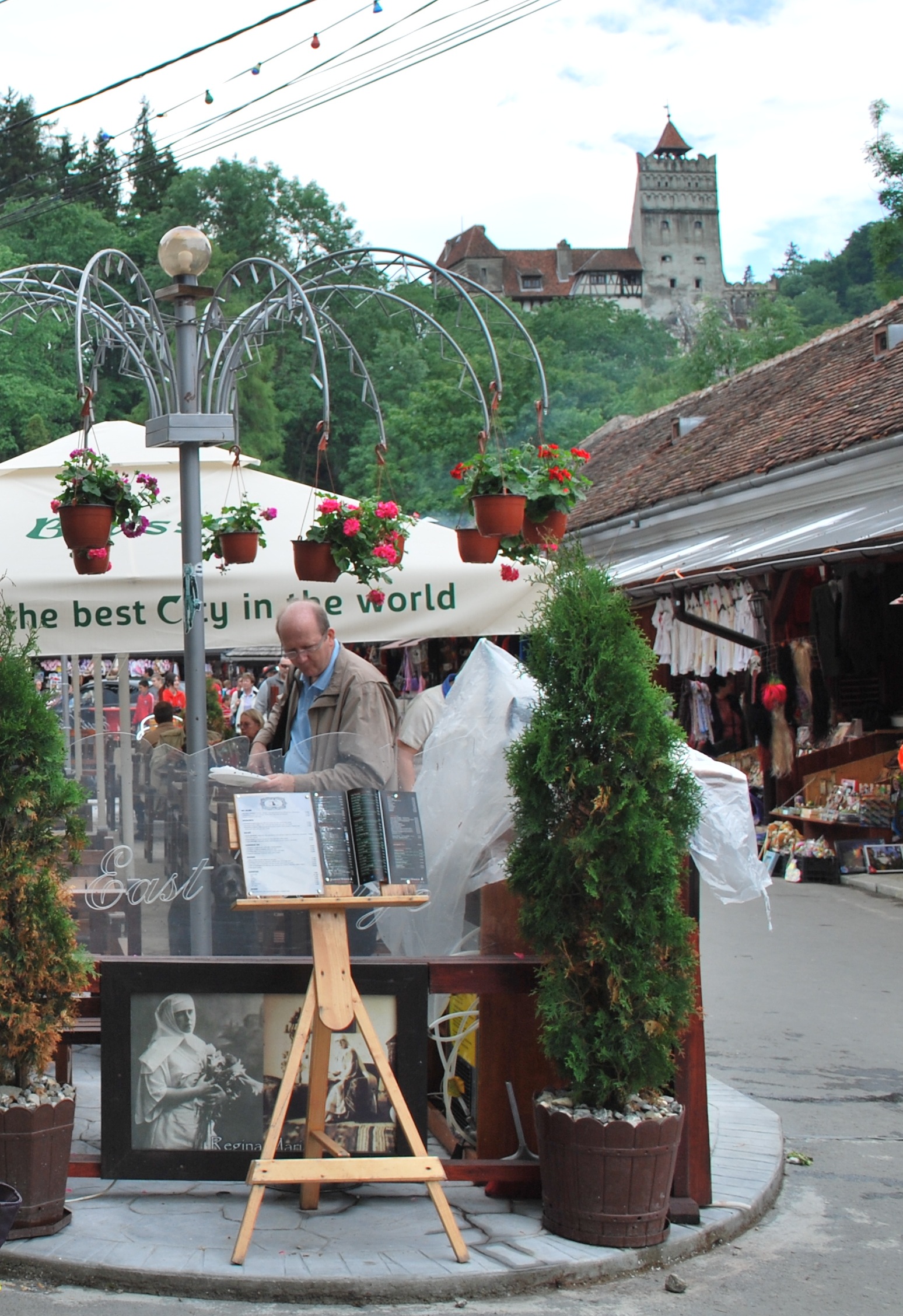
However, when you get to Bran Castle finally, you see there’s absolutely nothing creepy about it. It’s infested with tourists, largely kids on a field trip. There is bustling marketplace selling Dracula souvenirs and quaint looking cafés with umbrellas that say “Brasso: Probably the best city in the world”. The local industry knows to milk the legend to their advantage and we end up watching a 20 minute 4D movie called “The Haunted Castle” that tried hard to scare at Cinemax 5D. Galeria Bran was a good place to get pizza or pasta located only two-minute away from the castle.
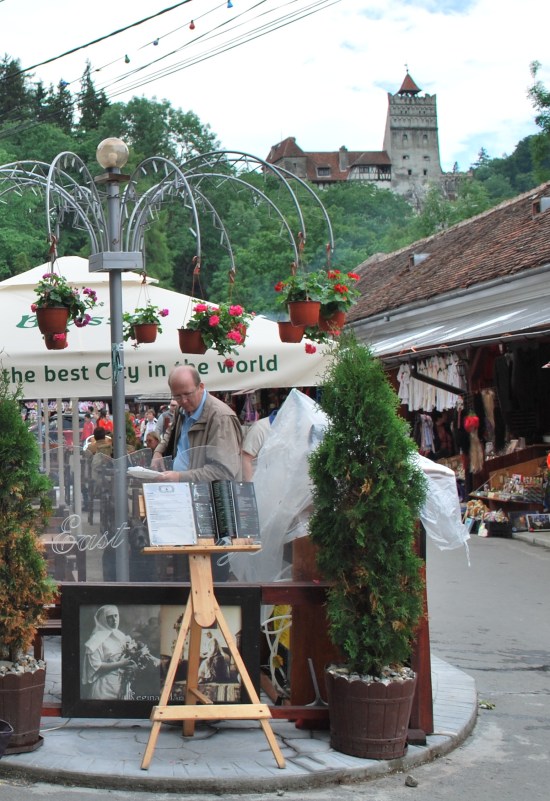
After lunch, we walk up to pick up our passes (there’s a 20 lei entry fee, about 5 Euros) to the Castle and you can also opt for an audio guide for commentary.

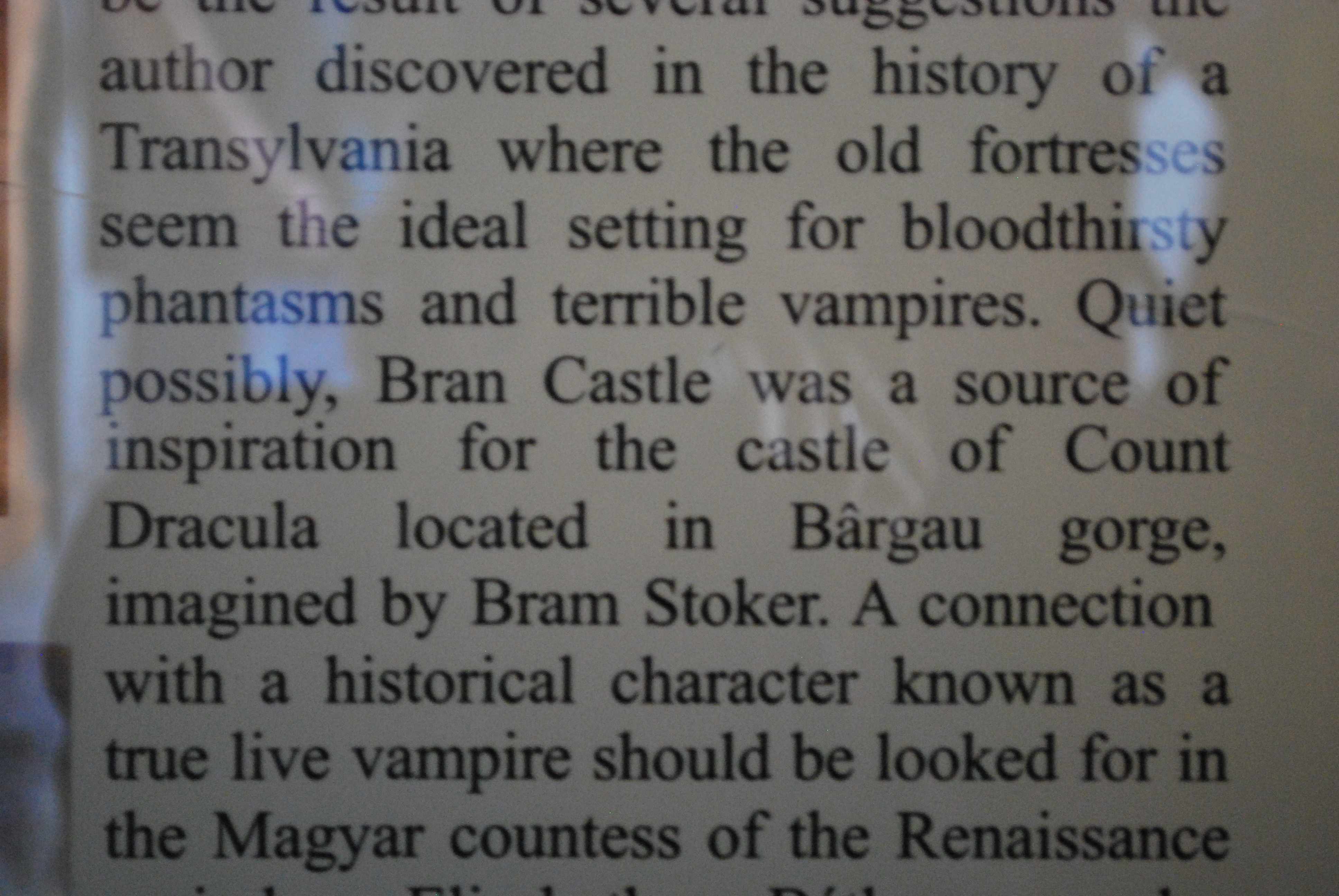
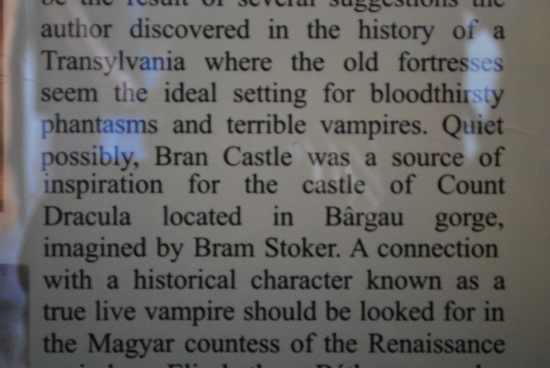
But for a showcase about the legend of the fictitious Dracula and the real Vlad Tepes, there’s absolutely nothing else connecting the castle to what it is promoted as: The castle that inspired Dracula. I quote from the printed poster in the showcase: “Quiet (sic!) possibly, Bran Castle was a source of inspiration for the castle of Dracula located in the Bargau gorge, imagined by Bram Stoker.”
But there are souvenirs – T-shirts with Vlad Tepes, some funny ones about Dracula, books and fridge magnets to take home.

The 13th century castle mostly contains old furniture, sculptures, costumes and artifacts collected by Queen Marie in the 20th century. More than what it stores, it’s known to provide both strategic and scenic views of the city around. It used to be a fortress after all.

After a quick stop in Brasov to fuel ourselves with chocolates and cold coffee, we get back on the road as Flavius tells us he’s going to take us back on a different route so that we get to see another countryside of Transilvania.
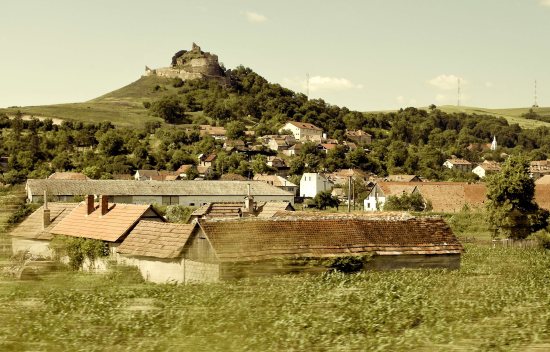
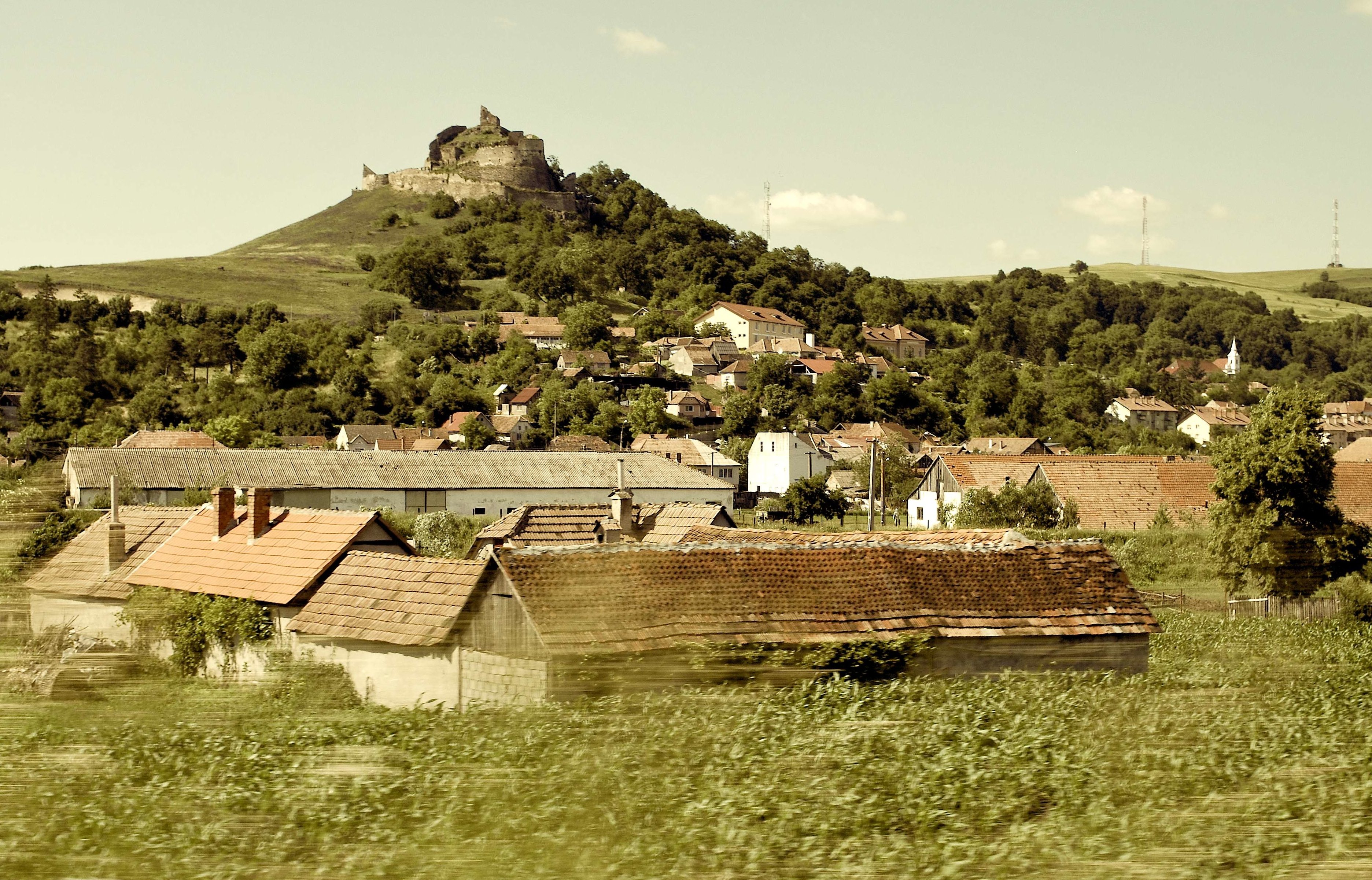
So we drive past the picturesque Rupea fortress surrounded by the Rupea town, all the way to Sighisoara, where Vlad III was born in 1431. With not enough time at hand, we decide against exploring the town and continue driving back to Cluj via Targu Mures, stopping only twice. Once to get up close with the sheep for photographs and once to buy wild berries sold by the road by local farmers.

They don’t taste all that great but how much fun would a road trip be when you don’t stop to see, smell, feel, listen to and taste as much as you can along the way?

How To: Be instantly famous

July 13, 2011 · by sudhishkamath

1. Bite a dog. Like they say, it’s not news when dog bites man. It’s news when man bites dog. Just make sure you have the footage. Every news channel will want it. It should get a few hits on Youtube. Next thing you know, news channels flashing blurbs calling you the Dog-Biter of *Insert name of your hometown*, will want a byte from you. But beware of animal activists, and a bite from them. And also beware: Dogs bite back when attacked. The safer option is not to interpret it literally but do similar things. You could bite a cat. Or a rat. Or a porcupine, if you can. Basically, people should be able to identify you as the guy who, say, eats worms, for example.

2. Once you’re done exhausting biting pretty much every animal you can find and if it still does not make you famous, protest. Stand up for something. But first, understand the competition. Greenpeace protests industrial pollution, PETA protests animals in cages, Maneka Gandhi protests everything endangering animals, right-wing fundamentalists protest Western culture and there are various feminist groups protesting different kinds of moral police. So find something no one is protesting. Like beauty. You could fight for reservation for ugly people on TV and films. There are plenty of their tribe who will support you. But then again, your local film industry, or the porn film business, already have many ugly people employed. So you might want to protest that and demand reservation for good-looking people in those sectors.

3. If protest doesn’t work and nothing you do is good enough for news. Go buy a copy of the book of records. See what they have records for and try to beat at least one of it. There are records for RJing, DJing, Cooking, Drinking Beer at a stretch etc. There must be something you can do at a stretch without sleeping. Else find the record for sleeping and beat that. Or create a new area where there is no record recorded. Like can levitate for three days, eat five copies of the book of records in five minutes etc.

4. If even levitation does not work, nothing will. You need divine intervention. So claim that too. That God came in your sleep and appointed you as the President of the World. There are many people who blindly believe in God-men. You just need to find the virgin market that’s yet to be touched by existing God-men. Try social networks and build an active e-presence, a website could be an e-temple for yourself full of testimonials from your devotees who are grateful to you for the change you brought to their lives. It takes less than an hour to make up a dozen testimonials. If you have the money, put posters all over town and double up as spiritual and political leader.

5. Okay, so nothing works. You are no good, nobody believes your lies and you have no skill or money. Learn from the kids from that new movie in town. Do the “chaddi march” all over town for no reason. It builds intrigue. “We don’t know why and he’s not saying why but he’s walking all around town in just an underwear.” You may have to take it off if someone beats you to it and continue the march! That should make you instantly famous.  But remember, we didn’t say “Without getting arrested.”

(The author is currently attempting to levitate. If it fails, he is threatening to pursue Step 5. This column originally appeared here.)

Interview: In the Nik of Time

July 11, 2011 · by sudhishkamath

A retweet on Twitter can ignite a revolution. A Facebook page can fan the fury further. And blogs, videos and news stories can go viral in a jiffy and challenge organisations, structures and even governments. Nik Gowing, the main presenter of BBC World News, was in Chennai to give an overview of his paper ‘Skyful of Lies and Black Swans’ that explores the new tyranny of shifting information power in crises. Excerpts from an exclusive interview with the TV legend.

Q: In a fragmented society like India where everyone’s focusing on their specific interests, largely sport, entertainment and occasionally politics (that differs from state to state) and discovering only information relevant to them in the context of filter bubbles generated by algorithms of search engines in every platform of the internet – including social media – resulting in a world that is consuming customised information, how relevant is your paper on social media actually having an impact on structures, organisations and governments when the corporations that control the internet have covertly launched a ‘Divide and rule’ policy?

A: No one can really define what social media is. It’s about the media space, the public information space in my view, with the proliferation of digital content, whether it be online, whether it be linear, whether it’s blogs or tweets, it’s about the vast number of contributions being made is enriching the perception of what’s taking place. It’s giving us a 360 degree three dimensional view of what’s taking place. Views that would’ve probably not been heard in the past are now out there contributing to the democratization of the information space. The information space, in my view, is being turned on its head because that machine in your pocket in many ways can challenge a big corporation or a big government. What it sees, while you are recording it, what it captures on video, what it captures on sound can have a serial impact on those who assumed they knew everything. F3 is not the same here, it’s in the time of crisis. Technology and digital content it’s creating in the hands of everyone is an empowering experience. And I think it’s great for journalism as well. It’s also intimidating for journalism because journalists need to make sure they are right now as opposed to getting away with interesting interpretations sometimes. It makes you ask questions… When a journalist has had an exclusive in the past, particularly in the old days of telex machines and the difficulties of getting the copy out within maybe days, how accurate they really were because no one else was there to challenge them.

Q: The corporates have been quick to react to this changing world. But do you think the governments today really care, especially in the Indian context?

A: My impression is that they are reluctant to embrace this new reality. But to be fair I was invited by the MEA to a conference on public diplomacy back in early December and I spoke there. And I think the mountain is moving. Some of the things I said at the conference about the role of Twitter and Facebook, they have embraced.

Q: The huge support for Anna Hazare and his anti corruption movement flared up by social media would have further reiterated your point.

A: That’s one classic example that I am now using. The fact that Anna Hazare, a 72 year old Gandhiite went on a hunger-strike and the fact that he mobilised five million people and the fact that within 96 hours, the government accepted the need for the commission indicates just how powerful the viral digital campaigns can become.

Q: There was also criticism in a section of the media that Anna Hazare’s supporters themselves probably had little clue about the specifics of the Lokpal Bill and its possible implications. Since opinion leaders on social media are not journalists and often don’t have their facts right, do you think they will be taken seriously in the long run?

A: No. Each of them have a vote. They have phones because they need to know what’s going on and that’s because of the mobilization of information. Whether you are in a village in India or China or England, I can tell you there are places where Twitter has revolutionised the community. Because, suddenly someone tweets saying that apples have arrived or fresh milk has arrived at the local store… Communities are becoming more active. What the Anna Hazare case as with many other places – in Syria, in Libya, in Tunisia, in Egypt, or BP or British Airports Authority or TEPCO in Japan – has shown the power of instant information to challenge those in positions of power. The revolution in Egypt took less than two weeks. Anna Hazare took 96 hours. In the old days, it might have taken several months to mobilize support. He might have died in 21 days and he might have had just a few hundred people with him. But there were five million people who were part of a digital campaign. That’s the message for politicians.

Q: But where do you draw the line between cyber-hooliganism and activism? Even after the judge said that Maria Susairaj could walk free since she had spent three years in jail for destroying evidence in a murder case, people are enraged and screaming for her blood on social networks.

A: I wouldn’t call it cyber-hooliganism. I would call it empowerment. What people are saying over a drink, or over their dinner table, or in their workplaces is now becoming viral in the digital space.

Q: Does it become right because a lot of people feel that way?

A: I’m not suggesting it’s right or wrong. What I’m saying is that it shows the mobilization possible whether it is those kind of cases or Anna Hazare. I don’t think technology can be controlled. These are complex times. Remember, yesterday, Obama died on Twitter. So, who believes Twitter? We could not get away by putting on BBC much of what appears on Twitter. It’s gossip. It’s unsubstantiated and as yesterday proves, it could be wrong.

Q: You call it empowerment but what if the majority is wrong? Isn’t there a flip side to what we cannot control, especially with gossip?

A: Of course, there’s a danger if the majority is wrong but life is like that. Not everything is right. It’s our job as journalists to make sure that what we report is right. What you are talking about is the phenomenon of modern digital technology, the pluses and the negatives. It is a negative but the death of Obama yesterday, it’s our job to make sure that what we report is right. As a journalist I would ask the same question too but I think you are exaggerating one side of the coin. Yes, there are negatives to everything in life. It’s the greatest time in journalism because of the instant nature of information mobilisation. It’s become a richer profession. It means we have to be even tougher on what we report and how we report.

Q: Most newspapers around the world used quotes from the Abbotabad tweeter who happened to be live-tweeting the Osama raid though he was two kilometres away from the incident. What could he have seen? All he knew was that there were helicopters in the area.

A: The Obama administration had full operational control. Four helicopters, 79 personnel and they were watching the whole thing. They thought they had full control of the information state but they didn’t. Because there was a tweeter, a real time interpreter of what was going on.

(An edited version of this interview appeared here.)

Murder 2: Robbery and murder

July 10, 2011 · by sudhishkamath

Cast: Thriller

Director: Mohit Suri

Cast: Emraan Hashmi, Prashanth Narayanan, Jacqueline Fernandez

Storyline: When a call girl goes missing, a crooked ex-cop goes in search to save her from a cross-dressing serial killer.

Bottomline: Korean film The Chaser ripped-off, butchered and Murdered.

Imagine the level of creative impotence when one of the best films of last decade – Na Hong-Jin’s 2008 debut thriller, The Chaser – is blatantly ripped off almost scene by scene and is still unable to stir a single emotion. Except maybe hate for the makers.

In the original and this rip-off, the serial killer, frustrated with his inability, tortures and butchers his victims. The same can be said of Mahesh Bhatt’s banner that has been serially mutilating some of the best films made.

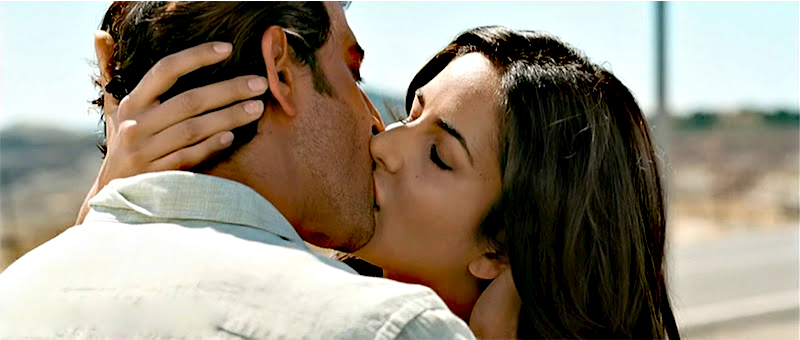
At best, Murder 2 is a showreel for the talented Prashant Narayanan, a men’s room glossy featuring the saucy Jacqueline Fernandez and just another day on the job for serial kisser Emraan Hashmi.

If Murder at least tried to be Unfaithful, Murder 2 is very faithful to the original, from the beginning to end, diverting only to show us Jacqueline make out with Hashmi in the song breaks and sometimes, to conform to the Bollywood rule book.

How can a pimp be a hero and the prostitute the heroine in a Bollywood film? So, Hashmi does not play the pimp. He’s the guy hired by the pimp (in the original, the pimp is the ex-cop who goes in search of the missing girl). And the girl is not a regular prostitute, she’s a college student on her first assignment to send money to her widowed mother and pay for her sister’s tuition as Hindi film tradition demands.  And Jacqueline supposedly plays a model. So it is a little weird that Hashmi offers to pay her every time they go to bed. Even more weird that she loves him despite it. Also, how can a villain be just impotent in a Bollywood film? So, in an attempt to make him scary and dangerous, the makers make him a cross-dresser. Whoa! Talk about regression. Putting generous doses of kissing and sex alone do not make your films bold and progressive. On the contrary, a little sensitivity towards the LGBTs would be appreciated in these times.

This serial kisser chasing serial killer tale offers nothing but titillation from Yana Gupta and Jacqueline Fernandez for the front-bencher. There’s plenty of blood and gore but most of it flows from the ripped out heart of The Chaser.

Dear makers, there are more honourable ways to make a living than robbery. And Murder.

(This review originally appeared here.)

Page 12 of 90 « Previous 1 … 10 11 12 13 14 … 90 Next »
  • Create a free website or blog at WordPress.com.
Privacy & Cookies: This site uses cookies. By continuing to use this website, you agree to their use.
To find out more, including how to control cookies, see here: Cookie Policy
  • Subscribe Subscribed
    • MADRAS INK.
    • Join 480 other subscribers
    • Already have a WordPress.com account? Log in now.
    • MADRAS INK.
    • Subscribe Subscribed
    • Sign up
    • Log in
    • Report this content
    • View site in Reader
    • Manage subscriptions
    • Collapse this bar
 

Loading Comments...