• SUDA MING’S CHANNEL
  • TALKING FILMS
  • Good Night | Good Morning
  • My Talk Show
  • PROFILE

MADRAS INK.

Menu

  • Archives
  • Columns
  • Diary
  • Interviews
  • My Films
  • Reviews
  • Good Night | Good Morning

  • Word thru the bird

    Tweets by SudhishKamath
  • Connect with GNGM

    Connect with GNGM
  • About GNGM

    Reviews

    “A cerebral joyride”
    Karan Johar, filmmaker on REDIFF

    “Among the most charming and creative Indian independent films”
    J Hurtado, TWITCH

    ★★★★✩
    “You don’t really need a big star cast… you don’t even need a big budget to get the techniques of filmmaking bang on…”
    Allen O Brien, TIMES OF INDIA

    ★★★★✩
    “An outstanding experience that doesn’t come by too often out of Indian cinema!”
    Shakti Salgaokar, DNA

    ★★★
    “This film can reach out the young, urban, upwardly mobile, but lonely, disconnected souls living anywhere in the world, not just India.”
    Namrata Joshi, OUTLOOK

    “I was blown away!”
    Aseem Chhabra, MUMBAI MIRROR

    “Good Night Good Morning is brilliant!”
    Rohit Vats, IBN-LIVE

    ★★★✩✩
    “Watch it because it’s a smart film.”
    Shubha Shetty Saha, MIDDAY

    ★★★✩✩
    “A small gem of a movie.”
    Sonia Chopra, SIFY

    ★★★✩✩
    “A charming flirtation to watch.”
    Shalini Langer, INDIAN EXPRESS

    “Interesting, intelligent & innovative”
    Pragya Tiwari, TEHELKA

    “Beyond good. Original, engrossing and entertaining”
    Roshni Mulchandani, BOLLYSPICE

    * * * * *
    Synopsis

    ‘Good Night Good Morning’ is a black and white, split-screen, conversation film about two strangers sharing an all-night phone call on New Year's night.

    Writer-Director Sudhish Kamath attempts to discover good old-fashioned romance in a technology-driven mobile world as the boy Turiya, driving from New York to Philadelphia with buddies, calls the enigmatic girl staying alone in her hotel room, after a brief encounter at the bar earlier in the night.

    The boy has his baggage of an eight-year-old failed relationship and the girl has her own demons to fight. Scarred by unpleasant memories, she prefers to travel on New Year's Eve.

    Anonymity could be comforting and such a situation could lead to an almost romance as two strangers go through the eight stages of a relationship – The Icebreaker, The Honeymoon, The Reality Check, The Break-up, The Patch-up, The Confiding, The Great Friendship, The Killing Confusion - all over one phone conversation.

    As they get closer to each other over the phone, they find themselves miles apart geographically when the film ends and it is time for her to board her flight. Will they just let it be a night they would cherish for the rest of their lives or do they want more?

    Good Night | Good Morning, starring Manu Narayan (Bombay Dreams, The Love Guru, Quarter Life Crisis) and Seema Rahmani (Loins of Punjab, Sins and Missed Call) also features New York based theatre actor Vasanth Santosham (Bhopal: A Prayer for Rain), screenwriter and film critic Raja Sen and adman Abhishek D Shah.

    Shot in black and white as a tribute to the era of talkies of the fifties, the film set to a jazzy score by musicians from UK (Jazz composer Ray Guntrip and singer Tina May collaborated for the song ‘Out of the Blue), the US (Manu Narayan and his creative partner Radovan scored two songs for the film – All That’s Beautiful Must Die and Fire while Gregory Generet provided his versions of two popular jazz standards – Once You’ve Been In Love and Moon Dance) and India (Sudeep and Jerry came up with a new live version of Strangers in the Night) was met with rave reviews from leading film critics.

    The film was released under the PVR Director’s Rare banner on January 20, 2012.

    Festivals & Screenings

    Mumbai Film Festival (MAMI), Mumbai 2010 World Premiere
    South Asian Intl Film Festival, New York, 2010 Intl Premiere
    Goa Film Alliance-IFFI, Goa, 2010 Spl Screening
    Chennai Intl Film Festival, Chennai, 2010 Official Selection
    Habitat Film Festival, New Delhi, 2011 Official Selection
    Transilvania Intl Film Festival, Cluj, 2011 Official Selection, 3.97/5 Audience Barometer
    International Film Festival, Delhi, 2011 Official Selection
    Noordelijk Film Festival, Netherlands, 2011 Official Selection, 7.11/10 Audience Barometer
    Mumbai Film Mart, Mumbai 2011, Market Screening
    Film Bazaar, IFFI-Goa, 2011, Market Screening
    Saarang Film Festival, IIT-Madras, 2012, Official Selection, 7.7/10 Audience Barometer

    Theatrical Release, January 20, 2012 through PVR

    Mumbai
    Delhi
    Gurgaon
    Ahmedabad
    Bangalore
    Chennai
    Hyderabad (January 27)

    * * * * *

    More information: IMDB | Facebook | Youtube | Wikipedia | Website

  • Browse: Categories

  • December 2025
    M T W T F S S
    1234567
    891011121314
    15161718192021
    22232425262728
    293031  
    « Dec    
  • Recent Posts

    • Simmba: A departure from the formula
    • Zero: The hero who wasn’t
    • Protected: AndhaDhun: What did that end mean?
    • Love and other cliches
    • October: Where is Dan?

Posts By sudhishkamath

What hit Showbiz?

June 17, 2009 · by sudhishkamath

First, the facts. The first half of 2008 saw as many as 62 Tamil releases. This year, there have been only 48 so far. Box office collections have been lower than last year. All big releases have been pushed to the second half of the year and there have been no big summer releases this year, barring Ayan.

What is happening? The traditional explanation is that the Tamil film industry is the midst of a recession, and is suffering in pretty much the same manner as Bollywood is. But scratch the economic surface, and you find a slew of other reasons for the gloomy state of affairs in Kodambakkam.

This summer, cinema has found itself with direct competition with the elections, the IPL and the Twenty20 World Cup. Although their impact cannot be exactly estimated, there is no doubt they have been responsible for lower box office collections.  Another factor is that big films are finding it difficult to recover production costs because distributors are not keen to pay a Minimum Guarantee post-Kuselan.

Kuselan was sold for Rs.65 crores and distributors claimed they lost 75 per cent of the Minimum Guarantee and Superstar Rajnikant refunded Rs. seven crores to compensate the losses.

Trade analysts believe that the recession factor is exaggerated and fails to explain what is happening. Many attribute this to lack of variety in fare, viewer fatigue and change in audience taste. With the exception of Ayan, all star-based six-song-six-fight-formula films have failed to deliver.

Abhirami Ramanathan, Managing Director of Abhirami Mega Mall, admits that the “collections have been average and lower than last summer” but adds that this is certainly not because fewer films have been released during the season: “If the trade was hit by recession, Ayan would not have been a super duper hit. In fact, such collections have never been seen.”

“I am unable to say the collections for other films are average because of recession. It is probably because of change in public taste,” he adds.

Clearly, the sensibility of the audience seems to have changed as low-budget, earthy, neo-realistic films like Subramaniapuram, Vennila Kabbadi Kuzhu and the recent Pasanga continue to flourish.

“The recession has had some effect,” Dilip Shah, Honarary Secretary of the Film and TV Producers Guild, believes. “But the bigger reason is that the lack of quality scripts and content. Also, the admission rate is very high and the tax exemption is not passed on to the consumer. Women audiences are not coming to the cinemas because they are finding better content on TV.”

Today, the audience is discerning and has become unforgiving.

Nationally, the strike seems to have hit the trade more than recession.

“There were 1325 Hindi films that were produced in 2008 out of which 1000 films released last year. This year, because of the stand-off between multiplexes and producers, there have been only 80 releases,” explains Shah.

“No matter what, films, education and prostitution will never go out of business,” says Kamal Haasan emphatically. “How do you explain Ghajini becoming the highest grosser when the market was at its lowest? People may not buy an automobile during recession but they will always have that five hundred rupees to spend on a movie.”

Quiz him about Marma Yogi and he clarifies. “Marma Yogi is on hold not because of recession. It’s because of thievery.” (The company he partnered with, Pyramid Saimira, is in the middle of a controversy for alleged fraud.)

Apparently, producers have not been cutting corners or compromising on the scale of their films – a typical fall out of recession. Susi Ganesan’s superhero film ‘Kandasamy’ and Selvaraghavan’s ‘Aayirathil Oruvan,’ awaiting release, are two of the most expensive films made in recent times. Gautham Menon just returned from Malta after shooting songs at a budget of one crore.

“Producers haven’t asked us to cut costs. I have a couple of big films this year starting July – one with Mahesh Babu for his home production and one for Sondarya Rajnikant and Warner,” he says.

Content is king
“If there is a good movie in the cinemas, I’m sure it would work,” believes Swaroop Reddy, Director of Sathyam Cinemas. “Ayan did it in Tamil Nadu and Arundhati did it in Andhra. Even in the US, the movie industry does really well doing recession. Movies depend on content rather than market situation.”

Sathyam Cinemas recently got into film production in association with Real Image when it launched “Thiru Thiru Thuru Thuru” last week.

Editor of Galatta Magazine, Shakti Girish, however takes a radically different position. She says that the industry simply does not want to acknowledge this given the sensitive nature of distribution business. “Actors are willing to negotiate, producers have cut budgets and only actresses have hiked their fees and that’s because currently, there are no great scripts,” says Shakti.

Everybody seems to agree that it’s lack of quality scripts that’s responsible for flops.

Trade experts estimate that no film can recover more than Rs. 40 crores in the present climate. Distributors are not keen to pay Minimum Guarantee and the audience won’t take run-of-the-mill. Big budget films are treading on thin ice and there is tremendous pressure to recover costs. The increasing risk factor has discouraged independent producers from venturing into films.

“The number of conventional producers have reduced,” says Arya, currently shooting for Vijay’s period love story ‘Madrasapatnam’. “The film industry depends on individual producers more than studios and a lot of producers have backed out over the last few months.”

While the debate about what has caused the downturn continues, the industry badly needs a few hits to be back on its feet. The trade believes that all it requires is for the content to be fixed to put the glow back on the face of the industry once again.

No. of Tamil Releases
January – December 2008: 119
January – June 2008: 62
January – June 2009: 48

No. of Hindi Releases
January – December 2008: 1000 (out of 1325 completed films)
January – June 2009: 80

(Source: Film and TV Producers Guild of South India)
Detective Naani: Granny Smarty Pants

June 13, 2009 · by sudhishkamath

Genre: Thriller
Director: Romilla Mukherjee
Cast: Ava Mukherjee, Master Zain Khan, Ankur Nayyar, Simran Singh, Shweta Gulati
Storyline: A granny, a cheerfully divorced daughter, her two brats, a dog and a young couple are the freaky neighbourhood’s Secret Seven.
Bottomline: Elementary, my dear Watson. This one’s made for TV.

Some mysteries can’t be solved. We can only hazard a guess.
1. What’s common to Sherlock Holmes and Detective Naani?
Holmes is a product of Baker Street. Naani is a half-baked product.

2. Why does the film feature a 70-something heroine?
Blame it on the pace. Apparently Ava Mukherjee was seven years old when she sat for a narration. By the time, the makers finished telling her the story, she was seventy-something.

3. What’s the best kept secret in Granny Smarty Pants a.k.a. Detective Naani?
As per the original ending, the camera actually zooms out of the apartment set as it morphs into an old haunted building. The camera does a slow reveal… It’s Nurse Ratched straight out of One Flew Over the Cuckoo’s Nest giving Naani her medication. No kids, no cheery divorced daughter, no dog eating biscuits she’s been tossing, no corpses, no men in hoods getting killed while trying to tip her off. It was all in A Beautiful Mind of a schizophrenic retired librarian who had an overdose of the detective novels in the kids section. This scene was deleted on grounds that Indian Cinema wasn’t ready for Awesomeness.

4. So, is this film for kids?
That’s part of the mystery. There are kids in the film. But, there are also at least three corpses. There’s also mention of drug use. And Viagra. One minute, there’s an animated song sequence with a girl post-make-over dancing in a mini in the middle of a “You’ve Got Yahoo” subplot and the next, you have an eerie Piano-based background score associated with B-grade Hollywood thrillers. It tries to be light like a comic book, it tries to be dark and moody like a thriller and realises it has to be cute because it has kids and realistic because it has a Granny and scary because it has bad guys.

5. What’s a good time to watch this?
To be fair to the sincerity of effort and the core idea behind the film, maybe it’s best seen on TV on a lazy afternoon. But if you don’t care much for cutesy detective stories or kids and dogs, you could still catch it on TV with drunk friends.

99: An inspired second innings

May 23, 2009 · by sudhishkamath

Genre: Comedy
Directors: Raj Nidimoru-Krishna DK
Cast: Kunal Khemu, Cyrus Broacha, Soha Ali Khan, Boman Irani, Mahesh Manjrekar, Vinod Khanna
Storyline: Two conmen who owe money to a Mumbai-gangster are sent to recover money from a compulsive gambler in Delhi, only to lose it and try to find ways to replace it.
Bottomline: 99 per cent original but finally, it’s the ‘Snatch’ of inspired Ritchie-ness that makes the director-duo’s gamble pay off.

Well, there are 99 reasons to watch this film:
1. It’s by the guys who gave us that wonderful little film called Flavors

2. Crime+Comedy+Ensemble=Always Interesting

3. Boman Irani makes even a compulsive gambler adorably human

4. Cyrus Broacha’s improvisation show. He keeps complaining he never gets to do anything because he’s always in the loo… Or are they all out-takes?

5. Refreshingly laid-back, light-hearted storytelling

6. The smart conceal; twists towards the end. Predictable but fun

7. A dash of romantic comedy. Especially, the scene in the lift

8. The Ocean’s Eleven Master Plan vibe

9. Guy Ritchie’s interconnected motley-crew of characters

10. Tarantino-ish random conversations

11. Coen Brothers-signature of believable larger than life characters

12. Cyrus Broacha makes even running into a pole funny

13. The huge henchman called Dimple

14. It’s a period film set in 1999

15. Isn’t it funny to look back and see how we first took to mobile phones?

16. The Delhi-Mumbai divide, not milked enough for humour, but works

17. Amit Mistry’s broken English as Kuber

18. The moral of mobile phones being injurious to health played for laughs

19. Soha, a tad over-enthusiastic and deglamourised, is not so-hawt but delivers Pooja

20. The opening lines of the film

21. Mahesh Manjrekar does another variation of playing don, at his comic best

22. A wicked Vinod Khanna makes a rare appearance

23. Kunal Khemu arrives as an actor

24. Experiments with non-linearity

25. Tongue in cheek razor sharp lines – the bargain scene with Boman in the climax

26. The funky opening credits

27. Pretty Simone Singh is endearing

28. Cyrus Broacha’s makes even fat-people jokes funny

29. Delhi plays a fine supporting role

30. Catchy songs that make you forgive the Rang De Basanti hangover in picturisation

31. Etching of support characters and extras – the supercop, the bald superstar, the Bengali Foreign Exchange customer, the taxi driver, the bootlegger, et cetera

32. Clever digs at cricket and cinema

33. Audacity to mix fact, fiction and controversy

34 – 99: Has any film ever given you 33 reasons to watch it? Also, since you don’t have any other choice of Hindi films in the cinema halls, isn’t each reason is as good as three?

The one reason to not watch it:

The DVD should be out in a few weeks.
Yes, despite the reasons, 99 is an inspired fanboy tribute to crime comedies the filmmakers seem to have grown up on. Also, some of the emotional scenes overstay their welcome, slow down the already laid-back narrative and stick out sore in a film whose sense of humour ranges from physical comedy and toilet-humour to the understated and cerebral.

The AID Support System – Unedited

May 14, 2009 · by sudhishkamath

About fifteen years ago, a 21-year-old IITian in America, got together with other fellow Indians and raised 3000 dollars to send to organisations working at the grassroots level.

It was the starting of something big.

Something that spread rapidly and increased to 40 chapters around the United States.

Something that inspired a generation of India’s educated elite to return home and provide electricity to villages in Maharashtra, Bihar and Andhra Pradesh.

Yes, something which became a movement big enough to spawn a Shah Rukh Khan film.

Something that today affects lives of seven lakh children in 1000 schools and 10,000 villages in Tamil Nadu.

Something that today raises and spends six crore rupees a year – a long way from the 3000 dollars that started it all.

AID-India is quite something – one of those rare organisations that fights shy of any publicity and continues to consider its volunteer base more valuable than money.

“There are many sources to raise money. We are about getting people involved in doing work,” says Balaji Sampath, after finally agreeing for an interview under the condition we would write about the organisation and the people, instead of focusing on him.

“We have 850 people working in all of Tamil Nadu today because we are low-profile. If people feel that an organisation is somebody’s baby, they don’t feel ownership. The fact that it is a collective effort keeps people together and helps us get work done,” he explains.

When he was in school, Balaji thought he would someday build a factory and use the money to set up an orphanage and work in villages.
But while he was in the United States to do his Ph.D, the Electronics student from IIT found that a lot of his friends wanted to do something for the country, especially since they felt that they had left India behind. “The only thing we could do was raise funds and send money to support organisations. We also used to visit them. We would come to see if the money was spent.”

When he saw what money could do to bring about change, he decided to do more. “I contacted my friends, their friends and collected email IDs. Email was becoming popular. It was the first SPAM kind of mail,” he laughs.

He mailed his fellow IITians and his seniors who were spread out all over the United States. “Since they were all interested, we started chapters. We started in Maryland and by ’95-’96, we had about 40 chapters in the US.”
Initially, it was completely the “engineering and the geek” crowd, he says.

“But as we grew, more people got involved from social sciences and economics backgrounds. When you bring in people with different skills, the quality of discussion completely changes. If four engineers sit together, they will be looking at the technology, how to do things and the flowchart… An economics or a social science person would try and study the caste equation here and see what happens.”

He would use his two-month break in India to visit the villages and see how the money raised was utilised by NGOs, prepare a report and send it back to donors. He was hardly spending time with his parents.

“They were angry and very worried,” he recalls the “high tension period” of his life – the mid-nineties.

He knew he felt happiest working at the grassroots and seeing the change for himself but what would he do for bread and butter?

Since social work was hardly a career option in the nineties, he came up with a plan to use the interest of his savings (he saved most of the money from his fellowship by walking to college) to sustain himself while he pursued his passion.

Confused, he told his American professor that he wanted to leave the course and go back to India. “He asked me to wait for six-seven months and finish my Ph.D. I had already registered AID India by then. Everytime I would see a new programme, I would see the change, I would be inspired and say Ok, this is what I want to do.”

But once he started work at the grassroots, he realised he had miscalculated his living expenses since the cost of living had changed considerably since the early nineties. He ended up using up his savings within a year.

“Today when I look back, it sounds so risky and childish,” he talks about the decision.

He could not mobilise people and hence, started working with existing groups. Soon, he started working with the Tamil Nadu Science Forum and did so for two years.

“That was an eye opener in mass-mobilisation and that helped me build up confidence. I gained experience on what can be done,” reveals Balaji.

Once he ran out of money, his friends from AID came to his rescue and they decided to support him financially by giving him a retainer of Rs.10,000 – something he wasn’t comfortable with.

“Then, I started my IIT classes, part-time teaching and stopped depending on AID. I wanted to keep my own financial requirement separate from the organisation,” he says.

Soon, he had support from some of the AID volunteers who were returning back to India. “Some of my students joined and started working with us and it became viable. As we started growing, apart from AID, Asha and Pratham started supporting, UNICEF and other corporate foundations started contributing.”

Was it practical for today’s youth to give up on salaries and work for a cause?

“Today things have become very different from what they were in 1997. Typically, if you manage to work for a few years in this kind of field, struggle without looking for financial returns, you will soon find a niche area to work and also find people to back you,” he believes.

“Suppose I said I wanted to take a salary here, even Rs.25,000 or Rs.30,000 would be considered normal given the number of projects. People don’t take salaries here because they don’t want to take. It’s their problem.”

Having gained plenty of experience in working with children, he realised that education and health were of primary importance in shaping the new generation.

“Government schools and public health institutions must be strengthened because they are the one that have the duty to deliver quality education and health. Sometimes, it’s like the government has almost given up on the mandate. So we work very closely with the government. Not by confrontation but in conjunction.”

“It’s ultimately teachers are the ones who improve quality of education. We identify and see how the teachers work can be made more effective. We listen to what they say, we do a lot of research and development, and provide them with extra training and material,” he explains the Eureka Child initiative of AID-India.

“One of the things we found was that a number of children were finding it difficult to learn. So we started developing a programme for them along with teachers. We have a team that gives arithmetic and science experiments based on the school syllabus. This provides them practical learning. Experiments that they can do with paper, thread, water, bottle etc and today, a lot of kids are coming out with their own experiments. We found out that 40 per cent of students were not able to read. So the teachers will target these students and conduct an extra hour of class to teach them, we train them and we give them materials. We should strengthen what is already there.”

There’s just one thing that governs its running – getting work done. “You form your team, decide what you want to do… you are an independent unit, you are responsible for raising your money. Our larger goal is citizens actively pursuing social causes and functioning democratically. In some places, we work with the government and in some places, we do our own thing but the point is that we work.”

“We have people working in the districts and we have districts where we work with other NGOs. The name does not matter, we keep ourselves in the background as long as we can get work done.

In Andhra Pradesh, there’s a group in Srikakulam, which says: I don’t like large scale. I will be a model for one set of villages and so I will take up 10-15 villages but I will do something very good in these villages. In Bihar, we have another team that says I will work on education and in Orissa, we have a group that started a livelihood centre. In Delhi, there’s a group that says I don’t want to be a fulltime NGO, we will all keep our jobs and carry on as professionals but we will reach out to other NGOs and help them, very similar to the original model of AID. In Chennai, Srikakulam, Bihar and Orissa, we have full-timers working in the field while Bangalore, Hyderabad, Delhi and Mumbai have a volunteer base and they work with other NGOs. We all meet regularly, once in a year and have email exchanges.”

Since Balaji started AID India in Chennai, it’s considered to be the headquarters. “It’s just quarters,” he laughs. “The head part is not really true because they (the other groups around the country) are all doing things on their own.”

Different places in the country need different strategies for the similar issues. Electricity, for example.

“In Bihar, we have already provided solar lighting to 100 villages. In Srikakulam, the group gives the money as a loan to the family to get a electricity meter because the initial set-up cost is high. In Maharashtra, it was hydro-electricity but it didn’t work out too well.”

AID-India has chapters in Chennai, Nellur, Chittor, Kolkata, Bihar, BITS Pilani, Hyderabad, Bangalore, Delhi and Mumbai.

What exactly does he want us to project if not him?

“I want to project that school teachers are doing great work. If I project that we are doing great work, then I am devaluing what the teachers are doing. I don’t need the projection but I need the school-teacher to get the work done. The 10,000 villages is basically Damodaran’s work. He’s somebody who plays a big role but he may not be able to articulate what he does. But he would talk to the district co-ordinators and get work done. I would come up with the planning. So basicalIy I do what I am good at, you do what you are good at, together we will get things done. Our strength is that people do not want projection, they just want to get work done. Most organisations break up over who gets more credits. Too much projection draws the wrong kind of people.”

The AID-India team

Chandra Viswanathan: This BITS Pilani graduate, worked with Wipro and had a well-paying hardware job at Tidel Park. She was volunteering since 2000. In 2002, she quit her job to work to work for AID India for a humble salary.

Ravishankar Arunchalam: Balaji’s junior in IIT, he did his Ph.D in Carnegie Mellon University. He joined IBM and soon quit to start teaching in IIT because he wanted to spend more time on the field.

Damodaran Muniyan: Having lost his mother at a young age, Damu, who was born into a landless Dalit family, struggled as a student. But once he joined AID-India, he started writing, went on to Masters in Anthropology and M.Phil. Today, he’s one of the key decision-makers at AID India.

Gomathi: She joined AID-India immediately after college and picked up a lot of skills. Today, she co ordinates a lot of their programmes.

Jayaram Venkatesh: He was working in the US, returned to India to join Standard Chartered to work with AID-India part-time. Soon, he realised he wanted to spend more time on the field and quit his job to join AID-India.

Rajapandian: He had studied only till the 10th but then he picked up a lot of skills, went on to finish his 12th and is now working closely with the teachers in the Eureka Child programme.

A week-long masterclass with Kamal Haasan. Interested?

April 21, 2009 · by sudhishkamath

INT. CLASSROOM, IIT – DAY

Professor Kamal Haasan walks around the class talking at length about how he wrote Thevar Magan as students try to catch up, scribbling notes on their copy of the spiral-bound script. One of them raises his hand to ask a doubt.

This scene is likely to play out at Indian Institute of Technology between May 29 and June 3, 2009. And to be a part of that classroom of select 250 at the Chennai International Screenwriting Workshop, you need to apply before May 5, 2009.

Kamal Haasan, in association with Indian Institute of Technology, Madras has convened a first-of-its-kind international workshop and seminar on screenwriting in South India. “It’s a strictly instructional event. Basic education is compulsory and candidates need to demonstrate their seriousness to get selected,” says the writer-filmmaker-actor.

The Chennai International Screenwriting Workshop to be held at the IIT-M campus between May 29 to June 3, 2009 will feature few of the best screenwriters and filmmakers from around the world.

Veteran writer Jean Claude Carriere has confirmed his participation via video conference.

Mr. Kamal Haasan himself will join the discussions and don the role of faculty during the workshop and seminar. “Students will be able to pick up copies of my scripts and get their doubts clarified,” he adds.

The screenwriting workshop will be conducted by K.Hariharan, Director of the L.V. Prasad Film and TV Academy, Anjum Rajabali, Professional screenwriter and head of departments of screenwriting at Film and TV Institute, Pune and Whistling Woods, Mumbai and Atul Tiwari, Professional screenwriter and well known playwright.

“We will be approaching screenwriting from two angles”, says Mr.Hariharan. “How to turn words into images that you see on screen and also how to do the opposite – putting in words what you see as images in your mind. Every day, we will have two sessions of guest lectures by reputed writer-filmmakers from the industry.”

For long, screenwriting has been a neglected discipline even in film schools. “While all good writing is essentially intuitive, it is essential to understand the basic principles of storytelling and the form of the screenplay to be a competent screenwriter”, says Mr. Anjum Rajabali, who founded the screenwriting department at FTII and at Whistling Woods.

“We all agree that it is impossible to make even a half decent film with a bad script and that a good script is the first and foremost requisite to make a good film. But even then we have seen that the pedagogy of the screenwriting has not taken roots in India,” adds Mr. Atul Tiwari, who has who has conducted similar workshops in New Delhi, Mumbai, Lucknow, Manipal and Pune.

The workshop will culminate with a seminar, which will be open to industry professionals. The event is an initiative of Raajkamal Films International to bring screenwriting to the forefront.

To apply, students must send a copy of their resume, a passport-size photograph along with a 200-word synopsis on their favourite film and a list of their five favourite films to admissions@screenwritingindia.com before May 5, 2009.

More details are available on http://screenwritingindia.com. For further queries, email helpdesk@screenwritingindia.com

EXCLUSIVE: He Says, She Says – Season 2

April 15, 2009 · by sudhishkamath

On Movements: Women want upliftment, Men don’t mind any movement as long as it has ups and downs.

Check out the first episode of the blog-exclusive Season 2 of He Says, She Says here.

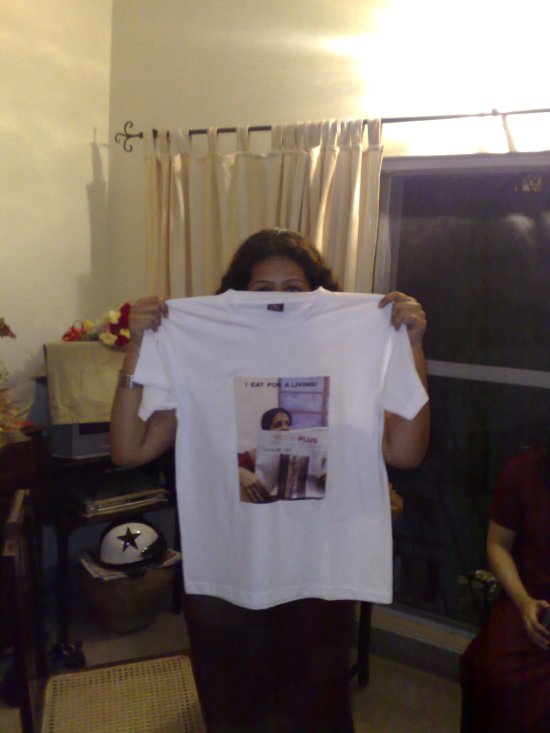
Yes, the She of He Says, She Says… Shonali Muthalaly, professional eater and author of the weekly column The Relectant Gourmet,  finally has a blog. Stalkers, please take note. In fact, send her your love notes.

Sho'in off her tee shirt!

Sho'in off her tee shirt!

For those who came in late, He Says, She Says is a super popular column (ahem!) that Shonali and me used to write in The Hindu. But now that we’ve both become super busy to write it regularly, we thought we’ll at least keep it alive on the internet.


Tasveer 8×10: Nagesh blows it up for the market

April 4, 2009 · by sudhishkamath

Warning: This being a supernatural thriller, please adequately suspend your disbelief because as Kukunoor reminds us: a picture not just freezes time but also tells us a story of what happened behind the scene.

Sitting at the theatre watching 8X10, I could relate to Akshay Kumar’s psychic ability. Given below is a first-hand account of my psychic journeys that took me me behind the scenes of Tasveer.

Soon after the elaborately staged miniature opening credits, a crane swoops down towards the edge of a cliff to reveal a fat kid standing stunned. He’s staring at a football. His parents come running towards him… More crane swoops follow as: I get sucked in to the location of filming.

On the other side of the camera, there’s Nagesh Kukunoor counting wads and wads of cash. “40 Crores,” chuckles Kukunoor. “Just two words to explain this: Akshay, Kumar. Goes to show that it doesn’t matter if you have a good script or not as long as you have a star.”

SFX: A miniature Nagesh pops up in a bubble above the life size filmmaker who is still counting the cash in disbelief.

“Have you forgotten your underdog days when you had one tenth that amount and made films like Dor and Iqbal and made them hits even without stars,” asks the miniature Kukunoor.

“Oh, it’s my conscience. Yes, yes. A star is not necessarily a bad thing to have. As long as you tone down the theatrics and extract what you want – exactly what the script demands. Not more. Not less,” he replies.

One minute is up and I wake up in time to catch the next scene.

Akshay Kumar seems to underplay quite a bit, though his English seems a little awkward. Apparently, he’s this Environmental (No co-incidence that it contains the word Mental) Protection Services officer who can just smell a bear-hunter from a distance and I get transported to the filming again.

Akshay: Listen Nagesh, I don’t think I am being utilised with this underplaying thing. My fans want more.

Nagesh: I am sorry. But this is your role.

Akshay: I understand but there should be something I can do. Look at that lake.

Nagesh: Yeah, we will take a few shots of it.

Akshay: I want to jump 100 feet into it.

Nagesh: Relax. This is just a simple whodunit.

Akshay: I know. I started my career with a whodunit called Khiladi and being a Khiladi, my films run because of athletics. I do crazy things to get my Thums Up and you think I’ll be twiddling my thumbs here like this is some Night Shyamalan film?

Nagesh: I am not too sure.

Akshay: I am not too sure either if I want to do this, you know.

Nagesh (looking at the wads of notes): Yeah, okay. Let’s do it.

Miniature Kukunoor opens from his forehead like a cuckoo clock.

Nagesh: Go back Conscience, I have always wanted to make an action film.

And suspended by strings, Akshay Kumar “jumps” screaming like a maniac as the same is shot with eight or ten cameras.

Nagesh: Oh well!

A few scenes later.

We learn that his father Benjamin Geelani is dead and the only way he can get to the bottom of the truth is to get into the photograph and visit the scene.

Surreal VFX later, I find myself looking at Nagesh Kukunoor trying to write his script.

Super: Five Years Ago

Kukunoor can’t seem to get an idea.

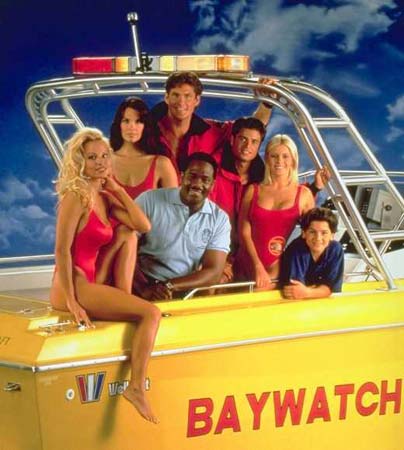
He looks around and sees a picture. It’s a still from Baywatch.

baywatch

And he gets sucked into their world.

He can see Pamela Anderson’s in a hot shower… It becomes a little too gross for me to watch what Kukunoor is doing while fantasising about this. So I tune out for a bit and return to the scene after a minute thinking about Borat falling in love with the woman in red water panties saying: “This C.J. was like no Kazakh woman I have ever seen. She had golden hairs, teeth as white as pearls, and the asshole of a seven-year-old.”

By the time I am back from that train of thought, I see Nagesh now staring at Carmen Electra and soon, he’s sucked into her Jacuzzi. But since I have the disturbing image of Kukunoor taking matters in his own hands… I tune out remembering that line from Hyderabad Blues: “Dil Pe Mat Le Yaar… Haath Me Le”.

A minute later, he stares at the other lifeguard… Aw Shucks! Is this ever going to stop?

I leave the guy alone to have his independent motion picture going but I am tempted to say: “Kukunoor dude, you have a script to write and I reckon you aren’t calling it Apna Haath Jagannath.”

Kukunoor finally wakes up, thankfully washes his hands, smiles satisfactorily and types down the title: 8×10

And I wonder, “What, you going to make a porno about a guy fantasizing about people in pictures? Guys do it all the time. What’s so unique about it?”

Suddenly, I feel the sound of the plane from Lost – yes, the sound effect used as a cue between flashbacks and present day. I am back in the theatre.

Akshay Kumar seems to be doing Parkour in most of the scenes, whether the film demands them or not. Maybe he’s looking for that bottle of Thums Up. Or didn’t have time for the gym. Because, no kidding, even when he’s attending a phone call, he’s doing his abs.

And soon, I’m at the set.

Akshay: I want to jump from there.

Nagesh: Ok

A few minutes later.

Akshay: Now, I want to jump from here.

Nagesh: Ok

A few minutes later… Montage:

Akshay: Now, from here.

Akshay: From there.

Nagesh (muttering): Does this guy never get tired?

A few minutes later.

Nagesh: Mr. Kumar, I think we have overdone the stunts, now we come to the revelation scene where Ayesha Takia has discovered a corpse. And since you are inside the house and on the floor, you can’t jump anywhere. You just need to react naturally.

Akshay (nods understandingly): Ok

He’s on the floor when he hears the screams, the cue for the shot.

Nagesh: And Action.

Akshay crawls from under the table like a commando.

Nagesh throws his hands up in the air.

Swooooosh. I am back in the hall watching Akshay have more of his psychic journeys, his health deteriorating after each departure.

And, I arrive on time to witness the scene behind that scene where Nagesh is arguing with his miniature conscience that’s become smaller than ever.

Mini Kukunoor: But this guy’s taking the film away from you making it look like an ad for Mountain Dew…

Kukunoor: Thums Up.

Mini Kukunoor: Yes, but I got an idea to satisfy you. Why don’t you disable him, make him sit on a wheelchair because you can always attribute it as a side effect of his psychic journeys.

Back in the film, Akshay Kumar seems to be calling 911 every other scene.

The 911 Operator: Oh, Hello Mr. Jai. With you being a regular caller and all, we have installed a special ambulance right outside your house.

The usual happens and I find myself at the set where Akshay is having an argument with Nagesh.

Akshay: I want to do more in this film. You can’t have a Whodunit and let some other actor walk away with the big revelation scene in the end.

Nagesh: But in a Whodunit, a director has to be fair to his audience and reveal all the suspects right at the beginning and we’ve done it through this 8×10 photo. Suddenly, introducing a new character not in the picture may make them feel cheated.

Akshay: Nagesh, you must watch more Hindi films. Nobody cares. Why should there be fixed rules that you should play all your cards at the beginning. The film is only halfway done, you can still introduce a mystery man trying to kill me when I am cycling so that I can do some more stunts… Maybe I can jump…

Nagesh: No more jumping please.

Akshay: Okay, done. I understand. I could just fall off the cycle and roll down the cliff.

At the end of the day’s shoot, Ayesha Takia unable to carry the weight of her top-heavy load, is dragging the cycle along after rolling down a cliff. But Akshay, he carries the cycle on his shoulder.

A few scenes later, Javed Jaffrey playing Habibullah Pasha, Happy with an I, is calling a nurse called Sally as Saali.

At the set, I walk in on Nagesh Kukunoor having a conversation with himself.

Micro Mini Kukunoor: Don’t you think it’s corny?

Kukunoor: Listen, I should have left you home the minute I signed this film. But now that it is anyway becoming a B-movie, maybe I should just play along and make it more campy. B-movie is also a genre, you know.

Micro Mini Kukunoor: I know. You already tried your hand at it with that last bit in Bombay to Bangkok.

Back in the film itself, plenty of things happen which I am afraid cannot be revealed given a request that reads like this:

“Hi,

This is Nagesh. I just want to make a personal, humble and unusual request to you that you not divulge the ending of my film in your reviews.

Given that it is a thriller and a murder mystery, its USP is the finale. I hope to reach as wide an audience as possible and I fear that the revelation of the climax may turn many viewers away.

Thanking you in advance.

Regards
Nagesh Kukunoor”

I get sucked into the computer screen as I see Kukunoor is sitting at his desk trying to type an email. He’s looking at the screen as Kukunoor’s Conscience, now a mere speck on his desk says: You are doomed. Critics are going to give away the end on Day 1 and once people know the end, they will surely not watch the film. Because they would be like: What?????

Kukunoor: Oh shut up, I remember my Hrishikesh Mukherjee films. All I need to do is name the boat after one of his films that is based on this very premise and keep using it as a cutaway. That should legitimise it with the critics and also work as a clue and tribute.

Soon, the end credits roll up with the signature Akshay-Kumar-film-rap accompanying it (with Bohemia) and Kukunoor finally makes his cameo – as an item boy getting drenched in the water with Akshay.

Back at the set, the actor directs the filmmaker.

Akshay: Trust me Nagesh. I know what I am doing with this. It’s a must-do in all my films… Come on, join me.

And that is how Nagesh Kukunoor learnt the Bollywood dance.

The End.

In other words: Tasveer 8×10 is a little under-developed, like all Bollywood films seems to be botched up in a dark room and the picture itself surely didn’t demand to be blown up this big. But then, if you like your poster-boys, forget everything else and be mind-numbingly entertained.

Aa Dekhen Zara: Nothing you can’t see coming

April 3, 2009 · by sudhishkamath

Genre: Thriller
Director: Jehangir Suri
Cast: Neil Nitin Mukesh, Bipasha Basu, Rahul Dev
Storyline: A photographer turns gambler when he gets a camera that clicks photographs of the future and soon realises he just has one week to live.
Bottomline: You won’t need the special camera to find out what will happen next in this film. But then, you won’t need brains either.

When life gives you lemons… Okay, here’s another one.

What do you do when your producer gives you Neil Nitin Mukesh?

A fairly good-looking chap, acting may not his biggest strength but he has those sinister smiles. With a face that’s vulnerable yet deceiving, Neil seems to be the kind who would go to any extent to make a little money, a persona he owes to Johnny Gaddar, his debut film. And boy, he can run. He reminds you of Hrithik Roshan, he may not be as talented but hey, he ain’t half bad as that Baweja boy.

Aa Dekhen Zara is the best you can squeeze out of Neil Nitin Mukesh – who may soon be singled out for this genre of dumbed-down crime-thrillers with guitar intros, quirky camerawork, slick cuts, surreal lighting, gun-fights and stylish clothes. The kind of cinema that will eventually give Johnny Gaddar a bad name.

It’s a fairly safe narrative structure, a formula that has been tried and tested over the years: first, a glimpse of something terrible that will happen in the future and then, a series of adventures as the protagonists try to stop that from happening, only to find that they are only inching closer to the inevitable. The TV show Heroes has formed a cult following with his formula.

So the story goes that Ray (Neil), a photographer down on luck, inherits a camera from his eccentric inventor uncle after his death. This antique piece of camera was probably invented after his uncle watched the ‘Back To The Future’ films back to back. And Johnny boy (yes, his name is Ray here but the first half of the film is like watching Johnny Gaddar in a parallel universe) puts the camera to good use by taking pictures of his hot neighbour (Bipasha) only to find a gun pointed at her.

Thanks to the camera, he saves the girl, makes a fortune at the lottery, the share market and the horse-races before the bad guys catch up on his secret. And to make things worse, the camera tells Ray that he’s headed into darkness.

The rest of the film is about Ray on the run with Bipasha to give him good company. Bipasha looks spunky, with a badass tattoo and attitude to boot and it’s only when she has to get her eyes moist that we have the time to discuss the glaring plot-holes in the script. Like why doesn’t he ever take a picture setting the date to the day after the D-day… Just to be sure, you know.

The stone-faced Rahul Dev playing a trigger-happy shooter called Captain makes things a little exciting with his cat and mouse game but this is clearly a Neil Nitin Mukesh showcase. Johnny is still a little raw on dialogue delivery, strong on subtleties and a fish out of water with heavy-duty drama. And, he can’t sing to save his life.

His self-conscious take on the Kishore Kumar song lacks the energy of the original and is smartly left relegated to the end credits, especially since it gives you a choice to walk out.

Like most horror films, Aa Dekhen Zara ends pointing towards a futuristic sequel that seems like a cross between Krissh and Love Story 2050.

Hurman Baweja, you may not be alone after all.

Your ticket to Sen City!

March 27, 2009 · by sudhishkamath
We also went to White Castle but I don't have that picture.

We also went to White Castle but I don't have that picture.

A big welcome to my Super-bro Raja Sen (some of you might know him as the Rediff Critic and/or as the most hated Indian online) to WordPress. Go to his official home now.

Aloo Chaat: Leftovers from another plate

March 27, 2009 · by sudhishkamath

Genre: Comedy
Director: Robby Grewal
Cast: Aftab Shivdasani, Aamna Sharif, Linda Arsenio, Kulbhushan Kharbanda
Storyline: Hindu boy loves Muslim girl, brings American girl home to convince the folks believe any Indian girl is better than American.
Bottomline: How to give your Dad a heart attack

There are many reasons why Aloo Chaat is bad for you.

1. Attacks your senses: Right from the robot-voice that goes Aloo Aloo Aloo Aloo Aloo Aloo, Aloo Chaat… [and repeat again and again] accompanying the interesting opening credits (probably the only high point of the film), this is one good-idea-spoilt-by-a-bad-one after another. By interval, you want cotton buds to filter out that annoying Aloo Aloo Aloo… And by climax, you want to stab the music director, who seems to have scored more pot than music, unleashing upon us the entire library of wack-a-doodle sound effects minus the laughter track.

2. Contains artificial flavours Aftab Shivdasani, Linda Arsenio and Aamna Sharif: Okay, Aftab turns in one of his better performances and quite earnestly but there’s very little help coming from the director or the writer. Aamna Sharif and Linda Arsenio in author-backstabbed roles have absolutely nothing to do. Aamna just needs to look like a complete idiot who cannot memorise lines without goofing up and Linda’s character, after a promising introduction sequence (where she is made to watch Purab aur Paschim to understand how to play Gori for the Indian audience) lacks motivation (she has no reason to play along and so seriously at that). Even a mannequin would look hot in a bikini but Linda, she’s still just flat-out plain.

3. In very bad taste (especially if you are pure vegetarian): ‘Stand-up’ comedy hits new depths in the office of the sexologist Hakim Tarachand who offers solutions to the sexually challenged in scenes written purely to sneak in the innuendo. Certainly not family entertainment.

4. Beware of the side-effects – Indigestion and Gas: Is there any reason why the film should go beyond the scene right at the end of the first act where Aftab tells the father categorically that he has decided to marry the girl of his choice, irrespective of what he feels. The father submits helplessly but the son isn’t just happy with that. He wants to mess with his old man’s head. Yes, films are about willing suspension of disbelief but watching undercooked characters doing things devoid of any motivation results in indigestion and Aloo Chaat is full of gas.

5. Stale, diluted, et cetera: The application of the Dilwale Dulhaniya strategy of manufacturing consent for a Hindu-Muslim marriage within a conservative joint family set-up, though inventive, loses focus as the makers are content watering down the socio-political subtext. It is rather unfortunate that such a potent subversive premise is reduced to an excuse to showcase Sanjay Mishra play the butt of all jokes in yet another film. Kulbhushan Kharbanda is no Amrish Puri but what could’ve been a spicy pot-poori of libertarianism with a lot of masala, Aloo Chaat ends up like a soggy leftover dahi-poori spat out after a gag reflex.

Page 22 of 90 « Previous 1 … 20 21 22 23 24 … 90 Next »
  • Create a free website or blog at WordPress.com.
Privacy & Cookies: This site uses cookies. By continuing to use this website, you agree to their use.
To find out more, including how to control cookies, see here: Cookie Policy
  • Subscribe Subscribed
    • MADRAS INK.
    • Join 480 other subscribers
    • Already have a WordPress.com account? Log in now.
    • MADRAS INK.
    • Subscribe Subscribed
    • Sign up
    • Log in
    • Report this content
    • View site in Reader
    • Manage subscriptions
    • Collapse this bar
 

Loading Comments...