• SUDA MING’S CHANNEL
  • TALKING FILMS
  • Good Night | Good Morning
  • My Talk Show
  • PROFILE

MADRAS INK.

Menu

  • Archives
  • Columns
  • Diary
  • Interviews
  • My Films
  • Reviews
  • Good Night | Good Morning

  • Word thru the bird

    Tweets by SudhishKamath
  • Connect with GNGM

    Connect with GNGM
  • About GNGM

    Reviews

    “A cerebral joyride”
    Karan Johar, filmmaker on REDIFF

    “Among the most charming and creative Indian independent films”
    J Hurtado, TWITCH

    ★★★★✩
    “You don’t really need a big star cast… you don’t even need a big budget to get the techniques of filmmaking bang on…”
    Allen O Brien, TIMES OF INDIA

    ★★★★✩
    “An outstanding experience that doesn’t come by too often out of Indian cinema!”
    Shakti Salgaokar, DNA

    ★★★
    “This film can reach out the young, urban, upwardly mobile, but lonely, disconnected souls living anywhere in the world, not just India.”
    Namrata Joshi, OUTLOOK

    “I was blown away!”
    Aseem Chhabra, MUMBAI MIRROR

    “Good Night Good Morning is brilliant!”
    Rohit Vats, IBN-LIVE

    ★★★✩✩
    “Watch it because it’s a smart film.”
    Shubha Shetty Saha, MIDDAY

    ★★★✩✩
    “A small gem of a movie.”
    Sonia Chopra, SIFY

    ★★★✩✩
    “A charming flirtation to watch.”
    Shalini Langer, INDIAN EXPRESS

    “Interesting, intelligent & innovative”
    Pragya Tiwari, TEHELKA

    “Beyond good. Original, engrossing and entertaining”
    Roshni Mulchandani, BOLLYSPICE

    * * * * *
    Synopsis

    ‘Good Night Good Morning’ is a black and white, split-screen, conversation film about two strangers sharing an all-night phone call on New Year's night.

    Writer-Director Sudhish Kamath attempts to discover good old-fashioned romance in a technology-driven mobile world as the boy Turiya, driving from New York to Philadelphia with buddies, calls the enigmatic girl staying alone in her hotel room, after a brief encounter at the bar earlier in the night.

    The boy has his baggage of an eight-year-old failed relationship and the girl has her own demons to fight. Scarred by unpleasant memories, she prefers to travel on New Year's Eve.

    Anonymity could be comforting and such a situation could lead to an almost romance as two strangers go through the eight stages of a relationship – The Icebreaker, The Honeymoon, The Reality Check, The Break-up, The Patch-up, The Confiding, The Great Friendship, The Killing Confusion - all over one phone conversation.

    As they get closer to each other over the phone, they find themselves miles apart geographically when the film ends and it is time for her to board her flight. Will they just let it be a night they would cherish for the rest of their lives or do they want more?

    Good Night | Good Morning, starring Manu Narayan (Bombay Dreams, The Love Guru, Quarter Life Crisis) and Seema Rahmani (Loins of Punjab, Sins and Missed Call) also features New York based theatre actor Vasanth Santosham (Bhopal: A Prayer for Rain), screenwriter and film critic Raja Sen and adman Abhishek D Shah.

    Shot in black and white as a tribute to the era of talkies of the fifties, the film set to a jazzy score by musicians from UK (Jazz composer Ray Guntrip and singer Tina May collaborated for the song ‘Out of the Blue), the US (Manu Narayan and his creative partner Radovan scored two songs for the film – All That’s Beautiful Must Die and Fire while Gregory Generet provided his versions of two popular jazz standards – Once You’ve Been In Love and Moon Dance) and India (Sudeep and Jerry came up with a new live version of Strangers in the Night) was met with rave reviews from leading film critics.

    The film was released under the PVR Director’s Rare banner on January 20, 2012.

    Festivals & Screenings

    Mumbai Film Festival (MAMI), Mumbai 2010 World Premiere
    South Asian Intl Film Festival, New York, 2010 Intl Premiere
    Goa Film Alliance-IFFI, Goa, 2010 Spl Screening
    Chennai Intl Film Festival, Chennai, 2010 Official Selection
    Habitat Film Festival, New Delhi, 2011 Official Selection
    Transilvania Intl Film Festival, Cluj, 2011 Official Selection, 3.97/5 Audience Barometer
    International Film Festival, Delhi, 2011 Official Selection
    Noordelijk Film Festival, Netherlands, 2011 Official Selection, 7.11/10 Audience Barometer
    Mumbai Film Mart, Mumbai 2011, Market Screening
    Film Bazaar, IFFI-Goa, 2011, Market Screening
    Saarang Film Festival, IIT-Madras, 2012, Official Selection, 7.7/10 Audience Barometer

    Theatrical Release, January 20, 2012 through PVR

    Mumbai
    Delhi
    Gurgaon
    Ahmedabad
    Bangalore
    Chennai
    Hyderabad (January 27)

    * * * * *

    More information: IMDB | Facebook | Youtube | Wikipedia | Website

  • Browse: Categories

  • December 2011
    M T W T F S S
     1234
    567891011
    12131415161718
    19202122232425
    262728293031  
    « Nov   Jan »
  • Recent Posts

    • Simmba: A departure from the formula
    • Zero: The hero who wasn’t
    • Protected: AndhaDhun: What did that end mean?
    • Love and other cliches
    • October: Where is Dan?

Archive For December, 2011

Best of 2011: The Year Bollywood Grew Up

December 31, 2011 · by sudhishkamath

Usual disclaimers: The top grossers of the year have absolutely no correlation to critical acclaim. Critics are not soothsayers of commercial success or representative of public opinion and every best of the year list around the world are at best a sum up of personal favourites – one person’s opinion – and not to be accorded any further importance than just that. Also, only films that have had a nationwide theatrical release have been considered in making this list.

2011 was the year when films stepped out of the safe zone. Here’s how.

10: Aarakshan | Rating: 6.5/10

Aarakshan was a political landmine that addressed the issue of reservation by advocating inclusion and insisting that the issue thrived on discrimination. After setting up the points of debate in the first half, the film soon assumes the drama and syntax of street-theatre (simplification of good and evil with archetypes) to get its point across to the grassroots, much to the disappointment of the urban elite. Rarely do filmmakers set out to make big political films and despite the sensibility disconnect, director Prakash Jha had his heart in the right place. Read the full review here.

9: The Dirty Picture | Rating: 7/10

Very rarely does the Bollywood heroine get a role with enough meat. Even if she did, very rarely did she flaunt all that meat. Vidya Balan was brave enough to get herself out of shape to play a siren from the South and faced the cameras with make-up designed to make her look ugly in the second half. We only wish the Milan Luthria’s film went deeper into her soul without shying away from darkness and tragedy as the film cuts to song and dance afraid to show us pain and suffering. Read full review here.

Number 8: Zindagi Milegi Na Dobara | Rating: 7/10

Zoya Akhtar’s confidently slow paced holiday film with the boys was let down by the blatant in-your-face promotion of Spain as a tourist destination and Hollywood hero issues (Daddy, girl, space issues respectively). ZNMD made up by creating some genuinely warm moments of fun and will be remembered as the day the mainstream Bollywood heroine took the initiative and rode a cruiser to seize the moment and kiss her man.  A delightful role reversal. Read full review here.

Number 7: I am Kalam | Rating: 7/10

We complain that we don’t make films for children and that cinema is becoming too adult but when those rare little gems come out, what were the parents doing? Nila Madhab Panda’s I am Kalam is the film the man it is dedicated to will approve of. It’s a sweet little inspiring film about children and spirit that shows a young India at the cusp of change. After setting it up so credibly, it settles to be a regular entertainer with a happy ending. Read the full review here.

Number 6: Stanley Ka Dabba | Rating: 7/10

The freshness of Amole Gupte’s Stanley Ka Dabba is to be seen to be believed. It’s realistic, choking and a tad manipulative with that social message slapped on it towards the end, but an effective, engaging film that completely charms you with its ensemble and heartwarming moments of spirit. With no Aamir Khan, or any familiar name in the credits, Stanley Ka Dabba works magic with its innocence. Read the full review here.

Number 5: Delhi Belly | Rating: 7/10

Delhi Belly was like that street food that causes the condition. Unhealthy yet inviting. Bollywood finally became brave enough to swear and casually show oral sex on screen. With its laugh a minute irreverence and attitude, this patchy but funny film directed by Abhinay Deo and written by Akshat Verma was the night Bollywood got old enough to be allowed into the frat house and let out everything that’s been repressed. Read the full review here.

Number 4: I Am Afia Megha Abhimanyu Omar | Rating: 7/10
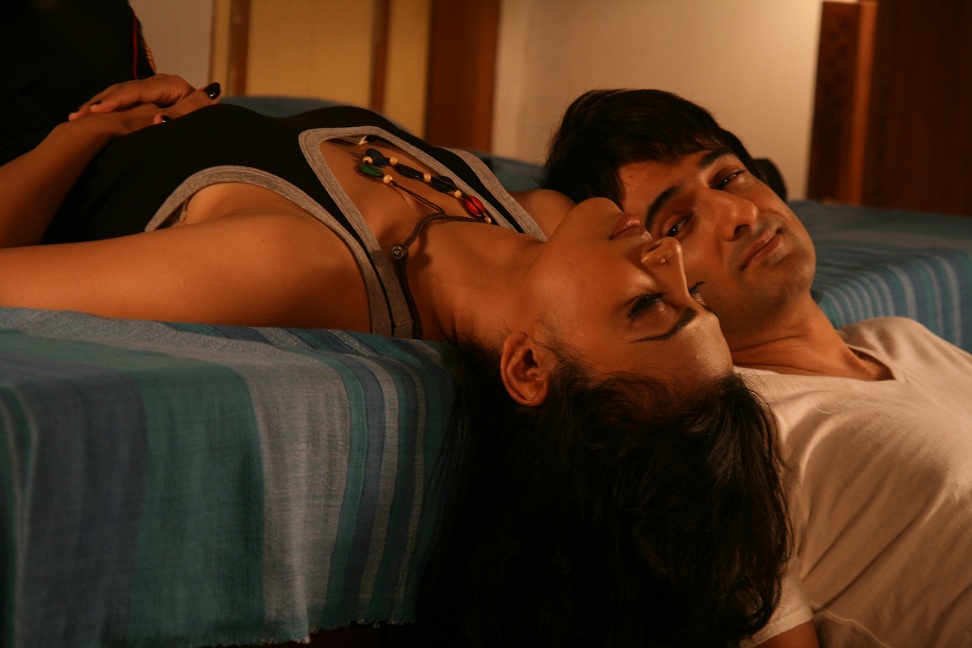
This one deserves to be up here among the best simply because it dared to tell stories no one ever told you before. Onir’s anthology film with a superb ensemble handled complex issues of identity, child abuse, incest and homosexuality with great sensitivity and understanding, without ever resorting to shock and awe to sensationalise the issues explored. Read the review here.

Number 3: Shor In The City | Rating: 7/10
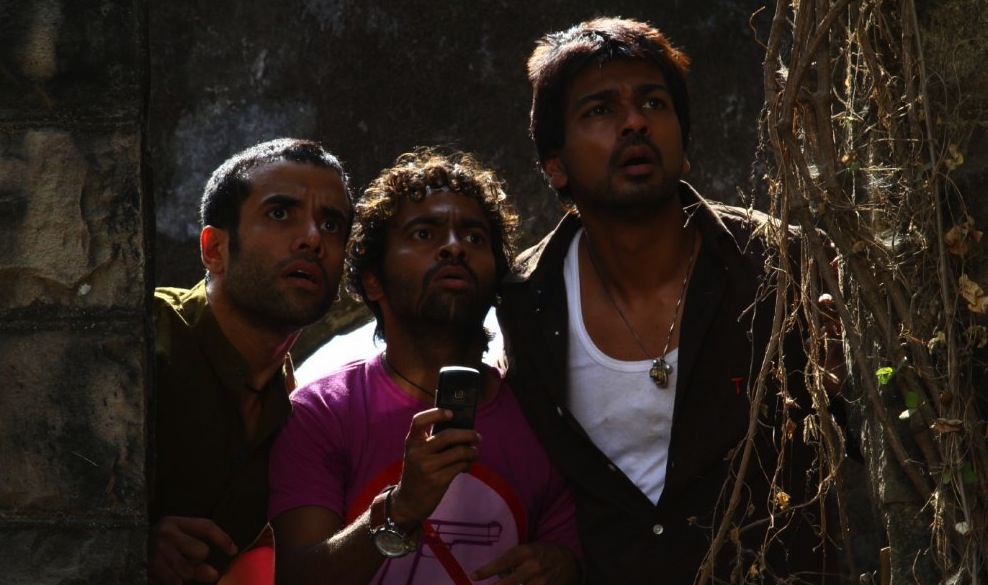
An explosive film that captures the inter-connectedness of chaos and karma in Mumbai as a microcosm of India, Shor In The City and makes you fall in love with the noise. Raj & DK’s influences may be Western but the heart of this film beats for India with its non-judgmental take on morality, supremacy of karma and the overbearing force of the universe. Read the full review here.

Number 2: Pyaar Ka Punchnama | Rating: 9/10

This was a story on the bittersweet pangs of love told from an unabashedly male point of view. A rare perspective that showed men as the weaker sex. This has a bunch of stereotypical women just like how chick flicks paint men in monotones but what makes it all real is how it explores men and their vulnerability when it comes to relationships, yet keeping the mood light. No Hindi film has captured relationship angst better than that five-minute monologue in Luv Ranjan’s Pyaar Ka Punchnama. Funny and intense. Read the full review here.

Number 1: Rockstar, directed by Imtiaz Ali | Rating: 9/10
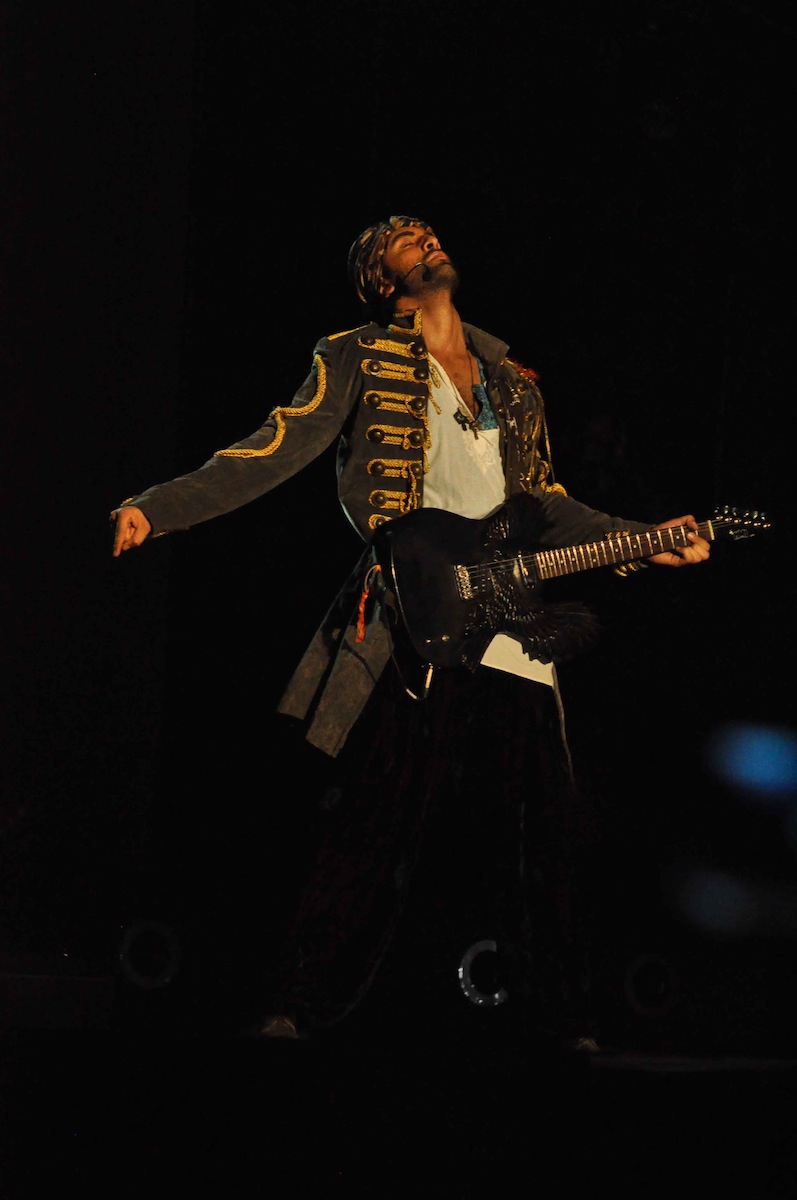
This sufi rock opera was the almost-perfect musical narrative in ages, fronted by a solid Ranbir Kapoor with Nargis Fakhri being the only jarring note. Indian cinema found another outlet for all that has been repressed. Romance, sex but most of all, choice and freedom. The angst of an alienated artiste who hates to conform has never felt more real. Hats off to Ranbir Kapoor, Imtiaz Ali and A.R. Rahman, the men who rocked 2011 by giving us most things that went right with our Hindi cinema. The film that gave the system the finger. Read the full review here.

(The ones that almost made the list: Bol, That Girl in Yellow Boots, Shaitan (didn’t get a chance to review it but was let down by the second half), Tanu Weds Manu, Dhobi Ghat, Yeh Saali Zindagi, No One Killed Jessica, Mujhse Fraandship Karoge (didn’t review, loved the acting but too many co-incidences to take seriously), Ra.One & Ladies Versus Ricky Bahl… in that order)

This list originally appeared in The Hindu.

Don 2: Two Plates and a Ham Burglar

December 27, 2011 · by sudhishkamath

Genre: Action

Director: Farhan Akhtar

Cast: Shah Rukh Khan, Priyanka Chopra, Lara Dutta, Boman Irani, Kunal Kapoor

Storyline: Don is a smartass. Don is a smartass. Don is a smartass. Repeat statement scene after scene.

Bottomline: Ra.One was the smarter SRK film this year.

Imagine this. You’re in prison. You haven’t eaten all day. And someone tells you: You have fifteen minutes to come up with a script for the Don sequel. And you can walk free.

No time to think. You start with the punchlines first. Obviously, you begin with the epic one that the 1978 film made popular. “Don Ko Pakadna Mushkil Hi Nahin, Na Mumkin Hai”. You come up with a couple of good ones. But since you’re running out of time, you just fill in Punchline Nos. 13, 26 and 49 with the same “Don Ko Pakadna” line.

Too much pressure. But you are in prison and need to get out.

Fine, put that in the first act. Don is in prison. But wait, he can’t get caught according to the best punchline you have. Ok, so he got himself in.

But why? You don’t know. Ok, so you write “Don smiles mysteriously.”

Ten minutes left.

You continue scribbling… Don is in prison. But Don has many a dushman (arch-enemy in Don-speak) there. Ok, let’s say Don has come to break one of his enemies out of prison. Say Vardhan (Boman Irani). Why? You don’t know. So you write “Don smiles mysteriously.”  You can think of the why later.

Now you are really stuck.

All you can think of is prison and prison food. Stale fish served last week had inmates down with food poisoning. Brainwave. Engineer food-poisoning and break jail.

All that thought of food is getting you hungry. What you would not give for a plate of leftovers. A brainwave again. Don wants to steal plates. Plates? Five minutes left.

Focus. YOU want a plate of food. Don probably just wants to steal plates used to make money. How? Write “Don smiles mysteriously.”

Think harder. Don’s a chase film. You can’t just change genre and make it a heist film. That would be blasphemy. But you need to get out before prison changes the genre of your life to gay porn.

Fourteen minutes are up. Don steals the plates. How? Action scenes. Let action director figure that out. Also add, “Don smiles mysteriously.” Lame big shocking twist. Obvious one but time up. The End.

So you smile mysteriously and hand over your script. You’re free.

It turns out that Farhan Akhtar who has ambitions of making a slick looking film like Ocean’s Eleven with stunts from Mission Impossible has already started shoot before he’s read your script.

Since it’s the sequel, the actors already know what they are doing. Shah Rukh Khan walks in suits, reels of slow motion shots are canned and bottles of hair gel are sacrificed, take after take.

Lara Dutta shakes it to the tune of the title track of the previous film since she’s been told the song will be just like the old one.

Priyanka knows she has to say all her lines exactly the same way when she speaks to Don. In a tone that says: “I want to do you. I want to do you now.”

SRK loves the punchlines. They glorify him. Wait till Sallu hears them.

“Let me do it again,” says Shah Rukh after every line. “A punchline needs to be delivered in style.” But Mr. Khan, there are some 50 punchlines in here, says the assistant director. “It’s ok. They love me,” he opens his arms wide, smirks and delivers it like Punchline No. 51 looking at us.

They are at the scene where Don can just trigger off an explosion and escape but that would mean SRK doesn’t get a chance to say a good line. “Well, we have to shoot Roma then,” says the action director. Bang. Roma is shot. And timing presents itself. “Little does Don’s Dushman know that before he can make a move, Don has already made his next,” says Don. Boom.

The editor wishes his studio exploded and didn’t have to put this together. But he’s getting a fat cheque. He does his job to the best of his ability and is almost done when he hears that line “Don Ko Pakadna Mushkil hi nahin…”

Screw it, says the editor, stops it right before SRK could finish the line and walks out.

End credits slapped together with a song recorded even before the script was written. The film releases. And a critic scratches his head wondering if he should take this cheesy action entertainer seriously enough to dissect or analyse it.

“Ok, whatever I can type in 15 minutes,” he says.

This review originally appeared here.

The Dirty Picture: Choli Ke Peeche Dil… missing!

December 10, 2011 · by sudhishkamath

Genre: Drama

Director: Milan Luthria

Cast: Vidya Balan, Emraan Hashmi, Tusshar Kapoor, Naseeruddin Shah

Storyline: Small town girl runs away from home to become a star of dirty pictures

Bottomline: A fantastic Vidya Balan fronts this entertaining, titillating romp that delivers one tight slap on the face of hypocrisy of showbiz… but does little else.

Picture this: A sexy Scarlett Johansson (or Zuleikha Robinson if you want some Indian blood) in a Kimi Katkar biopic directed by Danny Boyle. There’s meticulous attention paid to recreate the feel of Mumbai with Hindi film posters, Bollywood dance choreography, low cut cholis etc. but… all the speaking parts and even some of the songs are in English. Except for one. Say Chamma Chamma! Think that would make for a credible biopic set in the eighties?

Yes, Milan Luthria may not be our Danny Boyle. But The Dirty Picture is just as out of place in Madras as that Scarlett film in Mumbai. All the posters and a lot of the production design is in Tamil but the songs and speaking parts are in Hindi. The only Tamil song used is the jingle-savvy Nakku Mukka, which is anything but representative of the eighties. And this fish out of water feel of this biopic considerably waters down the impact. We are never able to take this film seriously beyond what the title promises. A dirty picture. That too, almost.

Vidya Balan performs with an attitude that Scarlett may never be capable of. This is the single-most boldest performance by a woman in the history of Indian cinema not because of the reels of cleavage, in almost every frame in fact, but because of the large frame she flaunts and carries off on screen in an age where heroines are called fat if they cannot maintain a size zero figure. Vidya apparently put on 12 kilos for this film and they all show. It needs some amount of guts and sass to pull it off and she sizzles in this role tailor-made to show off her acting chops.

Like she says, “Films run only because of one reason: Entertainment, entertainment, entertainment. And I am entertainment,” this is a film that will truly run because Vidya Balan is entertainment. She wears slutty clothes, makes dirty noises, pouts out horny faces, dances with thunder thighs and delivers some great old fashioned dialoguebaazi, speaking mostly in punch-lines.  She makes it impossible for you to take your eyes off the screen even when things get predictable in the later part of the film.

The makers (Milan Luthria and writer Rajat Arora) seem a little too afraid to get into the darker aspects of the tragic life of a star like Silk and most of the sadness is limited to showing the dark circles under her eyes. Even when her life is spiraling down, the film wants to go away from the tragedy and show you a love song. Clearly, they don’t want to depress you because depressing films don’t do well at the box office.

However, The Dirty Picture makes up for lack of depth with spirit and attitude. It is commendable that there’s no attempt to make a dirty picture look too clean or classy. Milan stays loyal to the genre and makes sure the frontbenchers get all the titillation. This is about bringing the subaltern into the mainstream and giving that genre and the women fronting that cinema their due. And that grand statement of the film comes a tad too early – at the halfway point. When Silk goes to pick up her award and calls the film industry’s bluff. “I am your dirty little secret,” she says.

She truly believes that what she does is ahead of her time and would one day be seen as a revolution against the male-driven film business.

For all that talk of feminism, the film regresses a little towards the later part when it strays into Madhur Bhandarkar territory when a broke heroine of dirty films has to resort to porn to save her house. And with that one scene, by depicting pornography as an evil compromise she must do, The Dirty Picture draws its moral line between the mainstream and the subaltern. All the good work is undone because we are told dirty pictures are OK for a woman of spirit but soft-porn… No, too low? Talk about hypocrisy.

If this film proves anything at all, it is this. We haven’t lost our appetite for dirty pictures. We are a country of voyeurs.

And poor Silk Smitha continues to be exploited even after her death.

For barring her screen name, this picture has nothing to do with her story.

I’m always in a state of excitement – Dev Anand (1923 – Forever)

December 4, 2011 · by sudhishkamath

In his mid-seventies, the grand young man of Indian Cinema has finally decided to do a rare father’s role in his latest project ‘Love at Times Square’. He was in Chennai for a couple of days to catch up with the music recording sessions at Amir Mahal with his music director Lucky Ali.

“I’ve been sitting here for about five hours, up to myself. I haven’t made any calls at all. I haven’t spoken to anyone. But I was celebrating those moments. Now, even as I am talking to you, I’m celebrating life,” Dev Anand, who people around affectionately call Dev Saab, talks to Sudhish Kamath on his approach to life and films.

VERY FEW know that Lagaan was not the first film to have a cricket match climax. Aamir Khan was belting boundaries almost a decade ago in Awwal Number which the director says was a different subject when he took it up. On sports and terrorism.

“I make no conscious effort. Maybe I am different. But I deliberately don’t want to toe anybody’s line. So I’m always on the offbeat line. If the film fails, it just remains an experiment. If the film clicks, it sets a trend. So why should I play safe all the time,” asks Dev Saab.

We remind him that ‘Censor’ didn’t do very well. “I knew that it might not work. Because censorship is not what a common man can relate to. It just addressed a problem faced by a film-maker,” he reasons.

“I am courageous. I look forward to win and I have the courage to lose and be in the race again. And keep watching, I’ll win with this one,” he winks, adding he’s casting Lucky Ali as music director for the first time.

‘Love at Times Square’

Is it a sheer co-incidence that most of his films have English titles? “Yes, it is a co- incidence. Love is almost a Hindi word… Hume Tumse Love Ho Gaya…Times Square is a place…Just like Mount Road. So like Love at Mount Road, this one’s about Love at Times Square,” Dev Saab smiles.

We are tempted to ask where does he get his radical ideas and stories from?  “From life. Every day, we see a million things. Something from that strikes you. Then you sleep with it, become obsessed with it, build a script and then make the film,” he explains.

“Love at Times Square is a contemporary Indian love story set in America. Times Square is a character in the film. It all started when I went to receive an award from Hillary Clinton last year. It was a Saturday evening when I saw Times Square. That plays defines joy. Two weeks later, I was returning from San Francisco, when I stopped by at New York. It was a Saturday evening yet again. And I remembered something that happened to me 35 years ago,” Dev Saab recollects with a twinkle in his eyes.

“It is a very personal incident which I will reveal before the release of the film. Anyway, so I got very excited… I work very fast, got the script done. And I shot 7-8 hours of footage on New Year’s Eve at Times Square. When the whole world waits to welcome the new year, the place is wonderful. We have done some great shots.”

But didn’t he say he hadn’t finalised the cast? “Special effects. We would incorporate this with the cast later because it is impossible to shoot on New Year’s Eve with the cast in any case,” he says.

Why has Hindi cinema been obsessed with American brands and locations, especially over the last half of the decade? “TV has brought it. Globalisaton has brought it. Nothing wrong with it. Why not,” asks Dev Saab.

“When I open your heart, you are an Indian. But when you talk, when you write, it’s a different language you are talking. You are wearing a trouser, but you are still Indian. And there are so many Asians in America,” he says.

“It’s a budget of Rs.10-12 crores. If it clicks, it’s big money. If it doesn’t, there’s no money. But this movie is made for an international audience. I’m looking forward to it. I’m in a state of excitement. I’m always in a state of excitement. That’s why I make films,” Dev Saab adds.

“It’s a fantastic profession. Because you are dealing with people, they are discussing you. They say it’s bad… They say it’s good, but they are still discussing you. You are giving them a choice. If they like it, they see it, or they see the next film. You can’t have hits all the time. But you are leaving something for the world for posterity. That’s why I love this great medium.”

(This is an interview I did with him a decade ago for The Hindu.)


Mayakkam Enna: High on love

December 1, 2011 · by sudhishkamath

You must have heard the story of a man who finds a near-dead snake in the snow. He tends to it, nurses it with warmth and soon enough, the snake springs back to life only to bite the guy who rescued it.

Director Selvaraghavan is that kind of guy who nursed an audience that comprised of misogynists, male chauvinists, stalkers, voyeurs, roadside romeos and assorted slackers pining for love that always went unrequited.

His films gave them warmth, stoked the fire to pursue the girl to the point of invading her space or gratifying their fantasies. Be it peeping into her room when she’s changing in 7G Rainbow Colony or making them sing ‘Variya?’ (Pudhupettai) to girls around the city. Be it fulfilling their fantasy of urban women fighting for/snuggling up to one of their kind (Aayirathil Oruvan) or making them cheer ‘Adra Avala’ (Mayakkam Enna).

Selvaraghavan has always had strong women in his films but the way they were treated has always been a little problematic. Men harassed and/or abused women in his films and hardly apologized for it. On the contrary, the crowd seemed to be rooting for these glorified anti-heroes.

There has always been the lower-middle-class single-guy unrequited love angst associated with his kind of cinema that instantly connected with an audience that formed the major chunk of movie-goers. Friends called him the poor man’s Mani Ratnam not because he lacked technique but because his heroes were always from the lower middle class.

From sex to voyeurism to abuse, he never shied away from showing what Mani Ratnam would be more discreet about. And that raw, edgy, bold crassness has always been his signature because people hailing from that lower middle class economic background were like that. Crude, rough and not the kinds who would look for euphemisms.

So when Selvaraghavan makes a film that works as an apology to womankind for all that misogynist, chauvinistic behaviour his films have been accused of promoting, his loyal but rabid lower middle class fan base that loved his old films seems to be unable to come to terms with the coming of age of Selvaraghavan’s cinema and its changing sensibility.

It’s not that Selvaraghavan has crossed over to cater to a more elite audience. He hasn’t entirely but this film surely seems like a transition into a more refined sensibility of restraint and understatement. Which is why the only jarring bits in Mayakkam Enna are the dramatic crying scenes that feel a little overdone ONLY because the rest of the film is so classy, subtle and understated.

So when the best scene of the film played out (one that is both disturbing and sentimental as Richa tries to scrub the blood off the floor – a better actress may have played this with greater restraint), the unruly college crowd, the snake Selvaraghavan provided warmth to, now bared its fangs. The crowd was laughing at the crying hero who is apologizing to the woman for what he has done.

And Dhanush cries quite a bit in the film. That’s a far cry from what heroes do. He also gets slapped by pretty much everyone he looks up to – first the girl, then the guy who steals his credit (slapped not literally but emotionally) and finally by his best friend.

They soon, as we, realise that the angry tough young man who sings ‘Adra Avala’ is actually a cluelessly lost, soft-hearted, sentimental fool who is weak in resolve. Whether it is getting the girl he is attracted to or claiming credit that is rightfully his.

Contrastingly, the girl here is the hero of the film. She wears the pants. She takes the initiative for the kiss (which we don’t see in a Selvaraghavan film – another indication of the director’s changing sensibility). She fights for him when he’s too scared to confront his best friend.  She fights for him even when he has given up (by sending his pics to magazines). She fights for him even when he is consumed by self-pity and dejection. She does not give up on him ever. She is the breadwinner, the mother and the wife.

Again, not because she’s a doormat but because she believes that he’s just mentally ill with all that angst eating him up. She knows that the only cure for that mental illness is to make him get his confidence back. She has the choice to leave him but she doesn’t. On the other hand, she is not quick to forgive him. She takes her time.

If Gran Torino was Clint Eastwood’s way of saying sorry for having led a generation astray with his brand of cowboy justice, Mayakkam Enna serves as Selvaraghavan’s apology (even if unintended) to women for all the harassment portrayed (and unintentionally glorified) in his past films.

It’s a solid tribute to the strength and resilience of the Indian wife, who for years now, has stood by her husband no matter what an asshole he has been. Yes, the Indian woman has changed and she no longer puts up with shit. But it’s never too late to acknowledge the woman behind every successful man.

Hats off to Dhanush to sink his teeth into a role that required him to completely submit to the character of a despicably weak man who deserves our sympathy but not our respect (it’s not a role any mainstream Tamil film hero would have taken up) and still infuse it with a boyish charm of someone real we know. No character in the film, barring the photographer who steals the credit is entirely evil but even there, when the man asks his assistants to throw him off the set, there is no stereotypical portrayal of goons pushing him to the floor to dramatic music. (Here, as perfect it may be, I really don’t want to comment on GV Prakash’s score. I am afraid to credit this young composer with any good work because he has constantly proved to be a thief. That is the thing when you steal and do it more than once, nobody believes you when it is really yours. Once you are in the business of stealing, you are a thief no matter what else you do.)

It’s the shades of grey within relationships that Selvaraghavan revels in and he works magic in this area. Friends fight, some scars remain, some cracks stay open but everything heals with time. It’s that strong, credible human fabric binding the relationships in the film that makes Mayakkam Enna rise above all its logical oversights (be it the geographical accuracy of the kind of animals/birds shot by the photographer, the places it is featured in or the cosmetic detail of Dhanush’s wig in the final act) and overdone histrionics (the crying scenes and that humiliation scene where he has to act as a dog probably put in to cater to an audience that was missing director Vikraman and SA Rajkumar’s score). Elaborate points on what works and what doesn’t are in Baradwaj Rangan’s review here. I agree with Baddy on most points.

Like most of Selvaraghavan’s films, the first and the second half feels like two different films. Here, the first is about a guy falling in love with his best friend’s girlfriend and the second is about a frustrated man turning abusive unable to cope with failure. There’s no point asking him to do a screenwriting course or telling him that he lacks what is needed to make it big because some people are just happy doing what comes naturally to them.

And this is an intensely personal film about an artist who can put the camera in front of an old woman and make her look beautiful with all her wrinkles.

So it seems autobiographical when he calls his biggest critic and tells her in his moment of truth: “I don’t want to do a course to know how to shoot light and shadow in a studio. I know I can capture life as it is. With all its beauty. I rather be happy doing something I like doing than stay unhappy doing something I don’t because it pays. I may never become big but I will remain happy.” And ironically, that is what he thought back then. He does not stay happy. Such is the nature of man.

Selvaraghavan knows he can see the beauty of the wild side of nature. His films are an exposition on the nature of man. He’s high on that passion to capture that beast. He’s a man in love with what he does. There’s nothing that makes him happier than recognition for his work.

Well done, Selva in bringing us this unique love story about a man in love with his craft. And a heroine who brought them together.

Rating: 8/10

  • Blog at WordPress.com.
Privacy & Cookies: This site uses cookies. By continuing to use this website, you agree to their use.
To find out more, including how to control cookies, see here: Cookie Policy
  • Subscribe Subscribed
    • MADRAS INK.
    • Join 483 other subscribers
    • Already have a WordPress.com account? Log in now.
    • MADRAS INK.
    • Subscribe Subscribed
    • Sign up
    • Log in
    • Report this content
    • View site in Reader
    • Manage subscriptions
    • Collapse this bar
 

Loading Comments...