• SUDA MING’S CHANNEL
  • TALKING FILMS
  • Good Night | Good Morning
  • My Talk Show
  • PROFILE

MADRAS INK.

Menu

  • Archives
  • Columns
  • Diary
  • Interviews
  • My Films
  • Reviews
  • Good Night | Good Morning

  • Word thru the bird

    Tweets by SudhishKamath
  • Connect with GNGM

    Connect with GNGM
  • About GNGM

    Reviews

    “A cerebral joyride”
    Karan Johar, filmmaker on REDIFF

    “Among the most charming and creative Indian independent films”
    J Hurtado, TWITCH

    ★★★★✩
    “You don’t really need a big star cast… you don’t even need a big budget to get the techniques of filmmaking bang on…”
    Allen O Brien, TIMES OF INDIA

    ★★★★✩
    “An outstanding experience that doesn’t come by too often out of Indian cinema!”
    Shakti Salgaokar, DNA

    ★★★
    “This film can reach out the young, urban, upwardly mobile, but lonely, disconnected souls living anywhere in the world, not just India.”
    Namrata Joshi, OUTLOOK

    “I was blown away!”
    Aseem Chhabra, MUMBAI MIRROR

    “Good Night Good Morning is brilliant!”
    Rohit Vats, IBN-LIVE

    ★★★✩✩
    “Watch it because it’s a smart film.”
    Shubha Shetty Saha, MIDDAY

    ★★★✩✩
    “A small gem of a movie.”
    Sonia Chopra, SIFY

    ★★★✩✩
    “A charming flirtation to watch.”
    Shalini Langer, INDIAN EXPRESS

    “Interesting, intelligent & innovative”
    Pragya Tiwari, TEHELKA

    “Beyond good. Original, engrossing and entertaining”
    Roshni Mulchandani, BOLLYSPICE

    * * * * *
    Synopsis

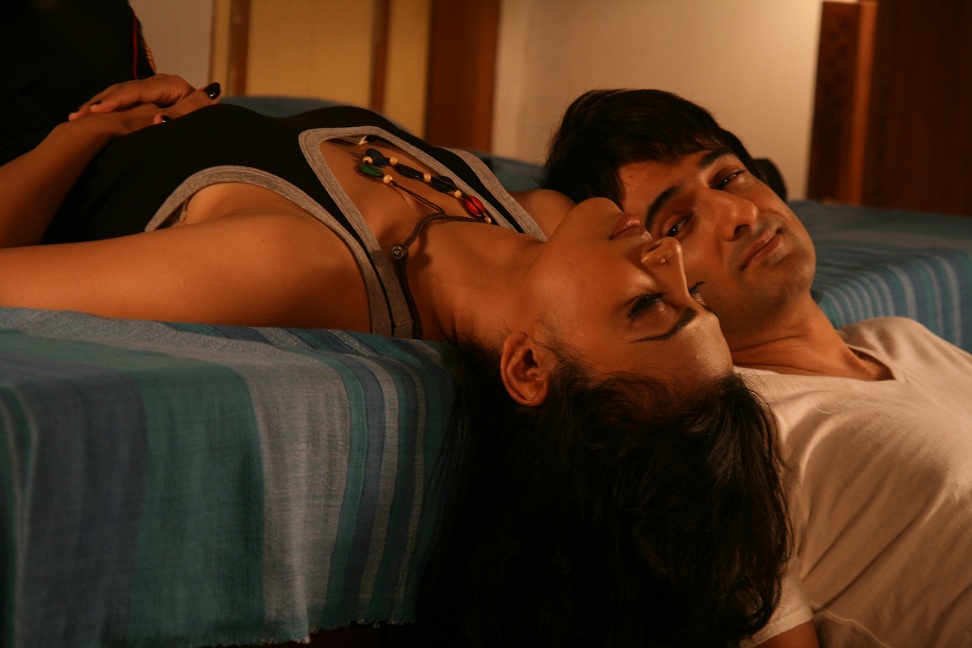
    ‘Good Night Good Morning’ is a black and white, split-screen, conversation film about two strangers sharing an all-night phone call on New Year's night.

    Writer-Director Sudhish Kamath attempts to discover good old-fashioned romance in a technology-driven mobile world as the boy Turiya, driving from New York to Philadelphia with buddies, calls the enigmatic girl staying alone in her hotel room, after a brief encounter at the bar earlier in the night.

    The boy has his baggage of an eight-year-old failed relationship and the girl has her own demons to fight. Scarred by unpleasant memories, she prefers to travel on New Year's Eve.

    Anonymity could be comforting and such a situation could lead to an almost romance as two strangers go through the eight stages of a relationship – The Icebreaker, The Honeymoon, The Reality Check, The Break-up, The Patch-up, The Confiding, The Great Friendship, The Killing Confusion - all over one phone conversation.

    As they get closer to each other over the phone, they find themselves miles apart geographically when the film ends and it is time for her to board her flight. Will they just let it be a night they would cherish for the rest of their lives or do they want more?

    Good Night | Good Morning, starring Manu Narayan (Bombay Dreams, The Love Guru, Quarter Life Crisis) and Seema Rahmani (Loins of Punjab, Sins and Missed Call) also features New York based theatre actor Vasanth Santosham (Bhopal: A Prayer for Rain), screenwriter and film critic Raja Sen and adman Abhishek D Shah.

    Shot in black and white as a tribute to the era of talkies of the fifties, the film set to a jazzy score by musicians from UK (Jazz composer Ray Guntrip and singer Tina May collaborated for the song ‘Out of the Blue), the US (Manu Narayan and his creative partner Radovan scored two songs for the film – All That’s Beautiful Must Die and Fire while Gregory Generet provided his versions of two popular jazz standards – Once You’ve Been In Love and Moon Dance) and India (Sudeep and Jerry came up with a new live version of Strangers in the Night) was met with rave reviews from leading film critics.

    The film was released under the PVR Director’s Rare banner on January 20, 2012.

    Festivals & Screenings

    Mumbai Film Festival (MAMI), Mumbai 2010 World Premiere
    South Asian Intl Film Festival, New York, 2010 Intl Premiere
    Goa Film Alliance-IFFI, Goa, 2010 Spl Screening
    Chennai Intl Film Festival, Chennai, 2010 Official Selection
    Habitat Film Festival, New Delhi, 2011 Official Selection
    Transilvania Intl Film Festival, Cluj, 2011 Official Selection, 3.97/5 Audience Barometer
    International Film Festival, Delhi, 2011 Official Selection
    Noordelijk Film Festival, Netherlands, 2011 Official Selection, 7.11/10 Audience Barometer
    Mumbai Film Mart, Mumbai 2011, Market Screening
    Film Bazaar, IFFI-Goa, 2011, Market Screening
    Saarang Film Festival, IIT-Madras, 2012, Official Selection, 7.7/10 Audience Barometer

    Theatrical Release, January 20, 2012 through PVR

    Mumbai
    Delhi
    Gurgaon
    Ahmedabad
    Bangalore
    Chennai
    Hyderabad (January 27)

    * * * * *

    More information: IMDB | Facebook | Youtube | Wikipedia | Website

  • Browse: Categories

  • December 2025
    M T W T F S S
    1234567
    891011121314
    15161718192021
    22232425262728
    293031  
    « Dec    
  • Recent Posts

    • Simmba: A departure from the formula
    • Zero: The hero who wasn’t
    • Protected: AndhaDhun: What did that end mean?
    • Love and other cliches
    • October: Where is Dan?

Browsing Category Archives

Website under construction.

Best of 2011: The Year Bollywood Grew Up

December 31, 2011 · by sudhishkamath

Usual disclaimers: The top grossers of the year have absolutely no correlation to critical acclaim. Critics are not soothsayers of commercial success or representative of public opinion and every best of the year list around the world are at best a sum up of personal favourites – one person’s opinion – and not to be accorded any further importance than just that. Also, only films that have had a nationwide theatrical release have been considered in making this list.

2011 was the year when films stepped out of the safe zone. Here’s how.

10: Aarakshan | Rating: 6.5/10

Aarakshan was a political landmine that addressed the issue of reservation by advocating inclusion and insisting that the issue thrived on discrimination. After setting up the points of debate in the first half, the film soon assumes the drama and syntax of street-theatre (simplification of good and evil with archetypes) to get its point across to the grassroots, much to the disappointment of the urban elite. Rarely do filmmakers set out to make big political films and despite the sensibility disconnect, director Prakash Jha had his heart in the right place. Read the full review here.

9: The Dirty Picture | Rating: 7/10

Very rarely does the Bollywood heroine get a role with enough meat. Even if she did, very rarely did she flaunt all that meat. Vidya Balan was brave enough to get herself out of shape to play a siren from the South and faced the cameras with make-up designed to make her look ugly in the second half. We only wish the Milan Luthria’s film went deeper into her soul without shying away from darkness and tragedy as the film cuts to song and dance afraid to show us pain and suffering. Read full review here.

Number 8: Zindagi Milegi Na Dobara | Rating: 7/10

Zoya Akhtar’s confidently slow paced holiday film with the boys was let down by the blatant in-your-face promotion of Spain as a tourist destination and Hollywood hero issues (Daddy, girl, space issues respectively). ZNMD made up by creating some genuinely warm moments of fun and will be remembered as the day the mainstream Bollywood heroine took the initiative and rode a cruiser to seize the moment and kiss her man.  A delightful role reversal. Read full review here.

Number 7: I am Kalam | Rating: 7/10

We complain that we don’t make films for children and that cinema is becoming too adult but when those rare little gems come out, what were the parents doing? Nila Madhab Panda’s I am Kalam is the film the man it is dedicated to will approve of. It’s a sweet little inspiring film about children and spirit that shows a young India at the cusp of change. After setting it up so credibly, it settles to be a regular entertainer with a happy ending. Read the full review here.

Number 6: Stanley Ka Dabba | Rating: 7/10

The freshness of Amole Gupte’s Stanley Ka Dabba is to be seen to be believed. It’s realistic, choking and a tad manipulative with that social message slapped on it towards the end, but an effective, engaging film that completely charms you with its ensemble and heartwarming moments of spirit. With no Aamir Khan, or any familiar name in the credits, Stanley Ka Dabba works magic with its innocence. Read the full review here.

Number 5: Delhi Belly | Rating: 7/10

Delhi Belly was like that street food that causes the condition. Unhealthy yet inviting. Bollywood finally became brave enough to swear and casually show oral sex on screen. With its laugh a minute irreverence and attitude, this patchy but funny film directed by Abhinay Deo and written by Akshat Verma was the night Bollywood got old enough to be allowed into the frat house and let out everything that’s been repressed. Read the full review here.

Number 4: I Am Afia Megha Abhimanyu Omar | Rating: 7/10

This one deserves to be up here among the best simply because it dared to tell stories no one ever told you before. Onir’s anthology film with a superb ensemble handled complex issues of identity, child abuse, incest and homosexuality with great sensitivity and understanding, without ever resorting to shock and awe to sensationalise the issues explored. Read the review here.

Number 3: Shor In The City | Rating: 7/10

An explosive film that captures the inter-connectedness of chaos and karma in Mumbai as a microcosm of India, Shor In The City and makes you fall in love with the noise. Raj & DK’s influences may be Western but the heart of this film beats for India with its non-judgmental take on morality, supremacy of karma and the overbearing force of the universe. Read the full review here.

Number 2: Pyaar Ka Punchnama | Rating: 9/10

This was a story on the bittersweet pangs of love told from an unabashedly male point of view. A rare perspective that showed men as the weaker sex. This has a bunch of stereotypical women just like how chick flicks paint men in monotones but what makes it all real is how it explores men and their vulnerability when it comes to relationships, yet keeping the mood light. No Hindi film has captured relationship angst better than that five-minute monologue in Luv Ranjan’s Pyaar Ka Punchnama. Funny and intense. Read the full review here.

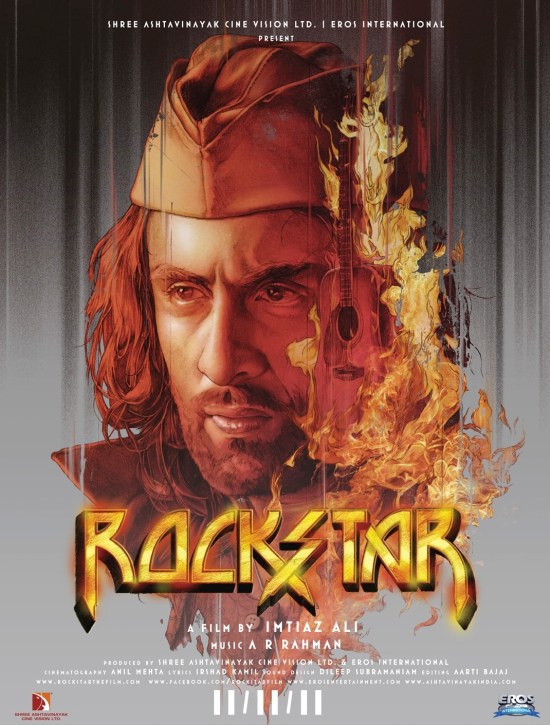
Number 1: Rockstar, directed by Imtiaz Ali | Rating: 9/10

This sufi rock opera was the almost-perfect musical narrative in ages, fronted by a solid Ranbir Kapoor with Nargis Fakhri being the only jarring note. Indian cinema found another outlet for all that has been repressed. Romance, sex but most of all, choice and freedom. The angst of an alienated artiste who hates to conform has never felt more real. Hats off to Ranbir Kapoor, Imtiaz Ali and A.R. Rahman, the men who rocked 2011 by giving us most things that went right with our Hindi cinema. The film that gave the system the finger. Read the full review here.

(The ones that almost made the list: Bol, That Girl in Yellow Boots, Shaitan (didn’t get a chance to review it but was let down by the second half), Tanu Weds Manu, Dhobi Ghat, Yeh Saali Zindagi, No One Killed Jessica, Mujhse Fraandship Karoge (didn’t review, loved the acting but too many co-incidences to take seriously), Ra.One & Ladies Versus Ricky Bahl… in that order)

This list originally appeared in The Hindu.

Don 2: Two Plates and a Ham Burglar

December 27, 2011 · by sudhishkamath

Genre: Action

Director: Farhan Akhtar

Cast: Shah Rukh Khan, Priyanka Chopra, Lara Dutta, Boman Irani, Kunal Kapoor

Storyline: Don is a smartass. Don is a smartass. Don is a smartass. Repeat statement scene after scene.

Bottomline: Ra.One was the smarter SRK film this year.

Imagine this. You’re in prison. You haven’t eaten all day. And someone tells you: You have fifteen minutes to come up with a script for the Don sequel. And you can walk free.

No time to think. You start with the punchlines first. Obviously, you begin with the epic one that the 1978 film made popular. “Don Ko Pakadna Mushkil Hi Nahin, Na Mumkin Hai”. You come up with a couple of good ones. But since you’re running out of time, you just fill in Punchline Nos. 13, 26 and 49 with the same “Don Ko Pakadna” line.

Too much pressure. But you are in prison and need to get out.

Fine, put that in the first act. Don is in prison. But wait, he can’t get caught according to the best punchline you have. Ok, so he got himself in.

But why? You don’t know. Ok, so you write “Don smiles mysteriously.”

Ten minutes left.

You continue scribbling… Don is in prison. But Don has many a dushman (arch-enemy in Don-speak) there. Ok, let’s say Don has come to break one of his enemies out of prison. Say Vardhan (Boman Irani). Why? You don’t know. So you write “Don smiles mysteriously.”  You can think of the why later.

Now you are really stuck.

All you can think of is prison and prison food. Stale fish served last week had inmates down with food poisoning. Brainwave. Engineer food-poisoning and break jail.

All that thought of food is getting you hungry. What you would not give for a plate of leftovers. A brainwave again. Don wants to steal plates. Plates? Five minutes left.

Focus. YOU want a plate of food. Don probably just wants to steal plates used to make money. How? Write “Don smiles mysteriously.”

Think harder. Don’s a chase film. You can’t just change genre and make it a heist film. That would be blasphemy. But you need to get out before prison changes the genre of your life to gay porn.

Fourteen minutes are up. Don steals the plates. How? Action scenes. Let action director figure that out. Also add, “Don smiles mysteriously.” Lame big shocking twist. Obvious one but time up. The End.

So you smile mysteriously and hand over your script. You’re free.

It turns out that Farhan Akhtar who has ambitions of making a slick looking film like Ocean’s Eleven with stunts from Mission Impossible has already started shoot before he’s read your script.

Since it’s the sequel, the actors already know what they are doing. Shah Rukh Khan walks in suits, reels of slow motion shots are canned and bottles of hair gel are sacrificed, take after take.

Lara Dutta shakes it to the tune of the title track of the previous film since she’s been told the song will be just like the old one.

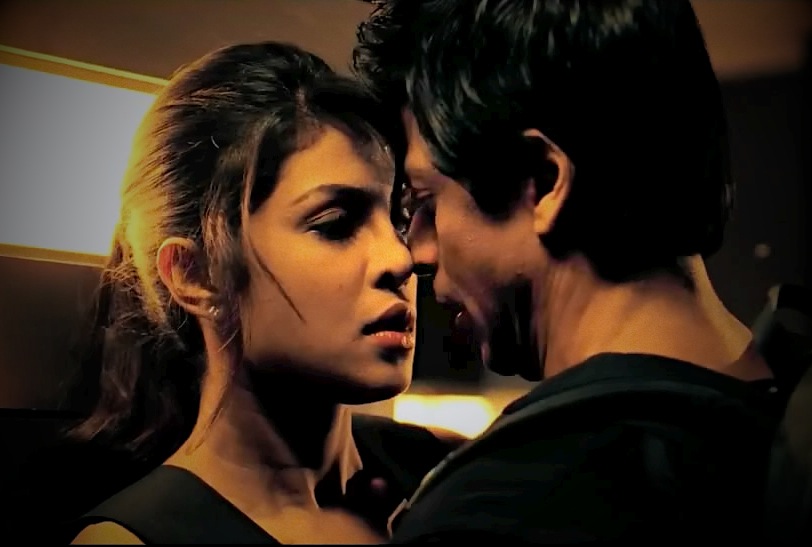
Priyanka knows she has to say all her lines exactly the same way when she speaks to Don. In a tone that says: “I want to do you. I want to do you now.”

SRK loves the punchlines. They glorify him. Wait till Sallu hears them.

“Let me do it again,” says Shah Rukh after every line. “A punchline needs to be delivered in style.” But Mr. Khan, there are some 50 punchlines in here, says the assistant director. “It’s ok. They love me,” he opens his arms wide, smirks and delivers it like Punchline No. 51 looking at us.

They are at the scene where Don can just trigger off an explosion and escape but that would mean SRK doesn’t get a chance to say a good line. “Well, we have to shoot Roma then,” says the action director. Bang. Roma is shot. And timing presents itself. “Little does Don’s Dushman know that before he can make a move, Don has already made his next,” says Don. Boom.

The editor wishes his studio exploded and didn’t have to put this together. But he’s getting a fat cheque. He does his job to the best of his ability and is almost done when he hears that line “Don Ko Pakadna Mushkil hi nahin…”

Screw it, says the editor, stops it right before SRK could finish the line and walks out.

End credits slapped together with a song recorded even before the script was written. The film releases. And a critic scratches his head wondering if he should take this cheesy action entertainer seriously enough to dissect or analyse it.

“Ok, whatever I can type in 15 minutes,” he says.

This review originally appeared here.

The Dirty Picture: Choli Ke Peeche Dil… missing!

December 10, 2011 · by sudhishkamath

Genre: Drama

Director: Milan Luthria

Cast: Vidya Balan, Emraan Hashmi, Tusshar Kapoor, Naseeruddin Shah

Storyline: Small town girl runs away from home to become a star of dirty pictures

Bottomline: A fantastic Vidya Balan fronts this entertaining, titillating romp that delivers one tight slap on the face of hypocrisy of showbiz… but does little else.

Picture this: A sexy Scarlett Johansson (or Zuleikha Robinson if you want some Indian blood) in a Kimi Katkar biopic directed by Danny Boyle. There’s meticulous attention paid to recreate the feel of Mumbai with Hindi film posters, Bollywood dance choreography, low cut cholis etc. but… all the speaking parts and even some of the songs are in English. Except for one. Say Chamma Chamma! Think that would make for a credible biopic set in the eighties?

Yes, Milan Luthria may not be our Danny Boyle. But The Dirty Picture is just as out of place in Madras as that Scarlett film in Mumbai. All the posters and a lot of the production design is in Tamil but the songs and speaking parts are in Hindi. The only Tamil song used is the jingle-savvy Nakku Mukka, which is anything but representative of the eighties. And this fish out of water feel of this biopic considerably waters down the impact. We are never able to take this film seriously beyond what the title promises. A dirty picture. That too, almost.

Vidya Balan performs with an attitude that Scarlett may never be capable of. This is the single-most boldest performance by a woman in the history of Indian cinema not because of the reels of cleavage, in almost every frame in fact, but because of the large frame she flaunts and carries off on screen in an age where heroines are called fat if they cannot maintain a size zero figure. Vidya apparently put on 12 kilos for this film and they all show. It needs some amount of guts and sass to pull it off and she sizzles in this role tailor-made to show off her acting chops.

Like she says, “Films run only because of one reason: Entertainment, entertainment, entertainment. And I am entertainment,” this is a film that will truly run because Vidya Balan is entertainment. She wears slutty clothes, makes dirty noises, pouts out horny faces, dances with thunder thighs and delivers some great old fashioned dialoguebaazi, speaking mostly in punch-lines.  She makes it impossible for you to take your eyes off the screen even when things get predictable in the later part of the film.

The makers (Milan Luthria and writer Rajat Arora) seem a little too afraid to get into the darker aspects of the tragic life of a star like Silk and most of the sadness is limited to showing the dark circles under her eyes. Even when her life is spiraling down, the film wants to go away from the tragedy and show you a love song. Clearly, they don’t want to depress you because depressing films don’t do well at the box office.

However, The Dirty Picture makes up for lack of depth with spirit and attitude. It is commendable that there’s no attempt to make a dirty picture look too clean or classy. Milan stays loyal to the genre and makes sure the frontbenchers get all the titillation. This is about bringing the subaltern into the mainstream and giving that genre and the women fronting that cinema their due. And that grand statement of the film comes a tad too early – at the halfway point. When Silk goes to pick up her award and calls the film industry’s bluff. “I am your dirty little secret,” she says.

She truly believes that what she does is ahead of her time and would one day be seen as a revolution against the male-driven film business.

For all that talk of feminism, the film regresses a little towards the later part when it strays into Madhur Bhandarkar territory when a broke heroine of dirty films has to resort to porn to save her house. And with that one scene, by depicting pornography as an evil compromise she must do, The Dirty Picture draws its moral line between the mainstream and the subaltern. All the good work is undone because we are told dirty pictures are OK for a woman of spirit but soft-porn… No, too low? Talk about hypocrisy.

If this film proves anything at all, it is this. We haven’t lost our appetite for dirty pictures. We are a country of voyeurs.

And poor Silk Smitha continues to be exploited even after her death.

For barring her screen name, this picture has nothing to do with her story.

I’m always in a state of excitement – Dev Anand (1923 – Forever)

December 4, 2011 · by sudhishkamath

In his mid-seventies, the grand young man of Indian Cinema has finally decided to do a rare father’s role in his latest project ‘Love at Times Square’. He was in Chennai for a couple of days to catch up with the music recording sessions at Amir Mahal with his music director Lucky Ali.

“I’ve been sitting here for about five hours, up to myself. I haven’t made any calls at all. I haven’t spoken to anyone. But I was celebrating those moments. Now, even as I am talking to you, I’m celebrating life,” Dev Anand, who people around affectionately call Dev Saab, talks to Sudhish Kamath on his approach to life and films.

VERY FEW know that Lagaan was not the first film to have a cricket match climax. Aamir Khan was belting boundaries almost a decade ago in Awwal Number which the director says was a different subject when he took it up. On sports and terrorism.

“I make no conscious effort. Maybe I am different. But I deliberately don’t want to toe anybody’s line. So I’m always on the offbeat line. If the film fails, it just remains an experiment. If the film clicks, it sets a trend. So why should I play safe all the time,” asks Dev Saab.

We remind him that ‘Censor’ didn’t do very well. “I knew that it might not work. Because censorship is not what a common man can relate to. It just addressed a problem faced by a film-maker,” he reasons.

“I am courageous. I look forward to win and I have the courage to lose and be in the race again. And keep watching, I’ll win with this one,” he winks, adding he’s casting Lucky Ali as music director for the first time.

‘Love at Times Square’

Is it a sheer co-incidence that most of his films have English titles? “Yes, it is a co- incidence. Love is almost a Hindi word… Hume Tumse Love Ho Gaya…Times Square is a place…Just like Mount Road. So like Love at Mount Road, this one’s about Love at Times Square,” Dev Saab smiles.

We are tempted to ask where does he get his radical ideas and stories from?  “From life. Every day, we see a million things. Something from that strikes you. Then you sleep with it, become obsessed with it, build a script and then make the film,” he explains.

“Love at Times Square is a contemporary Indian love story set in America. Times Square is a character in the film. It all started when I went to receive an award from Hillary Clinton last year. It was a Saturday evening when I saw Times Square. That plays defines joy. Two weeks later, I was returning from San Francisco, when I stopped by at New York. It was a Saturday evening yet again. And I remembered something that happened to me 35 years ago,” Dev Saab recollects with a twinkle in his eyes.

“It is a very personal incident which I will reveal before the release of the film. Anyway, so I got very excited… I work very fast, got the script done. And I shot 7-8 hours of footage on New Year’s Eve at Times Square. When the whole world waits to welcome the new year, the place is wonderful. We have done some great shots.”

But didn’t he say he hadn’t finalised the cast? “Special effects. We would incorporate this with the cast later because it is impossible to shoot on New Year’s Eve with the cast in any case,” he says.

Why has Hindi cinema been obsessed with American brands and locations, especially over the last half of the decade? “TV has brought it. Globalisaton has brought it. Nothing wrong with it. Why not,” asks Dev Saab.

“When I open your heart, you are an Indian. But when you talk, when you write, it’s a different language you are talking. You are wearing a trouser, but you are still Indian. And there are so many Asians in America,” he says.

“It’s a budget of Rs.10-12 crores. If it clicks, it’s big money. If it doesn’t, there’s no money. But this movie is made for an international audience. I’m looking forward to it. I’m in a state of excitement. I’m always in a state of excitement. That’s why I make films,” Dev Saab adds.

“It’s a fantastic profession. Because you are dealing with people, they are discussing you. They say it’s bad… They say it’s good, but they are still discussing you. You are giving them a choice. If they like it, they see it, or they see the next film. You can’t have hits all the time. But you are leaving something for the world for posterity. That’s why I love this great medium.”

(This is an interview I did with him a decade ago for The Hindu.)


Mayakkam Enna: High on love

December 1, 2011 · by sudhishkamath

You must have heard the story of a man who finds a near-dead snake in the snow. He tends to it, nurses it with warmth and soon enough, the snake springs back to life only to bite the guy who rescued it.

Director Selvaraghavan is that kind of guy who nursed an audience that comprised of misogynists, male chauvinists, stalkers, voyeurs, roadside romeos and assorted slackers pining for love that always went unrequited.

His films gave them warmth, stoked the fire to pursue the girl to the point of invading her space or gratifying their fantasies. Be it peeping into her room when she’s changing in 7G Rainbow Colony or making them sing ‘Variya?’ (Pudhupettai) to girls around the city. Be it fulfilling their fantasy of urban women fighting for/snuggling up to one of their kind (Aayirathil Oruvan) or making them cheer ‘Adra Avala’ (Mayakkam Enna).

Selvaraghavan has always had strong women in his films but the way they were treated has always been a little problematic. Men harassed and/or abused women in his films and hardly apologized for it. On the contrary, the crowd seemed to be rooting for these glorified anti-heroes.

There has always been the lower-middle-class single-guy unrequited love angst associated with his kind of cinema that instantly connected with an audience that formed the major chunk of movie-goers. Friends called him the poor man’s Mani Ratnam not because he lacked technique but because his heroes were always from the lower middle class.

From sex to voyeurism to abuse, he never shied away from showing what Mani Ratnam would be more discreet about. And that raw, edgy, bold crassness has always been his signature because people hailing from that lower middle class economic background were like that. Crude, rough and not the kinds who would look for euphemisms.

So when Selvaraghavan makes a film that works as an apology to womankind for all that misogynist, chauvinistic behaviour his films have been accused of promoting, his loyal but rabid lower middle class fan base that loved his old films seems to be unable to come to terms with the coming of age of Selvaraghavan’s cinema and its changing sensibility.

It’s not that Selvaraghavan has crossed over to cater to a more elite audience. He hasn’t entirely but this film surely seems like a transition into a more refined sensibility of restraint and understatement. Which is why the only jarring bits in Mayakkam Enna are the dramatic crying scenes that feel a little overdone ONLY because the rest of the film is so classy, subtle and understated.

So when the best scene of the film played out (one that is both disturbing and sentimental as Richa tries to scrub the blood off the floor – a better actress may have played this with greater restraint), the unruly college crowd, the snake Selvaraghavan provided warmth to, now bared its fangs. The crowd was laughing at the crying hero who is apologizing to the woman for what he has done.

And Dhanush cries quite a bit in the film. That’s a far cry from what heroes do. He also gets slapped by pretty much everyone he looks up to – first the girl, then the guy who steals his credit (slapped not literally but emotionally) and finally by his best friend.

They soon, as we, realise that the angry tough young man who sings ‘Adra Avala’ is actually a cluelessly lost, soft-hearted, sentimental fool who is weak in resolve. Whether it is getting the girl he is attracted to or claiming credit that is rightfully his.

Contrastingly, the girl here is the hero of the film. She wears the pants. She takes the initiative for the kiss (which we don’t see in a Selvaraghavan film – another indication of the director’s changing sensibility). She fights for him when he’s too scared to confront his best friend.  She fights for him even when he has given up (by sending his pics to magazines). She fights for him even when he is consumed by self-pity and dejection. She does not give up on him ever. She is the breadwinner, the mother and the wife.

Again, not because she’s a doormat but because she believes that he’s just mentally ill with all that angst eating him up. She knows that the only cure for that mental illness is to make him get his confidence back. She has the choice to leave him but she doesn’t. On the other hand, she is not quick to forgive him. She takes her time.

If Gran Torino was Clint Eastwood’s way of saying sorry for having led a generation astray with his brand of cowboy justice, Mayakkam Enna serves as Selvaraghavan’s apology (even if unintended) to women for all the harassment portrayed (and unintentionally glorified) in his past films.

It’s a solid tribute to the strength and resilience of the Indian wife, who for years now, has stood by her husband no matter what an asshole he has been. Yes, the Indian woman has changed and she no longer puts up with shit. But it’s never too late to acknowledge the woman behind every successful man.

Hats off to Dhanush to sink his teeth into a role that required him to completely submit to the character of a despicably weak man who deserves our sympathy but not our respect (it’s not a role any mainstream Tamil film hero would have taken up) and still infuse it with a boyish charm of someone real we know. No character in the film, barring the photographer who steals the credit is entirely evil but even there, when the man asks his assistants to throw him off the set, there is no stereotypical portrayal of goons pushing him to the floor to dramatic music. (Here, as perfect it may be, I really don’t want to comment on GV Prakash’s score. I am afraid to credit this young composer with any good work because he has constantly proved to be a thief. That is the thing when you steal and do it more than once, nobody believes you when it is really yours. Once you are in the business of stealing, you are a thief no matter what else you do.)

It’s the shades of grey within relationships that Selvaraghavan revels in and he works magic in this area. Friends fight, some scars remain, some cracks stay open but everything heals with time. It’s that strong, credible human fabric binding the relationships in the film that makes Mayakkam Enna rise above all its logical oversights (be it the geographical accuracy of the kind of animals/birds shot by the photographer, the places it is featured in or the cosmetic detail of Dhanush’s wig in the final act) and overdone histrionics (the crying scenes and that humiliation scene where he has to act as a dog probably put in to cater to an audience that was missing director Vikraman and SA Rajkumar’s score). Elaborate points on what works and what doesn’t are in Baradwaj Rangan’s review here. I agree with Baddy on most points.

Like most of Selvaraghavan’s films, the first and the second half feels like two different films. Here, the first is about a guy falling in love with his best friend’s girlfriend and the second is about a frustrated man turning abusive unable to cope with failure. There’s no point asking him to do a screenwriting course or telling him that he lacks what is needed to make it big because some people are just happy doing what comes naturally to them.

And this is an intensely personal film about an artist who can put the camera in front of an old woman and make her look beautiful with all her wrinkles.

So it seems autobiographical when he calls his biggest critic and tells her in his moment of truth: “I don’t want to do a course to know how to shoot light and shadow in a studio. I know I can capture life as it is. With all its beauty. I rather be happy doing something I like doing than stay unhappy doing something I don’t because it pays. I may never become big but I will remain happy.” And ironically, that is what he thought back then. He does not stay happy. Such is the nature of man.

Selvaraghavan knows he can see the beauty of the wild side of nature. His films are an exposition on the nature of man. He’s high on that passion to capture that beast. He’s a man in love with what he does. There’s nothing that makes him happier than recognition for his work.

Well done, Selva in bringing us this unique love story about a man in love with his craft. And a heroine who brought them together.

Rating: 8/10

Inglourious Basterds: All about the release

November 22, 2011 · by sudhishkamath

Right from spelling the title intentionally wrong, Tarantino makes it clear that he’s in no mood for minor insignificant things like how others spell or perceive things, especially history.

He wants you to see the world through his manic eyes and suspend your disbelief at the prospect of what history could’ve been, if he had his way with the Time Machine.

Be it Americans beating Nazis dead with baseball bats, skinning Nazi scalps and wearing them around the belt as trophies or reducing Hitler to a terrified caricature, Tarantino provides a cathartic release and gratifies the world’s need for revenge and the unanimous animosity towards Hitler. Violence has never been more cathartic and this film is living proof that history is often re-written by winners.

There’s a childish innocence to this irreverence. Remember when you were a kid and played with toys? You always made your favourite toy beat the crap out of the ugly toy. We showed our hatred for the bad guys by painting them stupid, making it a blatantly one-sided battle.

So how do you make an intentionally one-sided film gripping while portraying villains, in this case – the Nazi top management – as a bunch of silly, stupid idiots.

Tarantino does this by creating a proxy villain Hans Landa (Christoph Waltz), also known as the Jew Hunter, who right in the first scene, claims that he does not think like a Nazi. In other words, he’s smarter than his race.

He does not even believe in their ideology as he makes amply clear that Nazis may not agree with the comparison. The Jew Hunter calls himself a detective later in the film and we realise that he’s a man smart enough to know when to switch loyalties. Surely, a man as smart as him will not pick the team that’s losing.

But to appreciate the larger story, let’s begin from the structure of Tarantino’s screenplay. Despite being two and a half hours long, Tarantino employs only five chapters.

So simple that Inglourious Basterds is a textbook deployment of the classic five-act structure: Exposition, Rising Action, Climax, Falling Action and Resolution.

But what’s interesting is that all five chapters do exactly the same thing. They put the hunter and the hunted with a confined space, lets the audience in on where the cat and the rat/s are positioned, builds up tension, cooks up the pressure till we can’t take it anymore and lets it explode with a sudden release – usually a quick intense burst of violent action.

It’s also the story of the rat that burns down an empire of cats.

Exposition: Chapter One – Once Upon a Time In Nazi Occupied France

“What a tremendously hostile world that a rat must endure. Yet not only does he survive, he thrives. Because our little foe has an instinct for survival and preservation second to none… And that Monsieur is what a Jew shares with a rat.” – Col Hans Landa

The superimposed text tells us everything we want to know. The year is 1941 and a young woman turns pale looking at the SS officers heading towards their house on the hill.

Beethoven’s Fur Elise fuses in quite smoothly with Morricone’s guitar as she goes in to tell her father, who in turn asks them not to panic and get inside the house. The man tries to stay calm as he waits with bated breath.

Tarantino who usually uses pop music that people are familiar with, this time around employs Beethoven.

Now, Tarantino hasn’t just used Beethoven’s Fur Elise (Not Moonlight Sonata as previously mentioned – corrected by Krishnan Subramanian) as it is. It is an interpretation, an instrumental piece called ‘The Verdict,’ by Ennio Morricone, the veteran composer of many spaghetti Western films, to hint at the potential of gunfire around the corner. A perfect, smooth mix of epic classiness of Beethoven with the rugged sonic bizarreness of Morricone – music that can give you goose bumps given the tense situation.

A father with three daughters has a notorious officer of the SS visit him and we get the notion that the man knows more than his face gives away.

Tarantino sets it up as an ordinary routine enquiry in French before he stumps us by making the investigator switch to English, a language the auteur writer-filmmaker is most comfortable in, to get us to the juiciest part of the conversation – the reason the Nazi officer has come to his house: To make sure that the Frenchman isn’t harbouring a Jewish family.

Soon enough, Tarantino lets us in on a secret when he pans the camera down the table they are seated at, and even below the ground surface as we find a Jewish family hiding in fright. Now, we know there’s just a wooden floor that separates the hunter and the hunted and the Jew Hunter is classy, confident and almost dead sure about what his instinct.

The conversation that plays out is paced slow, punctuated with sinister all-knowing smiles by the Nazi and we have our heart in our mouth wondering if he would successfully intimidate a well-built calm looking man smoking a pipe into submission and surrender.

So imagine our horror when he does and how coldly, Hans Landa switches back to French while signaling his men to open fire and spray bullets into that wooden floor instantly killing some of the family members, except one.

Now, Hans Landa is an evil man and supremely confident of getting his kill that he lets the sole survivor of the massacre get away with a menacing smile and a scream of “Au Revoir, Shosanna”.

So ends Chapter 1 with the perfect exposition of the two characters who are significant to the story. The Hunter simply called The Jew Hunter and the hunted is a Jewish girl called Shosanna. Will the Hunter get his prey? The cat and the rat chase begins.

Rising Action: Chapter 2 – Inglourious Basterds

 “Nazi ain’t got no humanity. They’re the foot soldiers of a Jew-hatin’, mass murderin’ maniac and they need to be dee-stroyed. That’s why any and every every son of a bitch we find wearin’ a Nazi uniform, they’re gonna die.” – Lt. Aldo Raine

Chapter 2 introduces us to rising action in the form of the titular bunch of the “Inglourious Basterds” who are gaining notoriety for the bloody trail of dead Nazis they leave behind. We are introduced to Aldo Raine (Brad Pitt), the suave American Lieutenant, who tells his men that he hasn’t come all the way to teach the Nazis lessons in humanity because the Nazi knows no humanity and that they have to be destroyed.

Moments after Raine tells his men that they owe him 100 Nazi scalps each, we get an idea of their savagery through Hitler’s annoyed over-the-top reaction that makes him look like a caricature. The motive is extremely clear at this point. Tarantino wants you to laugh at the idiot. Hitler is a cartoonish buffoon.

Soon, we get a first-hand account of the barbaric ritual of the Basterds skinning Nazi scalps when Raine and his men question a senior Nazi officer about the squad of Germans, their exact location and ammunition to facilitate another ambush.

When the Nazi respectfully refuses, we are introduced to the key heroes of the Basterds.

Stiglitz is introduced with a newspaper headline and quick montage of assorted visuals of him killing Gestapo officers. And Sgt Donny Donnowitz, also known as the Bear Jew (Eli Roth) is an emotional killer who clubs his victims to death with his baseball bat.

We are witness to the intensity of the raw violence delivered personally by his bare hands, in contrast to the covert gun-fire from the last Chapter – the acts themselves making it amply clear who the heroes are and who the bad guys are.

No better line to sum up the rising action than:

“You probably heard we ain’t in the prisoner-takin’ business; we in the killin’ Nazi business. And cousin, business is a-boomin’.” – Aldo Raine

Climax: Chapter 3 – A German Night in Paris

Shosanna is living in Paris three years after the massacre, running a cinema under a fake identity. The chapter begins with her packing up for the day when a young German officer tries to make conversation with her, the lines indicating that he’s interested in her romantically (and he doesn’t really suspect her).

He’s a charming young soldier and if he wasn’t the enemy, maybe she would’ve considered going out with him.

Ever after she snubs him, the soldier persists, stalks her and we find out that he’s some sort of a German war-hero Frederick Zoller who killed scores of soldiers sitting on top of a 300-feet high watch-tower called the Bird’s Nest (the term used to describe the tower more than clarifying how safe the sniper was sheltered).

We realise she now hates him more. So we are once again disturbed when German soldiers show up at her cinema and ask her to just come along with them.

We are temporarily relieved that this was Zoller’s way of wooing the girl. The war-hero turned actor and hero of the film ‘Nation’s Pride’, a film based on his act of “bravery” wants the premiere of his film at her cinema. His director Goebbels, the man second in command to Hitler and the Minister for Information and Propaganda, has his reservations but Zoller successfully convinces him.

And before we know it, Shosanna hears a familiar voice and freezes. The Jew Hunter. Only that he does not recognise her. Or so we hope. Once again, Tarantino milks the scene with the explosive chemistry of placing the Hunter and the Hunted in the same frame as Hans Landa has a few questions about her cinema, her family history and the black man who works at the cinema.

Tarantino cooks it powerfully with the visuals and his intimidating body language (Watch how he extinguishes his cigarette in his strudgel with cream, something he seemed to be fond of). He also drops a bombshell by telling Shosanna he meant to ask her something but can’t remember what it was. The tension here is released not through literal violence but as relief when she pees her pants.

The very next scene, Tarantino reveals the girl’s agenda – she wants her revenge. And she will have it. The hunted will turn into the hunter and kill the people responsible for the death of her family.

“Marcel: [in French; subtitled] What are we talking about?

Shosanna Dreyfus: [in French] Filling the cinema with Nazis and burning it to the ground.”

Things have reached a climax, there’s no going back and hiding anymore. She must have her revenge.

Falling Action: Chapter 4 – Operation Kino

What were the Basterds doing meanwhile? They were planning to blow up the venue on the day of the premiere too with the help of a spy – a German actress called Bridget Von Hammersmark (Diane Kruger).

Bridget had called for a meeting with two of the Basterds at an inconspicuous tavern.

“Yeah, in a basement. You know, fightin’ in a basement offers a lot of difficulties. Number one being, you’re fightin’ in a basement!” – Lt. Aldo Raine

Lt. Raine expresses his concern about the choice of a basement as a meeting place and once again, we know there could be trouble given the nature of the hunted meeting out in the open in the presence of hunters when we see the tavern infested with German soldiers playing a game with their favourite star Bridget.

Bridget seems to be a smart actress, playing along with the drunk soldiers, hoping not to arouse any suspicion on what she could be doing there. When one of them refuses to let the lady alone, one of the Basterds tells the German curtly not to disturb the officers, his accent making the soldier smell something fishy.

Soon, tension mounts and we realise that there was a senior Nazi officer who was listening to everything going on. He joins the party to investigate and before we know it, another long random conversation that has our heartbeats racing with the explosive nature of the discussion.

And soon, the violent explosive release of tension: A Mexican standoff involving testicles follows is resolved with a shooting spree that leaves most of those at the bar dead.

Bridget is shot in the process and though Raine manages to get her out of there to a veterinarian, they leave her shoe behind, enough for Landa to know that Bridget had a role to play in the shootout.

Resolution: Chapter 5 – Revenge of the Giant Face

“My name is Shosanna Dreyfus and THIS is the face… of Jewish vengeance!” – Shosanna Dreyfus

Shosanna’s decision to have her revenge through film is only a metaphor for Tarantino’s desire to avenge the death of thousands of Jews at the hands of the Nazis through his weapon – film, if not literally, at least artistically.

Film is the medium where he can legally unleash a fictional genocide and go on a Nazi-killing-spree.

He can pump bullets and drill holes in Hitler’s face with no questions asked and provide a cathartic release to decades of anti-Nazi angst.

He can make it look like the easiest thing on the planet given how many people wanted to see Hitler dead, including his own men. Or at least the smart among his men, like Hans Landa.

Like the rest of the film, the Hunted and the Hunters share a confined space in a movie hall as the roles reverse in the course of the chapter and Tarantino triggers bloody mayhem, rewriting history through this beautifully shot segment that also resolves the tragic unrequited love story of the guilt-ridden German war-hero smitten by the charming Shosanna without really knowing that she was a Jew.

Landa bargains his way with a whole list of demands including a home in Nantucket Island with the OSS but will the Basterds let him live?

Of course, as long as Landa can be spotted in a crowd with a Swastika screaming from his forehead that he’s a Nazi.

As Aldo Raine tells his fellow Basterd soon after carving out a nice little bloody Swastika on Landa’s forehead with his knife, we can almost hear Tarantino say that line from behind the camera.

“You know what, Utivich. This may just be my masterpiece.” 

Nobody could’ve rewritten history with such panache and wicked joy.

Time for the twain to meet

November 20, 2011 · by sudhishkamath

MGR-Sivaji, Rajni-Kamal.

We’ve heard it so often that Rajni, like MGR, does not need to act or try so hard as Sivaji or Kamal who have pushed themselves to play nine and ten roles respectively in the same film.

These actors stood the test of time for generations.

If MGR and Sivaji ruled the box office from the fifties to the mid seventies, Rajni and Kamal, who took stepped into their shoes around the seventies, still continue to hold fort with so many stars waiting to command that cult status.

Let’s talk about the wannabes later but first, what led to these twin-associations? Why has history never considered one greater than the other and why has any such debate always lead to a war of words?

Maybe because, for long, heroes in the Tamil cinema have either been played by a star or an actor.

A star, like MGR or Rajni, a matinee idol, is often celebrated as the messiah of the masses. Someone who through sheer presence and charisma, can liberate the poor from the bad guys.  To put it simply, we pay to watch his image play out. And he plays the same guy in every film.

An actor, like Sivaji or Kamal, a true artiste, is often cherished for the variety of roles he has essayed. Someone who constantly experiments and can make you laugh and cry with the power of performance. Again, simply put, we pay to watch him break his image. And he plays a different guy in every film.

We will never reach a consensus on whether a star is greater or an actor is greater because of the inherent dichotomy in their roles.

To be a star, you need to strengthen your image and deliver the same style, mannerisms and larger than life persona. But to be an actor, you need to constantly break the image, reinvent it every time and discover newer ways to portray characters, even if it means changing your look and appearance with every film.

MGR-Rajni with the superstar status accorded to them, have never felt the pressure to prove themselves artistically just like Sivaji-Kamal with the accolades and awards won, have never felt that they were wrong to experiment with the box office.

Interestingly, Rajni and Kamal started off as products of independent cinema in the hands of the auteur K.Balachander, who made films the way he wanted to make them, without any interference from stars on box office diktats. They even did similar roles for a bit on attaining star status and as Kamal Haasan has often revealed in interviews, they mutually decided not to eat into each other’s markets early on in their careers. It turned out to be the smartest thing they ever did.

Because they proved that cinema has a twin purpose – to entertain and to provoke. There’s a bit of the whore and the mother in our cinema and it’s always a clever mix of selling out and raising it with love and care that results in good cinema.

What better filmmaker to illustrate this than Mani Ratnam who got to work with the Rajni and Kamal at the prime of their careers in Thalapathy and Nayakan. While Thalapathy piggy-backed on Rajnikant’s charisma and delivered a gangster film about the good guy in the wrong camp, Nayakan rode on Kamal Haasan’s chameleon-esque abilities to play different roles as the same guy – the young brash gangster, the middle-aged wise Godfather and the all-grey Grandfather who couldn’t answer the question if he’s good or bad. Both these films had a mix of the popular elements and the artistic elements but it’s very clear which side of art and commerce they favoured more.

These were two of those rare films that the twain met.

It’s the burden of a star that he cannot play grey and it’s a curse of an actor that his films don’t always click at the box office because of constant experimentation.

Stars and actors over the last decade have tussled with this dilemma and choice presented to them. To be the next MGR-Rajni as promised by the Perarasus. Or, to be the next Sivaji-Kamal and work on the merit of the script and the role, irrespective of what the market says.

With the advent of satellite television in the nineties, the idiot box weaned away a huge chunk of family audiences. Cinema halls became the refuge of a largely single male population as our cinema descended into full-blown brawl-celebrating beerfests.

Films that celebrated the male ego. Films where it was totally ok for the hero to wash his face with beer in the morning and have the audience cheer to that. Films where the woman became the object of desire, the fantasy girl – the “Bombay girl” as industry insiders call the type.

What happens in a street fight or a brawl? You mess with someone and there’s a score you have to settle. Like the Western, the Southern genre became based on the challenge. Who can beat who. After a decade of THOSE settling-score-challenge films, we are today left with the following street fighters: Ajith, Vijay, Vikram and Suriya with Dhanush, Simbu and Jeeva among the younger generation of heroes.

While Ajith, Vijay and Simbu have continued to do roles that celebrate their image (the Thala/Thalapathy type), Vikram, Suriya, Dhanush and Jeeva have at least tried to experiment with the odd offbeat role every once in a while. We find that it will be a really uphill task for any of these guys to take the mantle from MGR-Sivaji and Rajni-Kamal simply because of the consistency with which they delivered good cinema, not just hits.

Apart from Suriya and Dhanush now and Vikram a few years ago, none of the other guys have been able to score good films. Most of them are still obsess over their title-tag baggage.

It is an encouraging sign that Ajith has dismantled his fan clubs and went all out to play a bad guy with Mankatha. But given the star baggage he brought to the role, it is still early to call him the next Kamal Haasan. And, he hasn’t provided the hits to make him the next Rajnikant.

Vijay continues doing what he does best with a hit or miss success-rate that skews towards failure more often than success.

Suriya has chanced upon this solution of mixing it up – do different films for different audiences. A “mass-film” with Hari, a “class-film” with Gautham and “a mass-film” with Murugadoss and a “class-film” with K.V.Anand and has made sure that even his mass-based roles are devoid of any baggage or self-referencing.

And Vikram would do well to choose his scripts more wisely, and do more Raavanans than self-glorifying fiascos like Kanthaswamy.

The younger guys, Dhanush, Simbu and Jeeva have a long way to go to even be compared with the big four – Ajith,Vijay, Suriya and Vikram – but the need of the hour is to bring back the balance between art and commerce that over the last two decades has titled towards commerce. Star-vehicles have constantly crashed after initial success.

In film business, the only real formula to success is understanding that there is no formula for success. We have long list of flops from the big four to illustrate that.

We need a focus shift towards directors once again. We need producers to understand that good cinema stems from storytelling rather than just one or two individuals.

We need more stars to do what Rajnikant did with his last film – he broke his mould and embraced a grey character like he did in the seventies with Enthiran.

We need more actors to do what Kamal Haasan did with his last film – he let another actor walk away with the best lines in Man Madan Ambu.

It takes grace and confidence for an actor to step away from the limelight and share the stage with the other players. Cinema becomes richer only when all characters are fleshed out.

We need our filmmakers to be able to tell their stories with flourish rather than blow up all the money to hero-worship one person’s ego.

We need producers and actors to back the vision of a creator. We need more auteurs. We need to encourage original thought.

We need women back in our cinema, not just as glam dolls, but as real women with real issues.

We need the balance between man and woman restored in our films.

We need the balance between art and commerce back.

We need the next MGR-Sivaji or Rajni-Kamal to be the same person.

We need the twain to meet.

We need our actors to be stars and our stars to be actors.

We need to let our filmmakers call the shots again, without the pressure of hero-worship or box office diktats. Let’s not forget that Rajni and Kamal are children of that film culture.

We need to put that culture back into business.

We need to put the cinema back into film.

(This article originally appeared on Frappe.)

Rockstar: In search of the free bird

November 18, 2011 · by sudhishkamath

For long, for ages, our mainstream commercial cinema has made us believe that Aal Izz Well with the world.

Or at least, that it will all be well in the end.

And that the entire universe conspires to bring you what you want if you want it real bad.

It probably does but not always the way you want it to happen. As the saying goes: Beware of what you wish for, because it might come true.

Dreams came true as the fantasies of our society played out on screen decade after decade as characters went from rags to riches or from lost to found or from falling in love to happily everafter.

Our films taught us to believe. That there is a system or a God or a hero that makes everything all right or at least delivers poetic justice even in the darkest of tragedies. If we do the right thing.

Our films made us feel good.

But you know what, the world sucks and there is no right thing.

There is no God to make your dream come true.

There is no hero who will save you.

There is a system, of course. But one that tells us how we should lead our lives. That defines the rights and wrongs and judges us on the basis of our behaviour. We are rewarded for conforming and punished for straying out of line.

The more developed our societies got, the more civilized we became, conforming and learning to live orderly in groups.

It’s fascinating how issues in our cinema reflected issues in our society as they trickled down from as big as land (fifties), nation (sixties), society (seventies) to family (eighties) and to identity (nineties when the hero at least temporarily became a non-resident Indian).

But in love stories over decades, there was always a faux morality, a set of rules in the society that kept lovers away – from Devdas to Mughal E Azam to Pyaasa to Qayamat Se Qayamat Tak.

Real life lovers went to the movies to see their fantasies played out and wept when they didn’t work out.

Soon, three young second generation filmmakers Sooraj Barjatya, Aditya Chopra and Karan Johar started negotiating with the family structure. Romance in films started becoming about manufacturing consent from the family system or the head of it – the patriarch who slowly changed from a villain type (Dalip Tahil, Amrish Puri) to a father figure (Amitabh Bachchan, Anupam Kher) type.

And by the end of the nineties, our youth had a mind of their own. It was no longer about land, nation, society, family or even their identity. It was about the self. About what they wanted. About what the heart wanted. Dil Chahta Hai. Parents didn’t stand between lovers anymore.

In spite of all these changes, one thing didn’t quite change. The girl always had to be pure and virginal unless she was playing the other woman, usually a prostitute with a heart of gold pining for a lost hero.

If Kashyap’s Dev D for a first time in ages finally let out all the pent up repressed sexuality from between the scenes, Imtiaz Ali does one better – he makes his hero romance a “neat and clean, hi-fi” married woman, one who is certainly NOT a virgin. Of course, a boy and a girl can be friends. Till they kiss. And it’s never the same after that.

In Imtiaz Ali’s Rockstar, the kiss happens right at the halfway point in the film, two full years after the girl has been married, even if not happily.

But let’s rewind a bit to how they got to that point.

She was doing what Simran did in Dilwale Dulhaniya Le Jayenge, having one last blast of fun before her wedding. And he was a happy-go-lucky slacker trying to make it big, just starting his journey from boy to man, being comfortably cocooned in the nest of his family.

She knew when she should take off her leather jacket and ready up for mehndi and He knew that she was off-limits as great as she was. He had to find pain but he was simply incapable of heavy-duty emotions.

He was, as his mentor called him, a “halka aadmi.” A light-hearted dork, a stranger to pain. His life was just perfect. Or so he thought. Just like any of us.

We think our lives are perfect because we conform to a system. Because we have jobs that pay well. Or a loving family. Or at least basic education. We don’t live in the seventies. We aren’t part of any hippie generation either.

What do we have? We have nothing but the boring middle class family values. Janardhan knows that. He probably does not even like the way his name sounds. But when she calls him Jordan out of the blue because she likes how cool it sounds, he’s found a new identity – of a man being somewhere he shouldn’t be doing something he shouldn’t be.

He had to be at an audition for Platinum records and here he was in Kashmir. He had to be chasing his dream of being a pop star and here he was with a girl he liked to spend time with.

Rockstar is about being in that place – where you are not supposed to be, doing what you are not supposed to be. The forbidden.

This was the domain of porn films that slowly crept into the adult films over the last decade as Mallika Sherawat kissed away to fame. And the forbidden has finally found its way into a mainstream film for all audiences.

Indian cinema through Imtiaz Ali’s film has finally found an outlet for all that has been repressed. Romance, sex but most of all, choice. And freedom to do what is best for the self, not family, not society, not nation.

Rock music is not just about drugs or sex. It’s always been about the freedom to express. The rage against the machine. The system.

It’s interesting how Imtiaz Ali ducks the clichés associated with rockstars. Jordan is no Devdas who takes to the bottle nor is he sleeping around with other women.

He hates the taste of alcohol. He finds his moment of truth at the dargah of Hazrat Nizammuddin. Heer is not his muse. God is. He finds God in him during his journey (if you listen to the lyrics of Kun Faya carefully) and heads back home to channel that God through his music. He completely surrenders to it and where it takes him. He settles down and tries to conform to the way of single life in the big city, pretending to get drunk and dance away his blues.

He’s almost made his peace with his situation of being estranged from his parents and the girl he strangely misses when he finds an opportunity to go to Prague. But he’s already pissed off the system by laughing at it. It just came to him naturally. He didn’t want to laugh at it. And the only way he can go Prague is by selling his soul to the Devil. The Special Contract. He just does not care. He wants her.

Raj in Dilwale Dulhaniya Le Jayenge went from Europe to the bride’s home in India to get his girl. Here, Jordan goes from India to Europe to another man’s wife’s home to get her. Together, they tick off everything that’s forbidden there – the underbelly of Prague, the seedy strip clubs, gay bars and discos with neon lights. More importantly, they kiss.

Aditya Chopra was manufacturing parental consent. Imtiaz Ali is violating moral codes.

It’s a kiss that triggers off years of pent up repressed emotion and sexuality. Not just in Rockstar but in all of Hindi cinema.

Raj and Simran stayed all night in a hotel room (DDLJ) and he didn’t even kiss her because he’s Hindustani and a Hindustani boy will NEVER do that to a Hindustani girl, we are told. But here, they talk about it first. He kisses her. She resists, scolds him and then changes her mind and kisses him passionately. Beautifully done.

This is that halfway point where our hero and heroine stop being the typical hero and heroine because they “cross the line”. They go all the way and do it. (Kabhi Alvida Na Kehna had the perfect opportunity for this moment when he makes love to another man’s wife but squandered it by making it look like they were killing an infant – with that much guilt writ on their faces, it seemed like Rani and SRK were undergoing punishment than having sex there!)

Here, as much as Heer tries to run back to her city (the leitmotif in the film for orderly life), her home, she finds herself stopping halfway on the bridge between home and her lover.

The moment he breaks into her house, he’s crossed a threshold, a point of no return from the law, the system and the society. And the musician becomes a rockstar craving for freedom to do what he really wants to do.

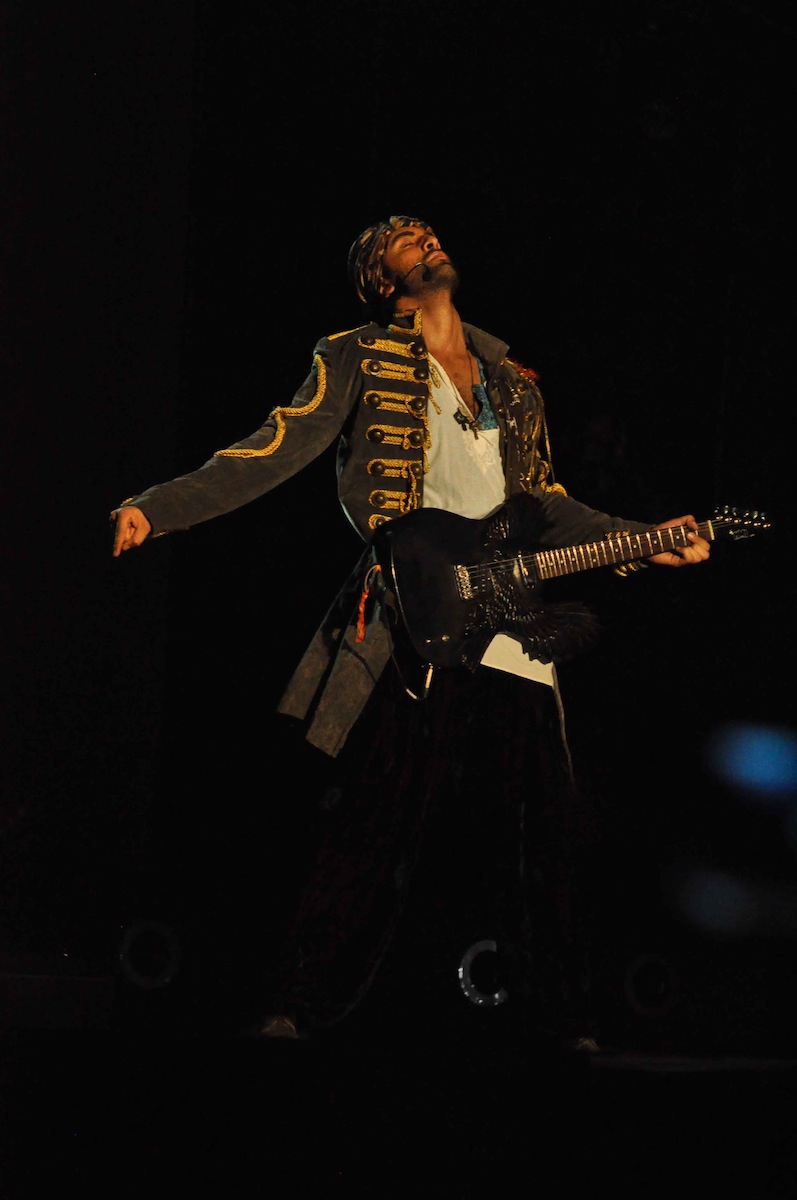
From a pop talent behind an album poetically called Sheher (City, the leitmotif and metaphor for the phase of his life where he conformed to the way of life) to a criminal behind bars during the launch of his album Negative (He stops in between Sadda Haq to tell us that he is searching for those wild pigeons that used to be where the City today is) to a true-blue rockstar who has given the society the finger, signed on by a bigger evil foreign company, endorsing a perfume called Noir (the name once again serving as a metaphor for that phase of his life where he has sold his soul), Ranbir delivers the performance of a lifetime, always uncomfortable with structures as Jordan, even before he knew he was. He’s winning every single Best Actor award next year.

At an audition earlier, we see Jordan unable to get in tune with someone else’s composition. “He is a different jaanwar (beast). He won’t stay in your cage,” as Shammi Kapoor (RIP, God bless Hindi cinema’s original rockstar) tells the head of the label despite the boy admitting to the shehnaii maestro that he really didn’t understand classical music. Here was a boy who didn’t like anything rigid or structured. He was naturally drawn towards the improvisational, free-flowing riffs of the guitar.

The beauty of it is that Jordan has no idea why he does things he does. He is not doing it to be a bad boy. He just finds himself at home jamming “Dum Maaro Dum” with prostitutes (He sings the ‘Duniya Ne Hum Ko Diya Kya’ bit) than an evening with his old friends. When his mentor screams at him in the middle of the road for his rash unpredictable behaviour, he confesses that he does not know why. He says he’s burning from within and he feels like worms are eating him from inside. His angst grew stronger every day and he felt more and more alienated from society.

She didn’t know it either. Heer is such a triumph of characterization that I will totally forgive Imtiaz for casting Nargis Fakhri, the only jarring note in this soulful rock opera.

Heer didn’t plan to fall in love with him. She didn’t plan to sleep him with. She didn’t even know that she was depressed and needed psychiatric counseling because she missed him. From being mentally unwell, she was becoming physically sick because she was infected by his presence in her life. She needed his touch to feel better and the longer the doses, the more dependent she became. They needed each other but it was forbidden. She had become Satine from Moulin Rouge.

But here again, it takes two-thirds of the film and about four and a half years for him to understand the connection they shared. “Main Sirf Tere Saath Hi Set Hoon, Yaar.” That one line sums up Imtiaz Ali’s brand of romance perfectly. A late realisation of love, a sense of settlement, with an old friend.

This is the feeling he has been fighting throughout the film.

On returning from Kashmir, he tries to find escape in videogames.

After being thrown out of home, he tries to find his peace through God.

After coming back from Prague, he tries to find his soul through his music.

He doesn’t care about Tibet. He cares about freedom when he’s singing Sadda Haq. All those cribbing about Imtiaz Ali blurring Free Tibet, if you knew enough about Tibet, you would recognise the Free Tibet flag shown in pretty much every frame of the concert shots throughout the film. It’s a part of his costume. Good thing the idiots censoring it couldn’t recognise the flag in half the film.

Very rarely has an Indian film succeeded in crafting a cohesive musical narrative where the lyrics are an integral part of the storytelling. Why is it that we have lost the ability to listen to the words and soak in the meaning? They tell us everything we need to know about the characters, their conflicts, their state of mind and the angst.

A film mounted on a scale as big as Rockstar needed the music that would make it wholly believable that a stadium in Europe would go crazy for an Indian musician. And who better than the man with two Oscars and a worldwide cult following to provide music that is not just credible but also a soul-stirring quality. If you have to buy one audio CD this year, go pick this one up.

Ranbir’s powerhouse presence, Mohit Chauhan’s vocals, Rahman’s music, Irshad Kamil’s lyrics, Anil Mehta’s cinematography, Aarti Bajaj’s editing and Imtiaz Ali’s vision make Rockstar a compelling biopic of a fictitious rebel without a cause. Loved how it unfolds as a jigsaw puzzle with bits of documentary footage of an enigmatic persona as we piece together his story in an effort to understand him and his pain.

The angst here is the driving force, the engine and the heartbeat of Rockstar and is something you will appreciate more if you’ve been an artist yourself. If you’ve experienced unrelenting pain, prolonged frustration and pounding heartaches, and channeled that choking feeling into a creative process as a cathartic outlet for your emotions.

Rockstar is the journey of every artist who has refused to conform to a system, to a structure, to a society, to a set-path or process not because he thought it was cool but because that’s who he is. It’s a journey of a never-ending search of that elusive peace, truth, happiness and freedom.

Art is all about the depth of that journey of self-discovery and Rockstar does full justice to that. It’s not about “Oh look, she’s walking, she’s cured! What a Bollywood film!”

She’s never cured completely. When the mother rejoices that her daughter was able to get out of bed, the doctor quickly acts as the reality check and tells her: Woh Aisi Hi Hai (She is just as she was.) When the mother is later ecstatic that her blood count has increased, the doctor is still skeptical (He’s not saying: Wow, it’s a medical miracle!) and tells her: Be logical.

And the answer she gives the Dr. Animesh should shut every critic up.

“We think we know life. But it surprises us. Stranger things have happened.”

I was in Auroville a few weeks ago for a film festival when I met this man with a hole at the bottom of his neck. He had lost all his hair, had no eyebrows and had lined up his eyes with kohl. I instantly knew he was a cancer patient. But here, he was dancing around, blowing bubbles for children and giving flowers to women. The doctors had given him three weeks to live. He got sick of chemotherapy, told them he wanted to die in peace and left for home. That was over two years ago. He healed himself. Or maybe he will die next week, we don’t know! That is life but the only truth is that he is alive today.

Even after that explanation about the mysteries of life, Imtiaz does what he must – pulls the plug on the happy ending and proves beyond doubt that Jordan’s “magic touch” was not her cure. It was her disease.

Imtiaz had to leave the artist with all the fame in the world and yet experience an empty void of nothingness. That was the point of it all.

“Yeh Duniya Agar Mil Bhi Jaaye Toh Kya Hai” (as the lines from Pyaasa go). Rockstar is also the exact antithesis to Pyaasa in the sense that there Vijay renounces the world, his identity and disappears into anonymity, frustrated with the society but no such happy ending for Jordan here. He does not find himself at the doorway of the auditorium where no one recognises him. He finds himself on the stage under the spotlight where there is no escape from all that he once wanted as he looks away at the doorway – the common motif in endings of both films.

Nothing is private anymore. Not even his emotions. His screams of pain had become art. Part of the music they were swaying to.

He’s an empty man feeling nothing looking at the sea of people cheering for him. He’s just standing there wishing he was under that bed-sheet with the girl he loved and there’s no one around. His process of alienation is complete. Jordan has to live like that because he had sold his soul to the devil, to the system, to a company.

There is nothing more tragic than a man still in search of what is long gone.

And once you’ve seen life through his eyes, you will just laugh at the next person who tells you: Aal izz Well.

Yes, the world sucks. So does this business of art, music and entertainment manufacturing feel good, faux morality and happy endings.

Good to see someone showed it the finger.

Imtiaz Ali, A.R. Rahman and Ranbir Kapoor have given us that rare film that’s true to everything rock music once stood for. The angst. The pain. The rage.

Rock is not dead. And all’s not well with the world.

Good Night | Good Morning releases on December 30

November 5, 2011 · by sudhishkamath


Finally, we have a release date. The film will release through PVR’s Director’s Rare banner on December 30 at  PVR in your metro (Delhi, Chandigarh, Baroda, Ahmedabad, Mumbai, Bangalore and Chennai). We are still working out something to get the film out in Hyderabad and Kolkata.

Good Night | Good Morning is also playing at the Noordelijk Film Festival in Leeuwarden in the Netherlands on November 10 and 11. If you are in that part of the world, do drop in. Come say Hi.

Being an independent film, we don’t really have a budget for publicity. Hence, we need your help to spread the word about the film. Here’s what you can do to help.

1. Post the trailer in your FB Wall / Twitter Updates/ Blog. Here’s the link. If you Like it, do click Like just so that we know if it’s working or not.

2. Go to http://facebook.com/goodnightgoodmorning and Like it to stay tuned for updates on upcoming screenings and premiere shows. Ask your friends to do the same.

3. If you want any more information to blog on /preview the film there’s quite a bit of information and photos and clips on http://goodnightgoodmorningthefilm.com

Lost: Seven years later

September 26, 2011 · by sudhishkamath

“We have to go back”
Seven years after the plane crash, I find myself in Jack’s shoes, craving to go back to the island and catch up with the Losties. Not because I didn’t get closure (I did, more on that in a bit) but because there will never be a show as deep, as philosophical, as enigmatic, as adventurous, as funny, as romantic, as introspective, as thrilling, as scientific, as spiritual, as geeky and freaky as Lost.

I still remember downloading and watching the Lost finale at four in the morning, alternating between tears of joy and sadness, as the bittersweet climactic moments of Lost left me with a choking feeling. It was the end of life as we knew it on the island, as six years flew past with the most memorable fictitious characters ever created… in the best story ever told in our times.

Lost is a triumph of storytelling, be it in terms of form, structurally (show me another story where storytellers have played with linearity in all possible ways – Flashbacks, flash forwards, time travel, sideways) or in terms of content, beyond genre (show me anothe story that traverses as many genres as this one – drama, romance, adventure, mystery, science fiction, period, fantasy, thriller, horror, action, feel-good, tragedy and comedy).

Yes, I know a lot of fans and regular viewers were disappointed with the way the show ended and I will go all out to call these guys infidels – Ye, of little faith. While some sci-fi geeks wanted more answers than the show provided, some just didn’t even understand the obvious answers and blamed the show for it.

I had been meaning to blog about the show and what it meant to me for over a year now but always kept putting off because I wanted to watch it all over again from start to end. Sadly, though I have the DVD box set and have watched all the Bonus features and finale quite a few times, I have never got the time required to watch it from start to finish all over again.

But I already have all the answers I needed and I am going to try and explain in this post why there’s nothing else I want to know about the story or the characters. I am fully satisfied with the answers the show has provided and anything that’s not is a little outside the scope of this story.

This show Lost obviously is about a bunch of people who find themselves lost metaphorically in their lives and physically on the island – a place they don’t fully understand after a plane carrying them crashes. The crash is a metaphor, we all have plans for life and suddenly there’s one thing that hits us and throws our lives completely out of control.

“We must let go of the life planned we have planned, so as to accept the one that is waiting for us.”

This Joseph Campbell quote is even mentioned in the Hero’s Journey bonus features in case you thought I was just reading too much into its significance with Lost (which was inspired by Star Wars, which in turn was inspired from the hero’s journey as outlined in Campbell’s book ‘The Hero With a Thousand Faces’.)

So what do we do when life as we know it, crashes into a zone from where there’s no escape but to confront your past, the ghosts that haunt, your greatest fears and darkest secrets? The island is a physical manifestation of that zone.

Season 1 was all about the people who crashed there and the lives they had before they got on to that plane and it played out beautifully through flashbacks introducing us to characters we would root for over the next few years while parallelly showing us the interconnectedness of the universe and the hidden mysteries – the Wonderland underneath. Like Alice, the castaways need to go down the rabbit-hole and find the answers. Jack never made peace with his Dad, neither did Locke. Kate was a murderer who killed her father, Sawyer a con-man who wanted to kill the man responsible for his mother’s death. Charlie was druggie, Claire an unwilling mother, Sun & Jin were an unhappy couple, Shannon & Boon siblings with secrets, Hurley was unlucky for his family, Sayid scarred by his past and Michael had to make peace with his son. They all had issues with people closest to them in one way or the other. Mostly, Daddy issues.

What do you do when you are lost? You look for answers. From who? Or from where? God or Science? And the central conflict plays out through Jack (the man of science) and John Locke (the man of faith) as they find a mysterious hatch on the island – the rabbithole that probably had all the answers.

And what do they find? A weird system of science that employed rules of faith. You have to push the button every 108 minutes to save the world? What? Why? Faith, either you have it or you don’t. What happens when you challenge that faith? Season 2 was an examination of that conflict as we were introduced to the people who lived outside the system of faith – people who took life into their own hands, the savages, the Others. The people in hatch, though men of science believed in a system of faith while the Others were the epitome of mistrust and doubt. They didn’t trust anybody from outside.

“Two sides – one is light, one is dark.”
There’s always a temporary solution you can find that helps you escape the problem. It involves cheating, letting down a few people, it’s a compromise and sacrifice. All of that happened after Michael cheats them at the end of Season 2 and the group decides to take the easy way out. The helicopter, even if it meant leaving the rest behind. They all have to choose between doing the right thing and what’s easy.They hadn’t yet confronted their ghosts, they were just looking for a quick getaway which they get at the end of Season 3 when we also realise that they had to pay a heavy price for what they did – Death of faith – John Locke employing for the first time in the series – Flashforwards.

“We have to go back”
Season 4 then showed us their attempts to get back to the island to set things right again and hit upon the perfect opportunity to mix up flashbacks and flashforwards to explain the physics of the island, it’s location, the key to enter and exit it and the fact that it can be moved. And if you manage to piece together the jigsaw structured Season 4, you would get the answers to every question – How you could exit one part of the island by pushing the wheel and enter from Tunisia but the flip side (and the reason why it’s not done frequently) is that you lose control over time when you manipulate space. There’s obviously a distance between island time and the real world because the island is a moving entity, a sort of an undiscovered black hole at the centre of the earth located in the middle of the Ocean between Australia and Los Angeles. The island because of its control over time, has a glitch that nobody has been able to fix. While it is able to heal the wounded, it is incapable of producing life on its own. The dying manages to live and the birthing manages to die. Something the science guys at Dharma initiative haven’t been able to fix. The Others can bring back the dead by the more primitive belief of selling your soul to the Devil and letting darkness inhabit you.

“See you in another life brotha”
As the castaways left back on the island travel back in time, they get the opportunity to live a life together, far away from the present. In the past and pretend like nothing happened. A happy existence in denial when truth shows up in the form of Jack and the Oceanic Six at the Dharma stations. And the losties must choose – do they want to embrace a life where they never met and continued on with their lost lives or do they live in denial? At the end of Season 5, they choose a life where they never met and explode the bomb and mess with the rules of time travel and end up belling Schrodinger’s Cat.

Season 6, the final season was a juxtaposition of the parallel universes with its Flash Sideways narrative. On one hand, we had this alternate reality playing out in the event that the plane hadn’t crashed and on the other we have the castaways back on the island thinking that the bomb blast didn’t work. When science does not have the answers, we are left with no other choice but faith. Exactly what happens to Jack haunted by the burden of being responsible for Locke’s death. Though Jacob’s flashback, we understand that the island is the place where the balance of the world is maintained. There’s good and evil. Good makes sure evil does not escape. There’s science and there’s faith. And we learn that science and faith go in search of the same thing. Truth. Answers. Evil wants to escape truth and Good keeps it in check by showing it the truth. Jacob and the Man in Black, old friends. The island gave them both the same powers to make sure they cannot destroy each other and the only way Evil could escape the island was if it turned one of Jacob’s own against him and killed him.

Jacob knew it would all happen and that’s exactly why he had brought this Lost group to the island so that he could pick the right candidates for the job to replace him. It was all pre-destined. It was a matter of time before someone stopped pushing the button (to rephrase, stopped believing in what they were supposed to do – Dharma, duty).

And everytime there is a crisis of faith, God takes an avatar. Cometh the hour, cometh the man.

The island has its way of restoring balance. So even if Jacob dies, there’s someone else to take over the job. One of the candidates. Jack volunteers because he has become a man of faith by now. He knows he’s supposed to do this, save the island.

Desmond, the fail-safe guy who rebooted the island, is the connect between the island world and the sideways world, just like how he was the connect between the island world and the real world through the love of his life, Penny. The beauty of Lost again is the perfect symmetry in its storytelling. The first and the last seasons are almost identical (mirror image) to the final frame. If the second one began with the hatch, the fifth ends with the hatch, if the third was about leaving the island, fourth was about coming back to the island.

And Lost brings us to its riveting finale with its key players spelling out the answer to life.

Jack simply believes. He has no answers. He knows protecting the island and making sure that evil does not escape is his duty. He has full faith in the powers that be that he will be aided. He is rooted in reality. He knows whatever happened, happened. There’s no escaping that.

Smokey (Locke) believes that you can escape your destiny if you cheat. He knows that pulling the plug on the island will relieve him of the curse of being imprisoned on the island. He thinks he can escape because there are always loopholes to every system.

And Desmond believes that it doesn’t matter because he has seen what happens in the Flash Sideways where everyone lives happily everafter.

Obviously only one of them is right.

Juliet: “I’ll tell you a secret. You just pull the plug out and put it back in”
Sawyer: “It worked” (when he puts in a dollar bill in the automated snack box and his snack gets stuck, Juliet offers this advice in the Sideways narrative)

As simple as that. When Desmond pulls the plug out of the heart of the island and the light goes off (I like how the plug is phallic like a Shiv Ling), Smokey realises that he’s probably turned off what has kept him indestructible but it’s too late because now, he has become human and can be killed. Jack didn’t know this but he believed that he was meant to do this. He does exactly that.

And we slowly realised that the Flash Sideways narrative was Karma – the fruit of things you did. While the island narrative was Dharma – what you have to do, what you were meant to do. Lapidus, was meant to fly the plane out, Hurley was meant to take over, Ben was meant to stay back and atone. The Lost were meant to find the right thing to do.

The right thing for Jack to do was to make peace with his father. As they do things they were supposed to do in the island life, it changes things in the Sideways life, which in the end we realise is afterlife – where there is no concept of time. No today, no tomorrow.

The Sideways life was the place you pay for your sins and reap the fruit of the life you lived. The purgatory.

The Island life was the test of your life, the place you found yourself and did what you were destined to do. The real world.

It’s popular belief that we live together, die alone. We learn through the Sideways narrative that THAT is not true. We all meet up again in the place we were all made, we reunite and move on.

Why?

To remember. To let go. And to move on.

While it is too much to expect a TV show to give you all the answers and explain the meaning of life, this is the closest a modern story has come to being so epic in its content and form, in philosophy and spirit.

Convinced?
“Now you’re like me”

Else, shoot me your questions and I will give you my interpretation of what the answers are in the comments below. Namaste.

Page 7 of 88 « Previous 1 … 5 6 7 8 9 … 88 Next »
  • Create a free website or blog at WordPress.com.
Privacy & Cookies: This site uses cookies. By continuing to use this website, you agree to their use.
To find out more, including how to control cookies, see here: Cookie Policy
  • Subscribe Subscribed
    • MADRAS INK.
    • Join 480 other subscribers
    • Already have a WordPress.com account? Log in now.
    • MADRAS INK.
    • Subscribe Subscribed
    • Sign up
    • Log in
    • Report this content
    • View site in Reader
    • Manage subscriptions
    • Collapse this bar
 

Loading Comments...