• SUDA MING’S CHANNEL
  • TALKING FILMS
  • Good Night | Good Morning
  • My Talk Show
  • PROFILE

MADRAS INK.

Menu

  • Archives
  • Columns
  • Diary
  • Interviews
  • My Films
  • Reviews
  • Good Night | Good Morning

  • Word thru the bird

    Tweets by SudhishKamath
  • Connect with GNGM

    Connect with GNGM
  • About GNGM

    Reviews

    “A cerebral joyride”
    Karan Johar, filmmaker on REDIFF

    “Among the most charming and creative Indian independent films”
    J Hurtado, TWITCH

    ★★★★✩
    “You don’t really need a big star cast… you don’t even need a big budget to get the techniques of filmmaking bang on…”
    Allen O Brien, TIMES OF INDIA

    ★★★★✩
    “An outstanding experience that doesn’t come by too often out of Indian cinema!”
    Shakti Salgaokar, DNA

    ★★★
    “This film can reach out the young, urban, upwardly mobile, but lonely, disconnected souls living anywhere in the world, not just India.”
    Namrata Joshi, OUTLOOK

    “I was blown away!”
    Aseem Chhabra, MUMBAI MIRROR

    “Good Night Good Morning is brilliant!”
    Rohit Vats, IBN-LIVE

    ★★★✩✩
    “Watch it because it’s a smart film.”
    Shubha Shetty Saha, MIDDAY

    ★★★✩✩
    “A small gem of a movie.”
    Sonia Chopra, SIFY

    ★★★✩✩
    “A charming flirtation to watch.”
    Shalini Langer, INDIAN EXPRESS

    “Interesting, intelligent & innovative”
    Pragya Tiwari, TEHELKA

    “Beyond good. Original, engrossing and entertaining”
    Roshni Mulchandani, BOLLYSPICE

    * * * * *
    Synopsis

    ‘Good Night Good Morning’ is a black and white, split-screen, conversation film about two strangers sharing an all-night phone call on New Year's night.

    Writer-Director Sudhish Kamath attempts to discover good old-fashioned romance in a technology-driven mobile world as the boy Turiya, driving from New York to Philadelphia with buddies, calls the enigmatic girl staying alone in her hotel room, after a brief encounter at the bar earlier in the night.

    The boy has his baggage of an eight-year-old failed relationship and the girl has her own demons to fight. Scarred by unpleasant memories, she prefers to travel on New Year's Eve.

    Anonymity could be comforting and such a situation could lead to an almost romance as two strangers go through the eight stages of a relationship – The Icebreaker, The Honeymoon, The Reality Check, The Break-up, The Patch-up, The Confiding, The Great Friendship, The Killing Confusion - all over one phone conversation.

    As they get closer to each other over the phone, they find themselves miles apart geographically when the film ends and it is time for her to board her flight. Will they just let it be a night they would cherish for the rest of their lives or do they want more?

    Good Night | Good Morning, starring Manu Narayan (Bombay Dreams, The Love Guru, Quarter Life Crisis) and Seema Rahmani (Loins of Punjab, Sins and Missed Call) also features New York based theatre actor Vasanth Santosham (Bhopal: A Prayer for Rain), screenwriter and film critic Raja Sen and adman Abhishek D Shah.

    Shot in black and white as a tribute to the era of talkies of the fifties, the film set to a jazzy score by musicians from UK (Jazz composer Ray Guntrip and singer Tina May collaborated for the song ‘Out of the Blue), the US (Manu Narayan and his creative partner Radovan scored two songs for the film – All That’s Beautiful Must Die and Fire while Gregory Generet provided his versions of two popular jazz standards – Once You’ve Been In Love and Moon Dance) and India (Sudeep and Jerry came up with a new live version of Strangers in the Night) was met with rave reviews from leading film critics.

    The film was released under the PVR Director’s Rare banner on January 20, 2012.

    Festivals & Screenings

    Mumbai Film Festival (MAMI), Mumbai 2010 World Premiere
    South Asian Intl Film Festival, New York, 2010 Intl Premiere
    Goa Film Alliance-IFFI, Goa, 2010 Spl Screening
    Chennai Intl Film Festival, Chennai, 2010 Official Selection
    Habitat Film Festival, New Delhi, 2011 Official Selection
    Transilvania Intl Film Festival, Cluj, 2011 Official Selection, 3.97/5 Audience Barometer
    International Film Festival, Delhi, 2011 Official Selection
    Noordelijk Film Festival, Netherlands, 2011 Official Selection, 7.11/10 Audience Barometer
    Mumbai Film Mart, Mumbai 2011, Market Screening
    Film Bazaar, IFFI-Goa, 2011, Market Screening
    Saarang Film Festival, IIT-Madras, 2012, Official Selection, 7.7/10 Audience Barometer

    Theatrical Release, January 20, 2012 through PVR

    Mumbai
    Delhi
    Gurgaon
    Ahmedabad
    Bangalore
    Chennai
    Hyderabad (January 27)

    * * * * *

    More information: IMDB | Facebook | Youtube | Wikipedia | Website

  • Browse: Categories

  • December 2025
    M T W T F S S
    1234567
    891011121314
    15161718192021
    22232425262728
    293031  
    « Dec    
  • Recent Posts

    • Simmba: A departure from the formula
    • Zero: The hero who wasn’t
    • Protected: AndhaDhun: What did that end mean?
    • Love and other cliches
    • October: Where is Dan?

Browsing Category Archives

Website under construction.

Suspect Drishyam: Did they steal it?

June 18, 2015 · by sudhishkamath

Drishyam Suspect X

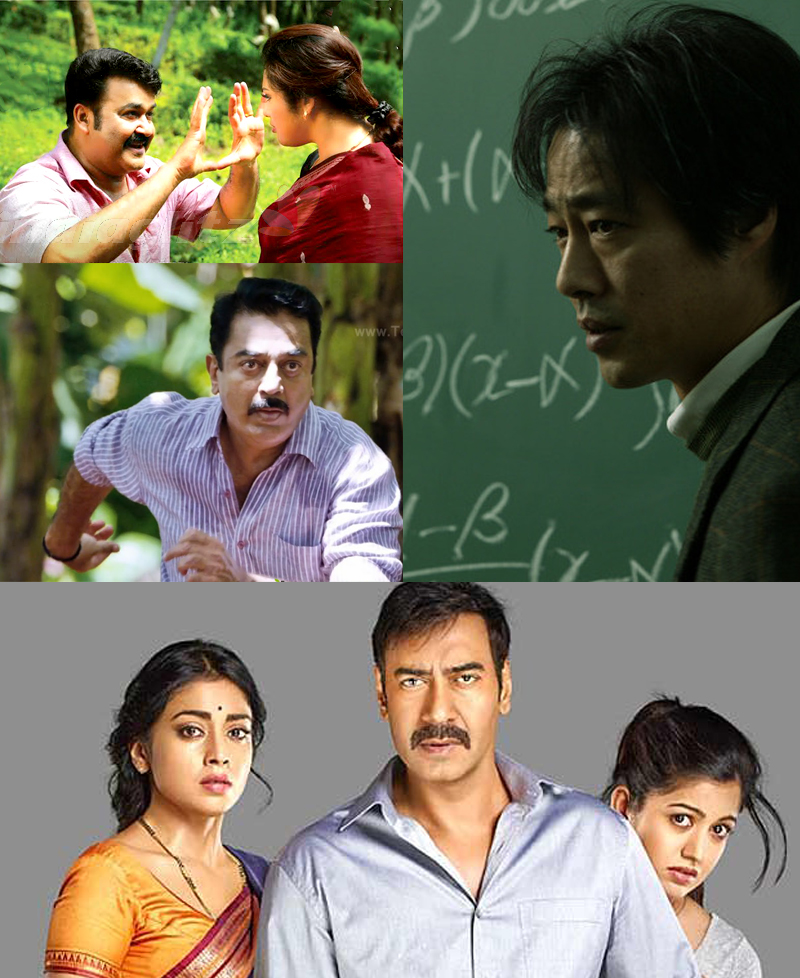
Ever since Drishyam released in Malayalam, there has been a lot of talk and assumption that it’s an unofficial remake of the Japanese film Suspect X (based on the novel The Devotion of Suspect X by Keigo Higashino). With multiple remakes of Drishyam awaiting release (with Kamal Haasan in the Tamil remake Papanasam and Ajay Devgn in the Hindi remake) and also a licensed adaptation of The Devotion of Suspect X produced by Ekta Kapoor under production, here’s a closer look at the two films.

The general belief is that Jeetu Joseph’s Drishyam is copied (or at least adapted) from Suspect X. To someone who has seen both films, this sounds like a charge as valid as the accusation that Reservoir Dogs is a copy or adaptation of The Killing.

Let’s look at the bones.

The Killing is about a bunch of strangers who come together to pull off a heist and things go terribly wrong and most of them end up dead. And Reservoir Dogs is exactly the same idea. But while Kubrick shows us the heist playing with linearity, Tarantino lets us figure out what went wrong after the heist. Despite the acknowledged source material, Dogs stands on its own as a film simply because, you know, as the saying goes “It’s not about where it’s from. It’s where you take it to.”

Suspect X is about a cover up. It’s not a murder mystery. We know up early on in the film/book whodunit. It’s a HowHideIt. And so is Drishyam.

While Suspect X uses the skills of a genius problem-solving math professor, Drishyam subverts the idea of what constitutes smart by giving us a hero who hasn’t dropped out of Class 4 and his only skill sets and passion involves watching movies on TV.

While mathematics is about creating difficult riddles, cinema is about simply believable myth-making. It’s about manufacturing a story by creation of a set of incidents in a credible world populated by convincing characters who want you to believe they lived that life. How’s that for a meta-narrative… which Suspect X is not.

Without giving away anything about the specifics of the case, yes… both films follow the template of a murder investigation. Questions are asked, alibis are checked, evidence is produced, versions are compared and while both narratives have a few similar elements given that the core plot is almost the same, Malayalam filmmaker Jeethu Joseph’s take on the story is truly unique.

Unlike Suspect X, Drishyam’s leading man fumbles, makes mistakes and is always on the verge of getting caught whereas in the original, the genius has created a watertight set of equations that will comprehensively prove the riddle he has given them.

Given a choice between a problem solving specialist dealing with a problem by changing the question and a ordinary man with no special abilities other than movie watching desperately trying to come up with a narrative against the odds to save his own family, who would you root for? Which film would you rather watch?

There is no right answer. Except that if you thought about this enough, it means you know they are both different films trying to tell slightly different stories of very different people driven by different motivations, resorting to different means to figure out very different solutions to the same problem.

You are bound to smile at Drishyam even if you have seen Suspect X because the characters win you over, thanks to the fantastic performances and the smart storytelling. If the character, central conflict, choice of approach, treatment and even the resolution is different, then what’s left is just the similar premise. Even if Drishyam is a copy or an adaptation as alleged, it is one hell of a cover up because there just isn’t enough proof or sign of guilt here.

QED.

Caught between two Indias: Tales of two dogs

June 6, 2015 · by sudhishkamath

Kaaka-Muttai

Anyone who wants to understand India or Indian cinema can learn everything – Ok, almost everything – about the different Indias within by just sampling the two releases of the week.

One that defies the notion of India as a poor country by mounting a dysfunctional family drama bigger than the biggest of Hollywood indies in that space. One that shows that no matter how rich, these characters are poor little souls needing our empathy. Oh, yes, we are talking about Zoya Akhtar’s Dil Dhadakne Do.

And the other that shows us the spirited world before the poorest of poor by crafting a bittersweet adventure with an all new cast of raw young actors.

One that shows us that no matter how poor these characters are, they have led a life richer and larger than any of us can even imagine.

Manikandan’s Kaaka Muttai is the single most relevant film of our times since The World Before Her and Court last year. It ranks up there with the best movie experiences of my life. One I will cherish for a long time to come.

While it’s brutally unfair (to Zoya, of course) to compare the two, we must only to see what these two films made at the opposite end of the spectrum are trying to tell us.

In Zoya’s luxuriously shot indulgent showcase of self-pity, every character on a luxury cruise that costs 8000 euros a head is so full of angst of not getting what he/she wants from life. Ranging from a favourite plane (rich son’s motivation) to a 49 per cent share investor (rich father’s plan) to a figure that would ensure her husband doesn’t dump her (rich mother’s fear) to a desire to dump her chauvinist husband the minute the ex shows up (the rich daughter’s desire).

And it’s all narrated by a pompous dog voiced by one of the biggest actors in showbiz. How much snooty expensive wine can you pack into one bottle? Watch DDD to get a taste of what money can buy. A proxy vacation for the price of a movie ticket in the middle of your sad miserable dysfunctional lives. If Zoya took us to Spain and made us live vicariously through the boys who jumped off a plane, scuba-dived and ran with the bulls in Zindagi Na Milegi Dobara, here she takes us on a cruise with a dysfunctional family that has waited 30 years to start talking to each other about their true feelings.

This could be any Indian family irrespective of class if you replace cruise with a bus journey across a village because irrespective of class, Zoya’s characters are as regressive as any Indian family – north or south, rural or urban. And this regressive dysfunctional family needs to finally open up, talk across the table and embrace progressive choices without worrying about the rest of the world.

If not for the all-knowing fly on the wall dog that has no bearing on the plot or was around during most of the proceedings, this would have been a fairly likeable film but the storytelling gimmick is so terribly out of character for a dog that you are not sure what’s worse – the gimmick bit of it, the actor behind the voice or the lines themselves. This disinterested bullmastiff is a mascot of rich people’s love (often kept in a cage when it’s not time to show off) and also the voice of disconnect (at least with our middle class existence) in an otherwise universal, relatable film. A film your folks would lap up irrespective of what us snobbish critics say because… who doesn’t want a vacation with the stars?

Dil Dhadakne Do

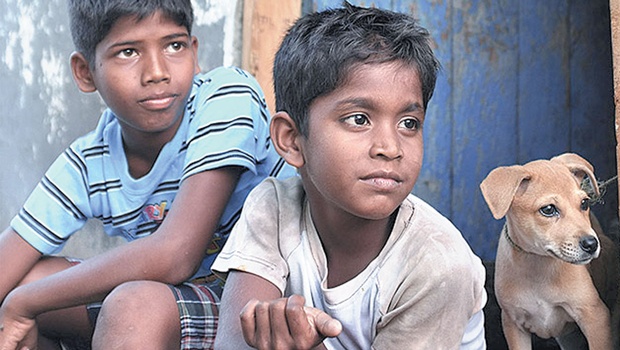
It’s interesting that Kaaka Muttai (Crow’s Egg), the other release of the film, features a trophy dog too – a pug that costs Rs. 25,000. One that’s used to gently take a dig at this culture of materialism and high breed consumerism. The scene where the kids try to sell their stray mongrel for 25,000 without the slightest clue about why a pug is more saleable is a riot.

In M. Manikandan’s naturalistic document of spirit and innocence, the two little heroes (who have earned their titular nick-name by stealing crow’s eggs because they cannot afford chicken eggs for protein) are so full of spirit when they set out to buy their first pizza that costs Rs.299… that’s more than what their entire family can earn in a month. Can money alone get them access to the junk food of the rich? While this is a film that could have become one of those melodrama-ridden manipulative depictions of poor-as-innocent and rich-as-evil-poverty porn narratives Tamil cinema used to churn out as a formula after the success of the Madurai films, Kaaka Muttai is refreshingly restrained, as it chooses to focus on the spirit rather than the odds that the children are faced with.

The plot is just an excuse to show us the changing socio-economic dynamics between the haves and the have-nots in a consumerist world. What happens to class politics when the power is transferred from politicians to capitalists in a media-monitored voyeuristic networked world? The ripple effect of Kaaka Muttai’s narrative needs to be seen than described to do it full justice.

The brilliance of this narrative lies in its layers.

At a basic micro level, it’s a story of a family living at the very edge of civilization trying to get a taste of the modern world. The father is in the lock-up, the mother tries to make ends meet and get her husband out of jail while the granny wants to be of some use to the household (that she looks at the picture of a pizza and tries to recreate it using her cooking skills to satisfy the kids) and the kids themselves are happy picking up coal from the railway tracks as long as they get three rupees a kilo. And life will never be the same for this family when the kids begin to dream of pizza.

At a macro level, it’s the story of a slum and its inhabitants. Every character is a delightfully detailed nuance contributing to the larger story. They are flavours influencing the kids in the neighbourhood. There are times when you fear that the characters would cross over into the world of crime, given how close good and evil reside in a slum but fortunately, Kaaka Muttai is the handiwork of a filmmaker who has his heart in the right place. It’s responsible, mature and so well balanced. I smiled when an affluent kid who is friends with these children saves them a slice of half-eaten pizza in his tiffin box early on in the film.

In one of the finest scenes in the film, the brothers in their quest for pizza find two rich kids who are not allowed to eat the street side Paani Puri. The plate is always yummier on the other side of the class. This is the kind of balance that puts Kaaka Muttai right on top of the year list. With half a year to go, I can bet there’s nothing in sight that can take the place of this most relevant, entertainer that makes you alternate between feel-good and feel-bad all through. It’s an incredibly shot slow-burn that shines bright, thanks to the filmmaker’s gaze (Manikandan has also shot the film) that fondly finds beauty even in the dirtiest sewer running across Chennai (the Couum river). And it’s playing with English subtitles here in Bombay, so there’s no reason why you shouldn’t go.

And at a completely meta-level, this is a film that inspires goodness. When I thought of the 450 bucks I had spent on the ticket to watch this movie from the comfort of a recliner, I thought of the noodle-sponsored campaign where Ranveer Singh tells us it costs only 750 rupees to feed a child for a whole year at a time when instant noodles in the country are nearing extinction.

And then, I thought of Zoya’s world where 750 rupees is less than what you would tip the waiter for the right bottle… no, glass of wine (how can you tip less than 10 Euros on a cruise, ya?!)

And here we are, caught right in the middle of two Indias… among many. On a Friday. Going to the movies for escape and enlightenment. Until another Friday gives us something to talk about.

eom

Cannes: Lessons from an expensive holiday

May 26, 2015 · by sudhishkamath

Sudhish at Cannes The best part about the Cannes Film Festival is that the dates are announced well in advance that you can plan your travel really well. Make up your mind well in advance and ideally, start four months before the festival. For May, start planning by January.

TRAVEL – Break down your trip:

Cheapest ticket to Paris – Book three months ahead. You will get it for under 500 Euros. And book Paris – Nice separately one whole day later, so that you can see Paris and also account for missed connections. You don’t want to come to France and leave without time in Paris. So always account for the break journey. Also, compare with the fare you get direct from your city to Nice which might be expensive because your local airline would automatically put you in a partner airline which may not have the cheapest fare for that region. Do NOT book midnight flights, whatever you saved you will lose paying for a cab ride. Nice to Cannes at night would cost you 100 euros by taxi. Book flights that get in during the day, walk up to the bus stop, ticket costs 1.50 to Nice or Antibes and you can take a train to your hotel. You can even take a train from Paris. There are superfast trains that make it five hours and cost lesser than airfare and get your right into Cannes. Budget: 500-600 Euros. (Could shoot up to 1000-1200 Euros if you wait till April/May)

TRANSPORT – Trains, your best friend:

If you want to get to the hotel quicker from the airport, walk it to Nice St. Augustin train station – will take you ten minutes to get there but after that, it would be much faster. What you need is a weekly pass – that costs 9.90 euros and gives you unlimited rides for a week. (Each ticket otherwise is about 6 euros) I haven’t tried getting a pass at St. Augustin but the weekly pass should be available in the bigger stations like Nice, Antibes and Cannes. Always stay close to the train station. Buses ply once in half hour, so you can’t count on them. And the roads are so narrow, you don’t want to risk bike rental. I was thinking of renting out a motorcycle except that I saw an accident on Day 1 and never considered it. Also, the deposit on motorcycle rental is very high. Can go up to 1000-1500 Euros and if you fall off the motorcycle, your holiday is over. Get the weekly train pass and you are set. Budget: 10 Euros.

HOTEL – By the Palais or the train station:

When you are booking, go to Google Maps, click on hotels a few streets away from the Palais – at least four months before – because they fill up really fast. By February end, 90 per cent of them are booked and the rest are super expensive. Do not do Airbnb, since most of them require deposits and you are better off having that money on you in an expensive town like Cannes. If you are unable to find accommodation near the Palais, the venue of the festival – look up hotels right next to the train line – Cannes Bocca on one side, Golfe-Juan-Vallauris, Juan Les Pin, Antibes or Nice on the other side. ONLY look for hotels right outside the train stations even if the distances seem tempting (like 1 or 2 kms from station because in the hills, even a 500 metre walk on a steep could be taxing). I stayed at Du Levant at Antibes which undoubtedly offers a spectacular view of the sea but at the festival, you won’t have time to enjoy your sea-view. And it took us one km of walk and waiting for buses to get to the train station (or a 15-20 euro cab ride every time to the station. To Cannes, a single trip from Antibes would cost you 55 euros by cab) Budget: 100 euros a day for a decent roof over your head. (This would go up to 200 a day if you don’t book on time).

BADGE – Marche Du Film, your all access pass:

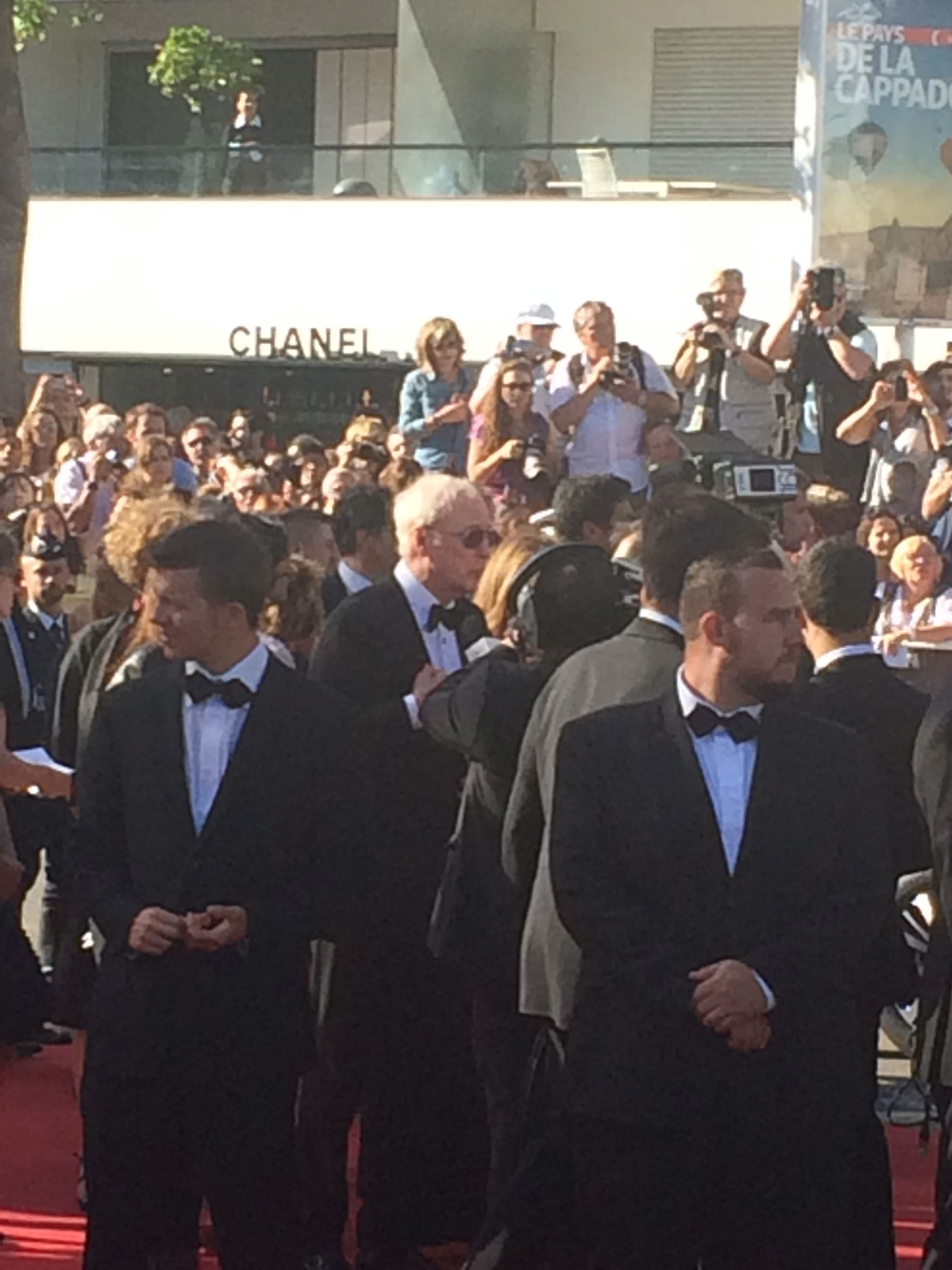
Unless you have a spectacular profile in the film business, don’t even bother applying for a free registration badge – you will end up waiting for weeks and not hear anything. Instead, Get yourself a Marche Du Film badge that costs 300-400 Euros (the earlier you buy, the cheaper it is) and you can buy this online on the official website. This is an industry badge, the only badge that gets you access to all films in Cannes, or at least gets you access to invites for the red carpet ones. The films at the Grand Lumiere Theatre – which are all official competition or Out of Competition official selections – are all red carpet events which are INVITES only. Once you get a Marche Du Film badge (make sure your profile online establishes your film credentials), you are set to get access to all screenings – official and the market screenings. There is a Day Pass of 20-30 Euros which you can buy for entry to the Palais but what they don’t tell you is that it does not get you access to screenings. It just lets you catch celebs on the red carpet. If you are really desperate and have no money, take a cue from the students and hold a board with the name of the movie you want an invite for and stand outside the venue. On a lucky day, you might get what you want. If you don’t want to base your entire trip on chance, get that badge. Best investment ever. Budget: 300-330 Euros. Cannes Michael Caine

RED CARPET – Screenings and Attire:

Red carpet screenings are black tie events and you need to be dressed in a tuxedo and black formal shoes (if you are male) and they are mostly nice to women as long as they are wearing a fancy evening dress. Do not think of renting tuxedos though the websites indicate you can rent one for 20-30 Euros. During the festival season, the tuxedo rental goes up to 100 Euros a day. You are better of getting one stitched for a 100 Euros before you leave for Cannes instead. Budget: 150 Euros. OTHER FILMS – To queue or not to queue: With the Marche Du Film badge, you should be able to queue up for the other screenings and if you spot unreasonably long queues, you are better off going for one of the market screenings. There are a lot of good films in there and you might be able to squeeze in two market films in the time it takes to get access to one official screening. And chances are the market screening film might be more fun. And if you are going towards the end of the festival, your Marche Du Film badge would get you access to all the films that played under official competition in a smaller theatre minus the rush. I ended up standing three hours in the queue for Youth and didn’t like it as much as I would have otherwise liked. But if I were staying back for the last few days, I could have caught it without the baggage of hype and long queues. Ditto with Love 3D.

FOOD & NIGHT LIFE – Party all night:

A beer costs about 3-5 Euros. So, a decent meal for two would cost 20-25 Euros. The place is full of bistros… And most of the pubs around the festival are open all night. So if you miss the last train before midnight, plan to stay out and party till five in the morning. But be warned, you will end up blowing about 30-40 Euros just drinking during the night. But you must stay out one of the nights. It’s quite special. A friend literally forced me to stay on but I’m glad she did. You never know who you would meet. We met a pilot who couldn’t name his boss (clearly a Hollywood celebrity – he said we would know the person if he took the name) and he bought us drinks. Most of the official parties are invites only. It always helps to network because someone will know someone who has a pass. Budget: 40-50 Euros a day for food and drinks.

Will edit this post as and when I remember more but if you are really smart about planning it, you can manage a trip and back under 1500 euros. If you don’t plan it well, you might end up spending three times that. Or more.

Interview: Aishwaryaa R Dhanush – From darkness to light

April 30, 2015 · by sudhishkamath

Vai Raja Aishwarya

What do you do when your father is a superstar of the masses, your husband is one of the best actors ruling the trade and your mentor is a much acclaimed maverick filmmaker with blatant disregard for formula?

Aishwaryaa R Dhanush decided to step out of the shadows – of Rajinikanth, Dhanush and Selvaraghavan – when she started work on her second film Vai Raja Vai releasing on Friday.

Her first film 3, a serious dark drama about a violent bi-polar protagonist was hijacked by the unexpected virality of the promotional song “Why This Kolaveri” (that had very little to do with the tone of the film) and shocked audiences who weren’t quite prepared for a depressing film. Critics found the film closer to her mentor Selvaraghavan’s school of filmmaking than the commercial type her father and husband are associated with.

While she had Dhanush help her out right from scripting back then, this time around Aishwarya decided she had to do it all by herself – with very little support from the family. I spoke to a nervous Aishwarya on the phone earlier this week to find out all about the new film. Here are some snatches from that conversation.

I’ve been watching your Dad’s films in the order they were made for my book on him and find his transformation quite fascinating. Have you seen them in the order they were made?

“No. Not really. But I’ve read some of the books on him. None of them have been able to get the facts right.”

I guess it’s always difficult to piece together accounts of a man’s life from memories of people who knew him. Luckily, my book is not about the facts. It’s not about the person but the onscreen persona that emerges from his films.

“Then, it’s subjective. You can write what you want.”

From the trailers of Vai Raja Vai, I can tell there’s a significant change of mood from the darkness of 3. This seems like a fun film.

“That was a very conscious thing. 3 was very intense and very dark and I tend to gravitate towards the darker side of storytelling. So, I consciously didn’t want to do that. I wanted to go out of my comfort zone. I find myself comfortable portraying complex relationships and concentrated emotions. Commercial cinema was very challenging for me.”

The story goes that you came up with this over coffee?

“I wasn’t ready with a script. I hadn’t planned what I would do next when I met this friend of mine – Archana Kalpathi (the daughter of Kalpathi S Aghoram of AGS Cinemas). When I briefly told her how I wanted to explore intuition, she took the idea back to her father. Having explored bi-polar disorder in 3, I’ve been very interested in the psychological aspects of the human being.I find intuition very intriguing and wanted to see how I can bring that idea into the film. AGS has always been particular that the script has to be different. So that’s what interested the producer. I didn’t have a bound script. Everything just fell into place.”

You wrote this yourself?

“Yes, I wrote it alone.”

In Tamil?

“I type Tamil in English.”

Would we see the Selvaraghavan influence or have you made an effort to come out of his shadow?

“I would say this has a combination of influences from my Dad’s kind of cinema and Selva’s. There are certain shots that would remind you of a Selva film but a lot more comparisons can be made with my Dad’s films. It’s a good balance.”

Why don’t you use Dad’s name in your credits? 

“I just feel it would be too long. I don’t see the reason why I should announce it. Everybody knows who I am. I am proud of my initials. While a person shouldn’t change their surname, the husband shouldn’t be denied his place in my life… It’s all right. I’m happy to be Aishwaryaa R Dhanush.”

You wrote a film without Dhanush as the hero but you’ve given him a cameo.

“I wanted to do something independently. It’s not fair to keep going back to him. I was working out of my comfort zone. Last time, he was around to support and help. This time, it was a conscious decision to do something on my own. But he’s done a cameo playing Kokki Kumar, one of my most favourite characters he has ever played (Kokki Kumar from Selvaraghavan’s gangster epic Pudhupettai). When we had a chance to intersperse it in our narrative, I didn’t want to let it go.
But it’s just a one scene. We shot for five hours. He has been busy shooting films in Hindi and Tamil. It was nice of him to do this.

Vai raja still

You have worked with a young cast led by Gautham Karthik. How did that fall into place?

“Each of them fell correctly into character. Daniel Balaji, Tapsee and Vivek have always been selective about their roles. When they heard the script, they knew it was a multi-star cast. The characters demanded these people. And I was lucky to get the right artists playing the characters I wrote.”

A while ago, we thought the market was ready for offbeat films but a whole bunch of good films (Kaaviyathalaivan or Ennakul Oruvan, for example) didn’t work. Nor have the big films worked (Lingaa, for example). What do you think is going on? What does the market want?

“The beauty of film business is that we can’t ever gauge what the audience wants. But yes, people have become broad-minded and the audience wants to see good cinema – doesn’t matter big or small. Jigarthanda and Darling were critically acclaimed and did well commercially. I think the release date has become more important. Promoting films has become so important.”

Also, do you see the game changing as the movie watching experience today is interrupted with the presence of the mobile phone in the hall? Nobody watches movies alone anymore. You are plugged into a network and reacting live.

“It is very unhealthy to have a running commentary going and people commenting on scenes as they are watching the film. Making cinema has become much more challenging. Today, if a film runs for two weeks it’s as much a success as a film that ran 50 days in the past. And that’s such a big challenge.”

What if you had the chance to make a film with your father? What kind of film would you make?

“I’m happy just being his daughter. I don’t think I’m experienced enough to direct him. It’s very difficult for me to see him as anything but a father. The equation we share is very personal. I can’t go out and pretend to be something else – like a director on the set. When you are a director, you have to treat people a certain way.”

Whoa! You sound like you slave-drive your crew.

“I’m a taskmaster. I’m not at all pleasant.”

Vai Raja Vai

Did you learn that from Selvaraghavan?

“The first advice he gave me was: Don’t look weak. You have to be the bad person. Only then, work will get done.”

Do you still go to Selva for inputs?

“He lets you be. He has so much confidence in me. I don’t think even I have that confidence in myself. If and when I go back to ask him anything, he’s like: Why ask me when you know the answers.”

Has he seen Vai Raja Vai?

“He’s been travelling, writing his own script but is eager to watch it.”

What about your father and husband? Have they seen it? How did they react?

“They have seen it and were quite surprised. They were very happy about it. My father thought 3 was very serious but this, he said, is perfect for the summer vacation. Timepass.”

(The film is releasing in Mumbai and other metros with English subtitles.)

OK Kanmani: Unlimited thaali please, we are South Indians  

April 18, 2015 · by sudhishkamath

Director: Mani Ratnam
Cast: Dulquer Salman, Nithya Menen, Prakash Raj, Leela Samson
Rating: Liked it*

✰✰✰✰

OK Kanmani for blog

About twenty years ago, Mani Ratnam made a movie about two young people from different communities who elope and make Bombay their home.

In Mumbai 2.0, or OK Kanmani as Madras Talkies insists, the young lovers are not fighting communal tensions but the prison of marriage or what it represents: commitment for life.

Now, I wish Mani Ratnam lived in Mumbai.

Because he would have enjoyed the freedom Jaideep Sahni had with Shuddh Desi Romance (a not-so-perfect film redeemed by a great ending) because OK Kanmani could have been THAT film that challenged the sacred thread. Or the knots often worshipped as thaali (Before you think of a bad pun, Yes… also one that gets you – both men and women – unlimited meals for life and we are not just talking about food here).

While Shuddh Desi Romance intentionally made young people seem flippant and confused about what they want, OK Kanmani is about two confident, independent young individuals – consenting adults – who choose to live and sleep together knowing very well what the future holds for them.

Mani Ratnam basically takes that Trisha-Siddharth (or Vivek Oberoi-Kareena Kapoor) love story from Aayitha Ezhuthu and fleshes it out with all the things people have come to expect out of him – the modern middle-class family dynamic, the irreverent tone (with which you call your parents by name), public transport (trains, of course), great looking houses with tasteful production design (even if it’s meant to be a seedy lodge, it better have a swing, Yo!), talkative kids who are quick to spot lovers up to mischief, people professing love sitting across the room, attractive people dancing to Rahman’s funky music, terse dialogues in staccato Mani-Ratnamspeak, magic hour and finally, rains to resolve everything. A squeaky clean petrichor feel good ending. You know you love it.

By now, a Mani Ratnam film is genre by itself. And you can’t question the genre because the man invented it. It’s like telling Jobs or Cook: Dude, in my opinion, the new iPhone 6 bends. You used to make cooler phones.

You know what you are getting when you buy an iPhone and the upgrades just make it more relevant for apps you tend to use more. Even if an Android has better specifications, nothing quite matches the feeling of wielding a highly acclaimed, incredibly beautiful, classy symbol of the elite (and the aspirational upper middle class.)

As much as I enjoyed the home comfort and the easy-on-the-eye sophistication of Mani Ratnam’s storytelling (and the writing truly marks a return to form – he should just stop collaborating and polluting his writing with substandard pulpy writers), I did find the old-fashioned endorsement of marriage a little too outdated. But then, Mani Ratnam’s films have not just respected the sanctity of marriage. They celebrate marriage.

In Mouna Raagam, he made a dysfunctional marriage (marred with baggage from the past) work. In Roja, he made a woman from a small town get in to war territory in search of her husband. In Bombay, the marriage of people from two communities was a symbolic representation of India as a secular State. In Alai Payuthey, lovers who secretly marry almost lose each other before they understand the true meaning of marriage.

Mani Ratnam continues this tradition of making even the most commitment-phobic young people FUCKING TOE THE LINE!

While you could expect someone on the other side of 50 to not understand how young people meet and greet these days (Yes, I found that long drawn meet cute at the wedding contrived), it is a little disappointing personally to see Mani Ratnam’s persona as a filmmaker change from the rebel (I always see Mani Ratnam as Karthik – Manohar from Mouna Raagam, or say Suriya – Michael from Aayitha Ezhuthu) to the father figure (now I see him as Arvindswamy – from Kadal or Prakash Raj – from OK Kanmani) – the preacher! That annoying uncle who has only one question to passive-aggressively ask every time he meets you: “Eppo Kalyanam?” (When good news?)

OK Kanmani is unfortunately that Uncle who makes you believe that marriage is the answer to your conflict of living in without any expectations from each other. He wants to say it’s good to have expectations. It’s good to miss each other madly and want to hold on to each other. Marriage is so good you know you want it. It promises you unlimited meals of chicken soup for the soul. Go marry already. I want to eat your Kalayana Saapad, unlimited thaali please.

But ideological differences aside, I LOVED the exquisitely framed (PC Sreeram) modern day fable on the soul-stirring beauty of good old-fashioned marriage (where you are there for the other, in good health and bad). Especially because the chemistry between the lead pair of Dulquer Salman and Nithya Menen is crackling (the young actors make you live their confusion) and equally adorable is the portrayal of the older couple (Prakash Raj and Leela Samson are terrific) in an Amour situation.

Yet, it’s a lost opportunity. Towards the end, there’s a lovely scene in there when the boy gifts her a necklace. He may not believe in a mangalsutra/thaali but gets her a parting gift that symbolically means the same damn thing – I love you and want you to wear this around your neck so that I know you love me. Isn’t that enough surrogate and subtle endorsement of marriage enough? Why take it all the way to a literal court acknowledged State-approved registered marriage with a vengeance, Mani Uncle.

As it is, it’s very difficult for young people to find houses in Mumbai (especially, bachelors – forget live-in) and you KNOW this (especially because you had to pass off spacious bungalows and five-star hotels from Chennai as Bombay though I must add it’s a big come down for The Park’s Pod to be de-promoted from New York in Good Night Good Morning to Bombay in OK Kanmani).

So pardon me if I don’t agree with the convenient solution of marriage to resolve complex relationship issues of space (physical and mental) and choices (professional and moral).

But I remember the ground reality of home.

It is not yet legal in Tamil Nadu to speak about pre-marital sex. Ask Khushboo. (As a friend’s father often says in denial when told that young people these days do things other than sleep on a bed together: NEVER BE!) And any discussion on the need for a thaali is interpreted as an insult to your own mother. Ask Puthiya Thalamurai.

Which brings me back to what I started this review with.

I wish Mani Ratnam lived in Mumbai.

(P.S: My rating scale goes from: Loved it. Liked it. Liked it but. Didn’t like it. Hated it.)

Proust Questionnaire: Nagesh Kukunoor

July 8, 2012 · by sudhishkamath

What is your idea of happiness?
To feel the rush that could come from driving down a gorgeous stretch of road with the sun beating down on your face, or a rock concert you  are at or a perfect take on the sets… Happiness comes naturally in the true, intense, unexpected sense of the word.

What is your greatest fear?
That I would lose the passion. I’ve always felt that we are wired to have a mad, maniacal passion for that one special thing. For me, it’s filmmaking.
The greatest fear is that you might just lose it and then what’s your purpose in life? What’s the point of waking up in the morning?

If you could change one thing about yourself, what would it be?
Honestly, if I could just remember to wake up and smell the roses or the coffee. Basically, to just enjoy the moment instead of glossing over it and enjoying it at hindsight.
If you could change one thing about your family, what would it be? I wish we met more often. I meet them once a year and it’s too less that I don’t get to enjoy that.

What do you consider your greatest achievement?
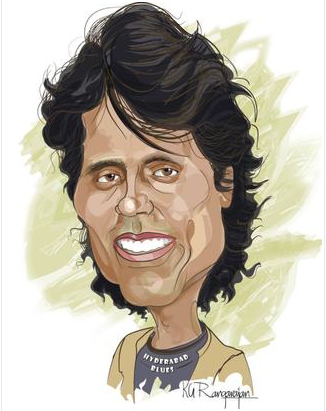
Without a doubt, making Hyderabad Blues. It was very simple. There’s a lot of things that one actually feels about one self. That you are meant for a lot more, that you are capable of a lot more. And it wasn’t until I made Hyderabad Blues that I gave myself any sense of
validity. It was not the success, just the making of the film. All your life you are like, give me a chance I could do this and that but after Hyderabad Blues, I felt I had nothing more to prove to anyone or myself.

If you were to die and come back as a person or thing, what do you think it would be?
Maybe as a rock. You would eliminate a lot of unnecessary thinking because of the tendency to do what you think is fit or fair or to analyze and over analyze everything. l think it is so much nicer to just stop thinking…

If you could choose what to come back as, what would it be?
Hugh Hefner would not be a bad idea.

What is your idea of misery?
To be physically incapacitated. I am a fairly active person and it’s the physical things that I do that give me my equilibrium and sanity.

Where would you like to live?
On a ranch in the US outside a big city with my own vegetable and fruit garden. Not way out in the boondocks but with access to the big city so that you have it when you need it.

What is your favourite occupation?
Filmmaking is the central most occupation that truly completes me…  Two professions actually –  One, doctors. It’s a profession I’m most fascinated by. Two, chef. If I were not a filmmaker, I think I could be a chef. I truly enjoy cooking. I think being a chef and being a doctor are at some level about the propagation of life…

What is your most marked characteristic?
That’s an easy one. It’s single-mindedness to the point of ridiculousness. I can have such tunnel vision that I can block out stuff, actually block out living for years, while I just focus on the task. That kind of single mindedness is stupid at times and that’s why I said I wish I could just remember to stop and smell the roses.

What is the quality you most like in the opposite sex?
Oh brother! I would like to go for sensuality. I know it seems superficial but sensuality can come in many ways. I know I could have said companionship, intelligence or honesty but I would rather pick this because women have the ability to be sensual in a million
different ways, doing the most mundane of things – whether it is reading a book, dicing vegetables, yawning, you name it…

What do you most appreciate in your friends?
Loyalty. Just knowing that you can count on them, no matter what the crap is.

Who are your favourite authors?
First, I would pick Stephen King and then George Orwell and JD Salinger

Who is your favourite hero of fiction?
Indiana Jones. Well, like I used his character in Aashayein, Indiana Jones represents adventure, the ability to take life to that next level.
Raiders of the Lost Ark (which introduced Indiana Jones) is the film that changed my life. It was that epiphanic moment that I decided to become a filmmaker. I am drawn to the rush and sense of adventure (don’t always have the guts to follow through) and therefore Indiana is a constant reminder… To take that step, physically and metaphorically, and embark on another adventure! If I could do it periodically it would be so amazing.

Who are your heroes in real life?
I would pick some contemporary ones. Richard Branson, George Clooney and Steve Soderberg. Branson is a true maverick that every step he takes is outside the box. He’s brash and has the guts to stick to his intuition. Clooney –  because it’s interesting that after becoming one of  the biggest movie star, he turned his attention to humanitarian efforts.
Only one in a billion can become a Gandhi. I could never reach that level but I can aspire to do what Clooney does. Make money, enjoy life and help the world. And Steve Soderberg because he’s a direct connect to my field. He has the guts to do everything…Successful, bizarre, off the wall, Oscar stuff and still he could shoot something on a Canon 5D
in half a day and make something out of it. I am in awe of someone like that.

What are your favourite names?
I think girls names evoke beautiful images… Salma Hayek, Madhubala… Wow. They bring a smile to your face when you just think of these names but there are too many to mention.

What is your present state of mind?
Reinvention. Way before, during my chemical engineering days, I read about a CEO… Every five years, he kind of almost restarts, he starts to do something radical and different and keeps his interests fresh… I take a lot of risks through my films… so there is some degree of reinvention but I’m trying to make it more than just films, in my personal life as well.

How would you like to die?
Without knowing. An accident or in your sleep. The knowledge of death is the worst thing. I don’t care when I go. But I just hope it’s Boom!
And Adios! And it’s done. Finished and over. It’s like seeing a 100 foot wave coming towards… One intense moment of awe and it’s over.

What is your favourite motto?
It’s something I’ve done for many years. “Either you do or you don’t.” The rest are just excuses and in betweens. It’s a saying that I put up at the start of every project. I genuinely believe in this.

(Nagesh Kukunoor is a fiercely independent filmmaker who continues to make films that defy convention and genre. His filmography includes the critically acclaimed Hyderabad Blues, Rockford, Bollywood Calling, Teen Deewarein, Iqbal, Dor, Aashayein and Mod)

This interview originally appeared here.

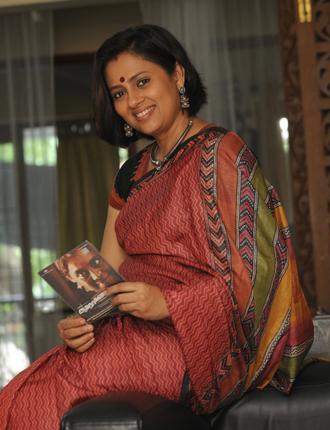
Interview: Lakshmy Ramakrishnan – The Upswing

June 28, 2012 · by sudhishkamath

You can never be too old to chase your dreams.

For 30 years now, Lakshmy has been nursing a dream. To share stories and take people into a world of fantasy.

When her debut feature film ‘Aarohanam’ hits the screens on July 27, Lakshmy Ramakrishnan’s dream would turn into a fairytale!

Aarohanam, that features strong, spirited women and tackles domestic issues with unprecedented sensitivity, is easily one of the finest Tamil films in years and probably the best you will see this year. We caught it at a private screening and the early buzz includes director K.Balachander himself showering the film with praise for her conviction and experiments with linearity.

Lakshmy has subverted every cliche Tamil cinema has been infested with over the last two decades and turns it into a celebration. Mothers will weep and the film is sure to sweep you off your feet with its brand of feel good entertainment. This is a film made with so much heart.

One that Bala, Vasanta Balan, Sashikumar, Balaji and every other filmmaker branching out from that school of cinema must watch. To learn that you don’t need to show poverty and misery to make people cry under the pretext of realism. You don’t need to paint the rich as evil and poor as good in every film saying that the story demanded the stereotypes. You don’t need to blatantly manipulate or exaggerate any condition – physical or mental – to tell stories of suffering. It’s a trend that has continued all the way till Vazhukku Enn 18/9. It’s high time someone stopped the pity-party. It’s something I have been praying for, for years: READ THIS. Lakshmy does exactly that. (Interview after the trailer below)

As we dig deeper into her story, we realise only a mother could have made this film.

You must have been familiar with Lakshmy as an actress over the past few years, having played strong supporting roles in over 30 Malayalam, Tamil, Telugu and Hindi films including Vinnaithaandi Varuvaaya, Yuddham Sei, Poi Solla Porum, Eeram, Naan Mahaan Alla, Vettaikaaran. Today, she’s a household name having done over 175 episodes with ‘Aval’ (on Vijay TV).

But it was in 1984 when TV serials were just coming in that actress-turned-filmmaker Lakshmy took her first step towards chasing her goal of bringing stories to life.

“I got introduced to someone working in Doordarshan and started working on 13 episodes based on short stories that used to appear in Women’s Era. I wanted to picturise these. It was an innocent, ignorant sort of enthusiasm but I wanted to do it.”

But by the time things materialised, she had to move to the United States. “My husband got a posting with IBM and I decided to move because I was carrying my first baby.”

In the next 20 years, she straddled many worlds – from US to Singapore to Muscat to Coimbatore – taking care of her family and managing careers in business, fashion designing and event management when a chance encounter with Malayalam filmmaker Lohithadas brought her back to the camera.

“We had a farmhouse and he wanted to shoot there. We didn’t give the place but he approached me for the next film and that’s how I came back to cinema – with Chakaramuthu, the remake of Kasturimaan. I played Kavya’s single mom and I got a meaty 32 scene role and a well-etched out mother-daughter arc to prove myself as an actress,” she says.

She continued her experiments with short films and thanks to her marketing acumen, was successful in shooting them in Tamil and Malayalam. “I just walked in to Jaya TV and asked them for a slot. They gave me a slot and I even ended up making a profit.”

Lakshmy shot six such films for TV while she continued acting. She also made shot short films and one of her shorts ‘Radio’ which she made for SCARF on positive mental health won awards all around the world.

After doing four Malayalam films, she shifted to Chennai in 2006. “‘Pirivom Santhipom’ was my first Tamil film. I was offered Azhagiya Tamizh Magan but since I was shooting for a Malayalam film then, I couldn’t do it. And then Poi Solla Porum happened.”

And before she knew it, she had 15 offers. She picked 10 and spent the next two years shooting as she realised she was getting tired of playing the similar roles. There wasn’t much scope for women on screen.

It was in 2009 that she attended the screenwriting workshop organised by Kamal Haasan at IIT, Madras. “I got an insight into the process of scriptwriting. I had a thirst for knowledge and I was so excited and it opened up many doors for me. It was like someone taking me to the sea and telling me that I could either just jump in and help myself to how much ever I could absorb or take back a little in a tumbler. That exposure really affected me.”

She had just written a story in 2008 about a woman who affected her a lot but she moved on to writing another film called ‘Kural 786’  after the workshop. “I had a producer, we almost announced the film when the German Bakery blast happened and my daughter’s close friend and brother passed away. I was affected so much that I didn’t have the confidence to handle the subject. As I sat down to do the shot division, I realised I wasn’t ready. I couldn’t handle it. I bought more time but admitted to the producer that I wasn’t ready and returned the advance. I was full of self-doubt and scared.”

“Whenever I met Raji and Uma Padmanabhan at shows we attended together, we would wonder: We see so many spirited women around but we don’t see them on screen. We wanted to make a desi Hangover kind of a film and have a blast. We started working on that and as we got deeper into the third character into the film, I realised that I had already written about this person in 2008, the story I had shelved. And soon her character dominated and took over the film. I produced it myself because it was an experiment. I did not know if it was possible for me to translate what I had in my head on to the screen.”

Last August, she decided to stop taking on new films just to focus on her film. She signed up for ‘Aval’ so that it would give her “the pocket money” she needed to produce the film herself though producer A V Anoop volunteered to put in the full amount. “With TV, you know you have to devote half a month and are able to plan better. With films, the dates keep changing all the time.”

Lakshmy shot her 90 minute ‘Aarohanam’ in just 20 days with a Canon 5D digital camera, working with its limitation. “Aarohanam is upswing, a crescendo… And our film is about that Arohanam in the central character’s life.”

Her three daughters – Sharadha, Sruthi and Shreeya – pitched in and her husband Ram managed the household for the last six months. “Sruthi was my assistant director and the eldest one , Sharadha was one of the co-producers, she sang the party song. My little one is my right hand.”

The industry is so impressed with her film that she already has two producers for her next two projects. “I next want to do an entertainer. I will probably do Kural as my third film. I will continue doing Aval and not take up anything else after that but I just ended signing up for two cute roles in films again.”

The moment of truth

“Watching films was considered a sin where I come from. Only widows used to shave their heads.

Mysskin had only one condition for Yuddham Sei: If you are ready to shave your head, you can do this role.

It turned out to be a revelation for me.

I had never removed my ‘Metti’ for the past 27 years and even if the ‘pottu’ moved from its place, I would feel insecure. And going ‘mottai’ was something unimaginable in Brahmin families. I was complaining there are no meaty roles and when there was one, why should I not do it?

It was not like cutting off my hand or leg… it was hair. The moment I did, I shed all my superstition. As a person, I felt so light, I was rid of all that baggage of superstition.

My father was 18 when his mom had to tonsure her head. He was shocked and couldn’t deal with it. My Dad is 90 years old now. I didn’t want to hide it from him. So I called him and told him I cut my hair. How short, he asked. Very short, I said.

As luck would have it, one of the local newspapers carried a story that I tonsured my head and I felt relieved that I didn’t have to break it to him.

So I went home bald and he didn’t say a word. So finally, I asked Appa: Why didn’t you say anything?

He just smiled and said: It looks good on you.”

(An edited version of this story appeared here.)

Gangs of Wasseypur: Part Time Avenger

June 24, 2012 · by sudhishkamath

Image

How do you evaluate an incomplete painting?

Or half a story?

It seems unfair but this is a situation the makers of Gangs of Wasseypur have forced on us by making us pay to watch what’s clearly an incomplete story. Yes, we can always appreciate individual moments and scenes but not all of us are die-hard Kashyap fans. Yet.

I wish it was as simple as saying that Gangs of Wasseypur 1 is half-empty or half-full of the plot but at this point, it looks like it holds no water.

Good filmmaking, or shot-taking, doesn’t always translate to good storytelling. While every frame here is so passionately put together (cinematography by Rajeev Ravi and edited by Shweta Venkat Mathew), supremely performed with brilliantly conceived moments of quirk and humour, Part 1 just doesn’t come together as a cohesive story.

Gangs Of Wasseypur is a trip, no doubt. A trip to nowhere, one most enjoyed if you are an Anurag Kashyap fan. You buy a ticket to Wasseypur, you meet colourful, gun-toting, expletive-spewing, sex maniacs on the way and share a couple of laughs, amused by their choice of language till the buffoonery gets repetitive. After a long, bumpy ride through every other busy bylane close to where you boarded from, the driver leaves you stranded on a highway with a note: “Next bus to Wasseypur in three months.”

You paid to watch revenge. What you get is a guy doing everything else except that. Unfortunately, most of us still consume films as stories and as far as stories go, Wasseypur Part 1 is a non-starter, a deceitful film that delivers none of the promise of that revenge advertised in big block letters: Keh ke loonga. Fine, but take already. The only thing it takes is your ticket money. All talk, no walk.

It’s all backdrop, backdrop, backdrop spelt out all through… and even that backdrop of coal mining is not convincing, as the film pretends to be a documentary on the subject with archival footage that does nothing to the narrative except prolong it with endless voiceover.

Voiceover here isn’t used to help you settle in, it’s the thread and glue that holds the loosely arranged pieces together, a character who returns to keep us in the loop, as bursts of superimposed text to illustrate timelines and character names are slapped on the screen, every few minutes. Show, tell and text on top! (This evening, the team has also released a family tree for those still confused about who’s who in the film)

While the two-part Kill Bill sets up the context and leaves two out of the five people in the list dead, assuring you are halfway home, Gangs of Wasseypur Part 1 cancels out everything that happens with its climactic moment, not just taking the hero back to square one but changing its mind about who the hero is.

So we just watched a 160 minute long prologue?

Even an out of form Ram Gopal Varma showed some focus in his indulgent, pulpy two-part Rakta Charitra. Part 1: One guy rises to power leaving the other guy who has lost his whole family understandably thirsting for revenge in Part 2.

Here, we don’t even understand why revenge is that important for the guy who has sworn to keep his head shaved till he has ruined his enemy.

If you want us to connect or understand the avenger’s motivation, he must have some quality that makes us root for him or at least some injustice meted out to him. But his father was a scheming scoundrel too. Sardar Khan has no redeeming quality except that it is portrayed by a fantastic Manoj Bajpayee.

The protagonist’s full time occupation is being a sex maniac, revenge is a part time thing he would do, like, over a few decades when he’s not getting his women pregnant. His misadventures with the two women in the film make for delightful vignettes but there’s little else powering this film except the entry of the endearingly filmi Faisal Khan (Nawazuddin) towards the end.

The trailer of Part 2 is one of the slickest ever you will see this year and going by the fun promised, you can blindly book your tickets to watch the Nawazuddin Siddiqui show. Richa Chaddha’s Nagma is guaranteed to win her fans, Reema Sen looks every bit the seductress and Huma Qureshi’s charm and chemistry with Nawazuddin sparkles.

Piyush Mishra makes for a wicked cheating Consigliori, Jaideep Alhawat is dispensed off early on as the man whose death triggers off this epic, Jameel Khan amuses us playing the foil to Bajpayee, while Pankaj Tripathi makes for a menacing baddie we want to see more of.

Like the villain of the piece Ramadhir Singh (Tigmanshu Dhulia lends this character so much charisma and intensity) demonstrates, coal becomes heavier when soaked in water, but there’s only so much you can adulterate it with.

Here, coal is substituted with coolth. We are so cool that in our town, we call the women, Womaniya (Hats off to music director Sneha Khanwalkar for the soundtrack that provides some respite). We are so cool that we use gorgeous-looking typeface guaranteed to make you drool even if it wears a vibe different from the rustic environs of the film. We are so cool that we would make the opening credits of ‘Kyonki Saas Bhi Kabhi Bahu Thi’ look like a joke. We are so cool we have characters called Definite, Perpendicular and Tangent in Part 2 of Gangs of Wasseypur because honestly, we got tired of keeping count of the Khans and Qureshis in the film!

All that coolth and pop realism may do well with the die-hard Kashyap cult but for the rest of us who paid to watch a bloody saga of revenge, it seems like a long wait at the circus.

Genre: Gangster

Director: Anurag Kashyap

Cast: Manoj Bajpayee, Nawazuddin Siddiqui, Richa Chaddha, Reema Sen, Huma

Qureshi, Jameel Khan, Tigmanshu Dhulia, Pankaj Tripathi, Jaideep Alhawat

Storyline: A man must avenge the death of his father, but he whiles away his time making babies.

Bottomline: Epic fail. Probably works a lot better when seen back to back.

A shorter version of this originally appeared here.

Teri Meri Kahaani: Trolling Shakespeare

June 24, 2012 · by sudhishkamath

If the other release of the week, Gangs of Wasseypur split its epic story into two parts that add up to five hours and twenty minutes, this one does exactly the opposite – packs three stories into a 120 minute long film – and yet manages to feel longer than the sum of the Wasseypur films.

Shahid Kapoor has achieved that rare feat of playing a star-crossed lover in back to back films across space (Mausam) and time (Teri Meri Kahaani) and proved that he can actually pick films that are bad no matter where they are set or which period they are set in.

From start to finish, Teri Meri Kahaani is as fake as it gets, a quality that wouldn’t have been as frustrating if it didn’t happen three times over in the same film!

Every location feels gimmicky, costume unrealistically flashy and conflict contrived. With hardly 40 minutes available per story, this could’ve made for a tight, snappy narrative. But no, even in these 40 minutes, the makers want them to go singing and dancing together… even when the boy is in prison! “Just have the girl enter prison and make someone throw the keys away so that they can sing and dance, yaar.”

In each of the three stories, the boy has a back-up girl, no matter how silly or immature he has been. We are talking about a boy who is juvenile enough to upload pictures of him in bed with his girlfriend and make them public on Facebook with captions ‘Jism’ and ‘Jism 2’!

The makers clearly are not in sync with any of the eras they have portrayed, be it 1910 (The hero from Lahore wishes aloud that we didn’t get freedom lest all the pretty women in his neighbourhood go to Hindustan… except that it wasn’t until 1930 did the Muslim League propose a separate nation) or 2012 (Yo, dudes! The kids these days aren’t stupid enough to live-tweet what they are thinking DURING the date… certainly not stuff like ‘I think she’s cute but she talks too much’.)

The 2012 episode set in Stratford-Upon-Avon (some respect for Shakespeare’s hometown, please?) featuring the modern day Krish, Meera and Radha seems written by a generation that’s never ever touched a computer, let alone mobile phone.

Priyanka Chopra tries hard to sound cute and Shahid Kapoor still gets himself mixed up with Shah Rukh Khan.

Teri Meri Kahaani is so bad that it makes us want to warn you thrice. Skip. Skip. Skip.

Genre: Romantic Comedy

Director: Kunal Kohli

Cast: Shahid Kapoor, Priyanka Chopra, Neha Sharma, Prachi Desai

Storyline: Boy meets, loves and gets girl in three different eras

Bottomline: They haven’t figured it out yet themselves, don’t blame us

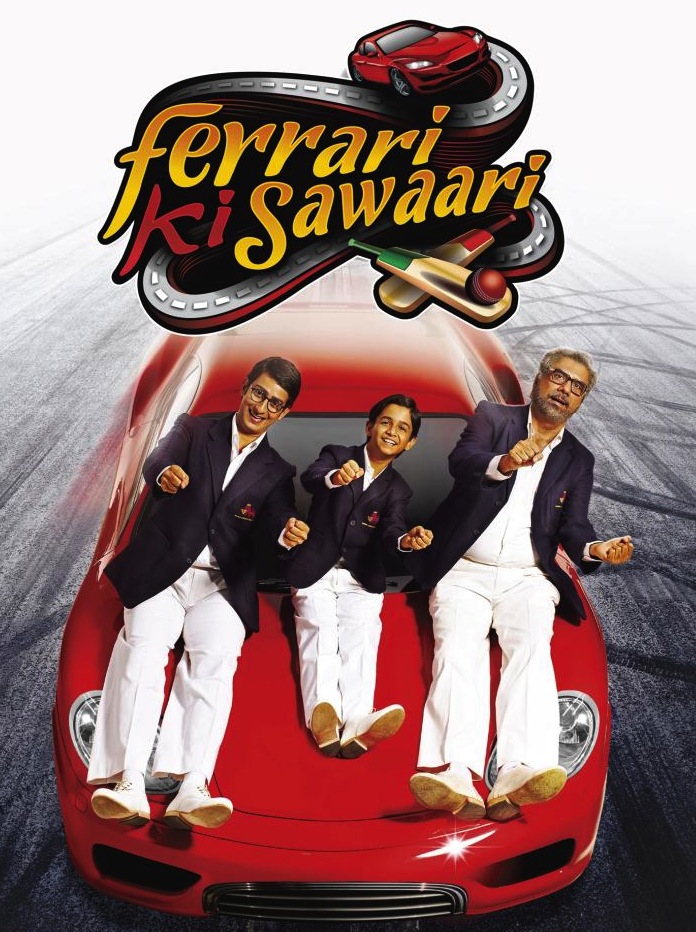
Ferrari Ki Sawaari: Bumpy Emotional Rollercoaster

June 19, 2012 · by sudhishkamath
It is never easy to make a film where one of the characters actually gets to say ”I just stole Sachin’s Ferrari.”
And this – the fact that the makers set it up for their conscientious lower middle class protagonist to actually get his hands on the Little Master’s dream machine – is the part of the ride that’s thoroughly entertaining and almost plausible.
At a basic emotional level, this is essentially a story of two fathers. One who stopped his son from chasing his dream of being a cricketer owing to his history with the game and that son who grew up into a caring, loving father who wouldn’t think twice before breaking the family piggy bank to buy his son the bat he fancies. Even if the real need is for better shoes than a bat he can borrow for the match.
At a more social level, this is the story of contemporary India where the gap between the haves and the have nots has increased so much that it takes a miracle for the lower middle class to afford the quality of training that is priced for the rich.
It’s a modern day fairy tale and treated like one as the writers (story is by Rajesh Mapuskar and Raju Hirani, dialogues by Raju Hirani and the Screenplay is credited to Rajesh Mapuskar and Vidhu Vinod Chopra) manage tosuspend our disbelief for most of the superbly executed set-up.
It’s post interval that the film descends into excessive manipulative melodrama with plot contrivances guaranteed to make you roll your eyes and grind your teeth. While the film makes us root for the father forced to ”borrow” the Ferrari, it frustrates us by making him do the silliest things – the equivalent of the blonde girl following the noise in a horror film instead of running away from it. We stop relating to a film where all characters suddenly decide to behave like idiots just so that the makers can milk them for melodrama.
And there’s the unwarranted media circus and a meandering comedic subplot involving the father-son dynamic between a local gangster turned politician and his groom-to-be son that slows down the ride further.
Ferrari Ki Sawaari bears the brand of feel good drama that we have come to expect from Hirani and Vinod Chopra and debutant Rajesh Mapuskar crafts some genuinely heartwarming moments in the first half and towards the very end, extracting finely nuanced performances from the entire ensemble.
Sharman Joshi excels in this author-backed role (though his fake eyebrows are a little distracting) while Boman Irani as the bitter old man delivers his best, most refined performance. The kid Ritwik Sahore is a natural and wins you over instantly while Paresh Rawal shows us his range in a cameo. The rest of the supporting cast comprising of lesser known actors bring in the laughs too.
As entertaining as they may be, this Ferrari would’ve coasted along fine had the two-seater not been this populated. Like in the film, it runs out of petrol soon enough only to be dragged on by a bullock cart of a narrative.
Genre: Drama
Director: Rajesh Mapuskar
Cast: Sharman Joshi, Boman Irani, Ritwik Sahore, Paresh Rawal
Storyline: The head clerk of an RTO needs to beg, borrow or steal Sachin’s Ferrari to fund his son’s cricket training camp at Lords
Bottomline: Partly superlative, mostly manipulative
This review originally appeared here.
Page 4 of 88 « Previous 1 2 3 4 5 6 … 88 Next »
  • Create a free website or blog at WordPress.com.
Privacy & Cookies: This site uses cookies. By continuing to use this website, you agree to their use.
To find out more, including how to control cookies, see here: Cookie Policy
  • Subscribe Subscribed
    • MADRAS INK.
    • Join 480 other subscribers
    • Already have a WordPress.com account? Log in now.
    • MADRAS INK.
    • Subscribe Subscribed
    • Sign up
    • Log in
    • Report this content
    • View site in Reader
    • Manage subscriptions
    • Collapse this bar
 

Loading Comments...